
Sef Fah
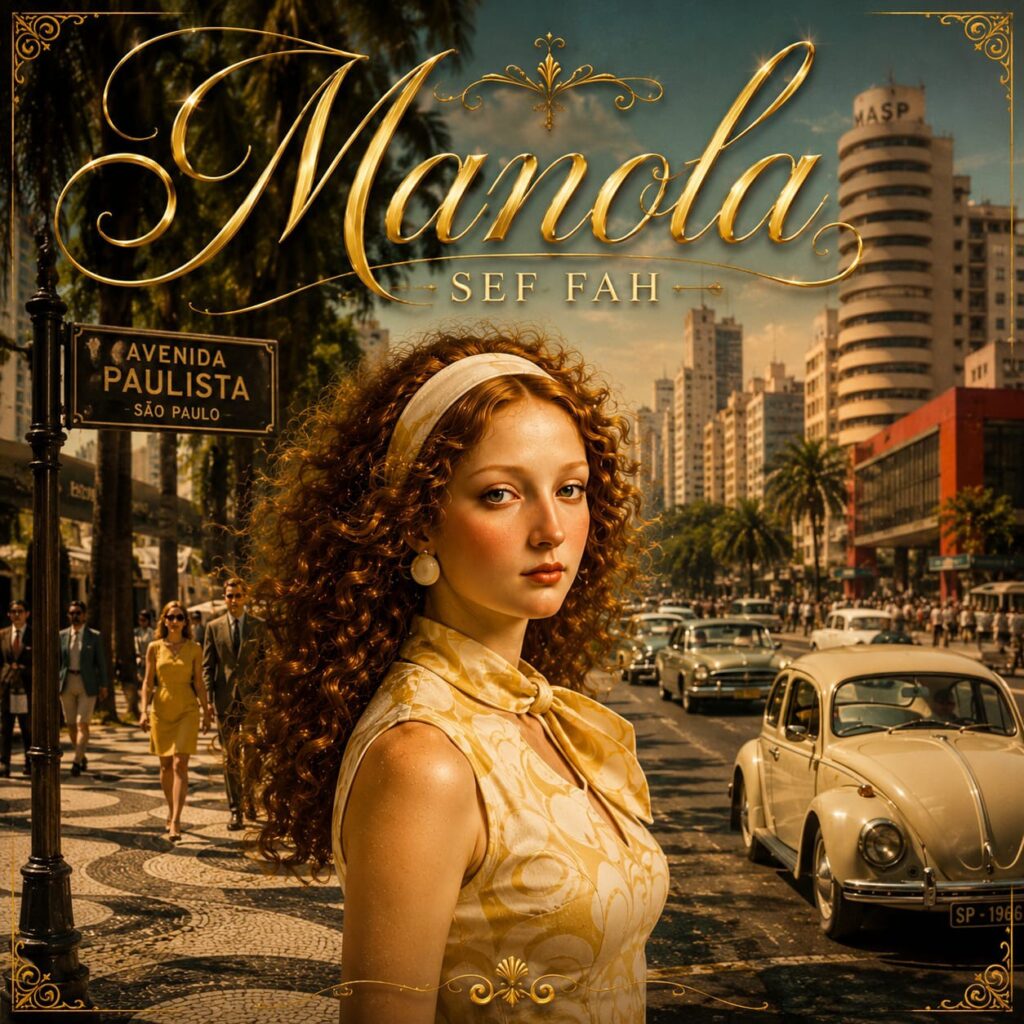
Sef Fah In this interview, Sef Fah explores the inspiration behind “Manola,” the challenges of songwriting, the creative possibilities of AI music, and the dream of sharing original songs with the world. 1. “Manola” began with a simple thought while you were sitting on a train, imagining what kind of song you might write for Madonna. The lyrics and melody appeared almost instantly, as if you were tuning into a radio station. Can you take us back to that moment and describe what it feels like when an entire song suddenly arrives in your mind? First of all, I feel a little awkward giving an interview. I’ve never accepted any interviews before. I only started my promotion last July. I don’t think I’m important enough to give interviews, but a music writer from Nigeria contacted me recently and asked me some very clever questions, and I didn’t feel like turning him down. So I gave my first interview, and this is my second one. Maybe this is an opportunity for me to express myself a little better than I did during the first interview. So, the thing is, I suddenly started hearing music in my head. At first, I thought it would stop. I was always thinking that maybe next week, or tomorrow, it would stop. It was like a happy schizophrenia, but, you know, it wasn’t something I was used to. I wasn’t born with it. So it was a little strange. It wasn’t unpleasant, but it was weird. I was hearing what was like a private radio station, with lyrics and melodies. One day, I was on a train, and I was bored. I felt that I couldn’t hear music voluntarily, that I had no control over the music I could hear in my head. So, I wondered: if a famous person asked me to write a song, would I be able to do it? I was absolutely certain that I couldn’t. So, I picked someone. I picked Madonna, but I could have picked Barbra Streisand or anyone else. But I picked Madonna, and right away, within a few minutes, this song arrived in English. So, it wasn’t different from the other songs I was hearing in my head. I cannot say whether it’s good or bad. It just comes, as if it didn’t belong to me. It’s very outside myself. However, when I think about Madonna, I have this image of Frida Kahlo in my mind, and I also have the image of Madonna in the movie “Evita”. So, I think I was trying to connect with these two women, Frida Kahlo and Evita Perón, and I ended up with a kind of triangle. 2. You have explained how difficult it was to recreate the music you heard in your head when working with musicians and professional arrangers. Watching the documentary about George Michael helped you realize that other artists had experienced similar frustrations. How did these experiences change your understanding of your own creative process, and did you ever consider abandoning “Manola” altogether? First of all, I’m a shy person. I like to please others, and I tend to make myself disappear. I’m not an accomplished musician. I hear melodies and lyrics, but I’m not a skilled musician, so perhaps I’m a little too humble in a recording studio. I don’t know how to assert myself or how to impose my point of view. And it’s a man’s world, although this has happened to me with women as well. Sometimes I went into a studio, spent a lot of money on great musicians and a great recording studio, and then I didn’t like the sound at all. The whole thing went into the bin. I’m very polite, so I would say, “Oh, it’s great,” but I would never publish it because it wasn’t what I heard in my head. The version was simply too far away from mine. If I tell skilled musicians that I don’t like what they’ve done, they might think I’m arrogant, when in fact I’m just trying to explain that I hear something very specific. Imagine that nobody had ever heard “Twinkle, Twinkle, Little Star”. You sing it, and it has a very definite rhythm and melody. The words, the melody and the rhythm are so distinctive that you cannot really change them without changing the song itself. Now imagine that the song isn’t famous yet, and I go into a recording studio and sing it. Everybody wants to improve it. Someone says it’s nothing special, just a little children’s song. Someone wants to make it jazzy, someone else wants to make it country, and others want to change the words or the melody. But I hear “Twinkle, Twinkle, Little Star” as if it already existed in the world. I’m not saying it’s wonderful or fantastic. I’m simply saying that it’s already there. That’s what makes it difficult for me when everybody wants to improve it by changing everything. The documentary about George Michael was fascinating for me because it helped me understand that this wasn’t necessarily something strange about my own creative process. He went to Nashville, which is a city I adore. I’ve been there, and I could imagine living there. He worked with some of the best musicians and recording studios, spent a fortune, and when he returned to London, he threw the recording away. It was for “Careless Whisper”, and eventually he found the saxophone sound that worked. But finding the right arrangement took a long time. George Michael was a skilled musician who worked night and day on his arrangements and orchestration. If someone like him could experience those frustrations, perhaps I could forgive myself for having the same kind of difficulty. That’s how the experience changed my understanding of my own creative process. I forgave myself. I was not so strange after all. Yes, I abandoned “Manola”. I had recorded it in a recording studio with my own voice and a pianist, and it was
Robert Luther Smith
Robert Luther Smith Robert Luther Smith’s Blues Man is a reflective journey through love, loss, human behavior, and life’s unanswered questions. Inspired by American road-trip imagery and his lifelong passion for blues, soul, R&B, and rock, Smith blends personal introspection with a wandering observer’s perspective, embracing modern production to bring the music he has always imagined to life. 1. ‘Bluesman’ introduces a wandering observer who is partly fictional and partly a reflection of yourself. How did this character first take shape, and what aspects of your own personality and experiences did you want to put into him? I suppose it came to me gradually, partly because I wanted to know what the hell I was talking about but also, I’m interested in psychoanalysis and wanted to see the influences that were subconsciously influencing me. Lockdown gave me the time to do just that, after recording three albums with Dave (Thomas), we had to stop so I pondered. I think Kings and Queens, my first professional song, reworked for Blues Man, shows the observational style in its first form, melancholic (or bluesy), and slightly detached. I think Americana, the idea of the road trip, has always fascinated me and it really only works in the American drama. Long roads to nowhere, stopping off at diners and dives and bars, meeting people or observing them. 2. You describe the Blues Man as someone who moves from place to place observing people, relationships, love, and loss. What is it about watching everyday human behavior that continues to inspire you as a songwriter? I got the observational thing from spending time in Paris and sitting with a beer and baguette jambon, watching the people go by at the Latin Quarter. Moving from place to place creates an eternal stranger. That’s the dramatic style to create a character. I’ve always been interested in psychology and the various ways people act and mix, and particularly get caught up in love, which, in the final analysis, is what matters most to people. Little things, like a woman’s hair blowing over her shoulder, a homeless person asking for a cigarette, all these things can trigger a line of thought. The music is different. In my head, tunes just endlessly repeat until I hit on a new combination, that I don’t think came from elsewhere, which they sometimes do, particularly titles in my case, but I immediately work the melody out on the piano and go from there. “I’ll be there” is a good example: in that case the melody came first, and I fitted the words to it. 3. The idea of the American road trip plays an important role in the world surrounding Blues Man. What fascinates you about that imagery, and how does the idea of being constantly on the road connect with the themes of the album? I suppose some movies gave me the road trip vibe. It’s more interesting travelling on Route 66 than the A1. The vastness of the USA has an existential or dramatic feel rather than stopping at a services on the A35, as unfair as that may be. Like David Byrne, I’m interested in the “road to nowhere,” an analogy for “where am I going?” “What does life mean?” Does it mean anything? Obviously, the idea of a musician or singer touring, the travelling minstrel adds detail to the mix. 4. You originally learned to play blues before moving toward funk and eventually incorporating rock, soul, R&B, and pop into your music. When making ‘Bluesman’, how did you reconnect with those early blues roots while still reflecting the musician you have become? In fact, I learnt to play the blues first. At the time there was a lot of blues, Hendrix (Red House) and Free come to mind immediately. But the 3-chord structure of the blues meant I could just noodle in a pentatonic scale til I got the idea. Then I got a fuzz box and a Watkins Copycat and I was away. I then went from that basic understanding to expanding my knowledge of chords, mostly on the piano. However, I’m not a fan of the mighty arpeggiators, I’m a B.B King and Elliot Randall fan. It’s the feel that counts, not the number of notes, so my blues roots remain in my guitar playing, the complexity comes from the piano (or keys of any kind). 5. You’ve worked with producer Dave Thomas for around 13 years, and your recent material has also involved an AI remix process. How has your creative relationship evolved over that time, and what role does modern technology play without losing the organic character of your music? For starters, Dave and I both love Tears for Fears. I met him first when trying to find someone here who could translate Sibelius (the music-writing program) into music. The local music shop and studio Absolute music told me about Dave, so I went to see him. He was building his first studio then and lo and behold he could get the Sibelius to play the music digitally. I was impressed. However, unlike may people I’ve worked with he could deal with my zany ideas that turn out to be good and thanks to Tears for Fears, we gelled. We don’t argue. I never do and nor does he. He just goes with the idea and Hole in My Heart was our first production. Obviously, Lockdown slowed the whole thing down and I have to admit I was pleased with everything, and I started curating everything and moving all the tracks to Spotify. I had them on arthouserecords site but in the end, if you can’t beat them, join them. This must have triggered Dave to do something and he emailed a couple of tracks “If I loved you” and “Philly Girl” I think, “just a bit of fun” he said diplomatically, and I could hear the difference in the sound. The voice was “out there” and everything was right in my head. 6. You’ve
Krey Galin

Krey Galin Krey Galin joins Elemental Entertainment to deliver Level Up, a multilingual celebration of ambition, self-belief, personal victories, and music’s universal power to connect audiences across cultures and borders. 1. Level Up is built around the idea of celebrating victories, from personal achievements to winning a game. What does “leveling up” mean to you personally, and how did that idea shape the EP? To us, leveling up means moving forward in life, overcoming challenges, and celebrating the accomplishments that come from hard work and determination. Throughout history and across cultures, people have shared that same desire to succeed and enjoy the rewards of their efforts. Whether it’s achieving a personal goal, advancing in a career, or simply winning a game, every victory deserves recognition. The English version of “Level Up” was created first and became the foundation for the entire EP. Because we have friends, supporters, and audiences in different regions of the world, we were inspired to expand the project into multiple languages. We wanted people from different backgrounds to connect with that same feeling of achievement and celebration in a language that speaks to them personally. 2. The project was developed through Elemental Entertainment’s team of producers and songwriters, with recording taking place in the USA and connections to studios in other countries. How did this international collaboration influence the sound and direction of the EP? Throughout our journey of creating multilingual EPs, we’ve discovered something remarkable: people around the world share many of the same hopes, dreams, ambitions, and optimistic attitudes toward life. What often separates us isn’t what we feel or what we hope to accomplish, but the languages we speak and the cultural differences that shape our experiences. That realization helped guide the direction of “Level Up”. Working with an international perspective encouraged us to think beyond one language or audience while maintaining the energy and positive message of the original song. Our goal wasn’t simply to create different language versions, but to make the music relatable to listeners across these cultures. Especially social media platforms We wanted “Level Up” to reflect something universal: no matter where you’re from or what language you speak, the desire to grow, succeed, and celebrate life’s victories brings us together. 3. You described Level Up as music designed to accompany those moments when people want to share their achievements on social media. What makes a song work particularly well as the soundtrack to a memorable moment or celebration? We believe music has the ability to capture emotions in ways that words or images alone sometimes cannot. When someone achieves something meaningful, whether it’s graduating, winning a competition, reaching a personal milestone, or simply overcoming a difficult situation, the right song can make that moment even more memorable. With “Level Up”, we wanted to create that kind of energy. Something upbeat, confident, and celebratory that people could naturally connect with their accomplishments. Social media has become a place where people share their journeys, and music is often part of how they tell those stories. That is why this EP contains versions that are shorter than normal. 4. Your statement, “I’m the one, I’m the man, I’m the legend in the making,” carries a strong sense of confidence and ambition. Where does that mindset come from, and how important is self-belief to your journey as an artist? Ummm that statement came natural with writing of the song. It represents the mindset of someone who believes in their potential, even before the rest of the world recognizes it. We believe confidence isn’t necessarily about thinking you’re better than anyone else. It’s about recognizing your own abilities, trusting your vision, and celebrating that accomplishment. In music, as in life, there will always be challenges, setbacks, and people who may not understand what you’re trying to accomplish. Self-belief gives you the motivation to keep moving forward. The phrase “legend in the making” is especially important because it acknowledges that success is a journey. You don’t have to be at the top to recognize that you’re building toward something greater. That’s really the message behind “Level Up”: believe in yourself, keep improving, and celebrate your progress along the way. 5. Coming from Recife, Brazil, while working with an international production team, you are already creating music that crosses geographical boundaries. How has your background in Recife influenced the artist you are becoming? Brazil is actually one of many places we use to live and where I upload many of our content. Not being aware of new technology, a lot of our work is processed and uploaded there so in many cases we were unaware of the tracking location on some devices lol. For us, music is constantly evolving, and our want my artistic journey to reflect “the global connections we’re building through our releases”. 6. Looking beyond Level Up, what would you like listeners to discover about Krey Galin through your next releases, and what is the next level you are aiming for? We want listeners to discover that Krey Galin is a Producer/Artists who isn’t afraid to explore different sounds, languages, and creative directions. Music is a universal form of expression, and we believe there’s an opportunity to connect with audiences who might never have discovered our work if we limited ourselves to one genre or “language”. Through Elemental Entertainment, we’re continuing to explore multilingual projects and musical styles that reflect the diversity of our listeners. Every release is an opportunity to grow creatively, “learn something new”, and reach people in different parts of the world. The next level for us is about expanding those connections, continuing to improve the quality of our productions, and building a lasting international audience. Ultimately, we want people to recognize Krey Galin not just for one particular sound, but for the creativity, versatility, and positive/ negative energy behind the music. It’s the only way the big battery behind our creativity operates…. We see this as a journey, and “Level Up” is one piece of a much
Eon ReZ
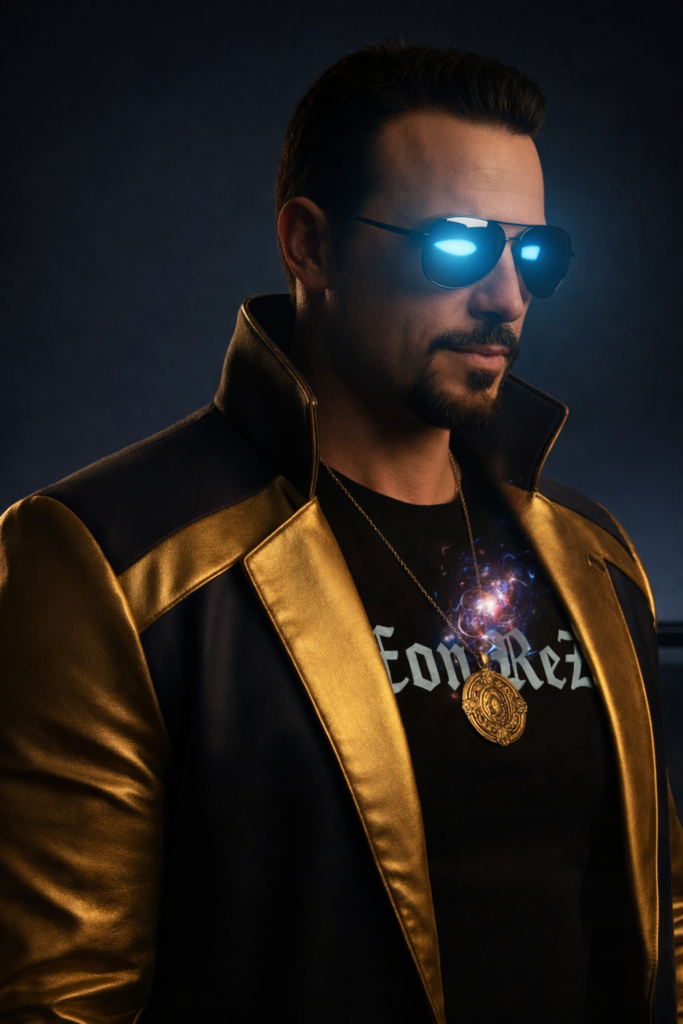
Eon ReZ Eon ReZ takes us into the ReZ Universe, where music, consciousness, speculative physics, and storytelling intertwine. We explore the origins of “Strings of Connection” and the ideas behind this expanding creative world. 1. “Strings of Connection” was the first song that sparked the ideas, sound and philosophy behind what eventually became the ReZ Universe. When you originally created the track, did you already sense that it could become the starting point for something much larger than a single song? I honestly had no idea what kind of ride I was about to take. I had always sensed some underlying connection—to people, to the world around us, maybe even to something larger than we normally acknowledge. I felt there was more to existence than what we see on the surface. “Strings of Connection” opened a door. What was on the other side wasn’t another song. It was this enormous flow of thoughts, questions and connections. One idea led to another, then another, and suddenly I was following strings in every direction. I didn’t know I was creating a universe. I was just curious enough to walk through the door. 2. Central to the song is the concept of “the hum,” an underlying connection between people, matter and the universe expressed through vibration, energy, memory and shared experience. How did this idea first emerge for you, and how has your understanding of it evolved since writing the song? It started as more of a feeling than an idea. Many years ago, I saw what I can only describe as a ghost. I know how that sounds. I’ve been in over 8,000 homes as an appraiser over the years so statistically my odds of seeing a ghost are way higher than average. But I saw something in that room that glowed, and I got out of there fast. Later, the owner and I talked about it, and he was aware that something unusual exists in that space as well. He said it was the ghost of an old see Captain from the early 1800’s. That part of the house was built in 1760. I still can’t tell you exactly what it was. But I know I saw something. That experience changed the way I looked at existence. It made me much more open to the possibility that reality may include things we don’t yet understand, and that frequency, vibration and energy might play a much larger role than we realize. That curiosity eventually led me toward frequency and vibration. Before “Strings of Connection,” I wrote an exploratory essay asking whether gravity itself might have an underlying frequency, and whether the interaction between matter and gravity could somehow reveal something about it. I’m not presenting that as established physics—it’s a question I’ve been exploring. After “Strings,” another image emerged in my mind: a kind of cosmic lattice, with matter interacting with or loading that structure. Then the word hum started making sense to me. The hum became my metaphor for all of it—the frequencies we measure, the connections we feel, memory, consciousness, human relationships and the possibility that things we experience as separate may be more connected than they appear. 3. Musically, “Strings of Connection” brings together rock, soul, blues, electronic elements and gospel-inspired vocals. How did you approach combining these different influences while making sure the music still served the philosophical ideas behind the lyrics? There really wasn’t a formula. I played with genre combinations until something spoke to me. Rock, soul, blues, set the base and then electronic sounds, Lo-fi, dark folk, reggae, hip hop, gospel all found their way in—if something added emotion, I let it into the room. My test is ridiculously simple. When a version hits me and I suddenly feel like I’m in free fall—there’s this physical feeling in my chest—I know I’ve found it. That’s when I stop analyzing. This one’s done. For me, the music has to make you feel the idea before you ever start thinking about what the lyric means. 4. The track appears on your second album, The Resonance of Existence, which explores questions surrounding physics, consciousness, perception and human connection. How does “Strings of Connection” fit into the wider narrative and themes of the album? It’s the starter for all of it. I sometimes compare it to a sourdough starter because that one little culture ended up feeding everything that came afterward. Once I recognized this idea of an undercurrent of human connection—the hum, what I later began calling the frequency of existence—the whole world started pouring out of me. Songs about matter, perception, consciousness, gravity, memory, empathy and connection started linking together over the next few months. So “Strings of Connection” isn’t simply another track on The Resonance of Existence. In many ways, it’s the song that made the album—and eventually the ReZ Universe—possible. 5. The ReZ Universe extends far beyond music, incorporating spoken word, speculative physics, cinematic visuals and serialized storytelling. What made you want to build an entire creative universe around these ideas rather than express them solely through traditional albums and songs? The funny thing is, I never decided to build a creative universe. Each piece just happened. I never sat down and said, “I need another product. What should I make?” A kernel of an idea would pop into my head, and suddenly I’d be awake until dawn trying to see where it went. Twilight became incredibly productive for me. The world gets quiet, distractions disappear, and my mind seems to enter this strange flow state where one idea can connect to ten others. The songs led to ReZ. ReZ led to essays, speculative physics, a television pilot, the Quantum Pearl Hunt, characters, jokes, stories, videos and eventually ideas for a podcast. And here’s probably the most important part: I made most of it to entertain myself. I was playing. I was following my curiosity. Only afterward did I look around and realize I’d accidentally built a world. 6. Since launching the ReZ Universe
Mick Rochford
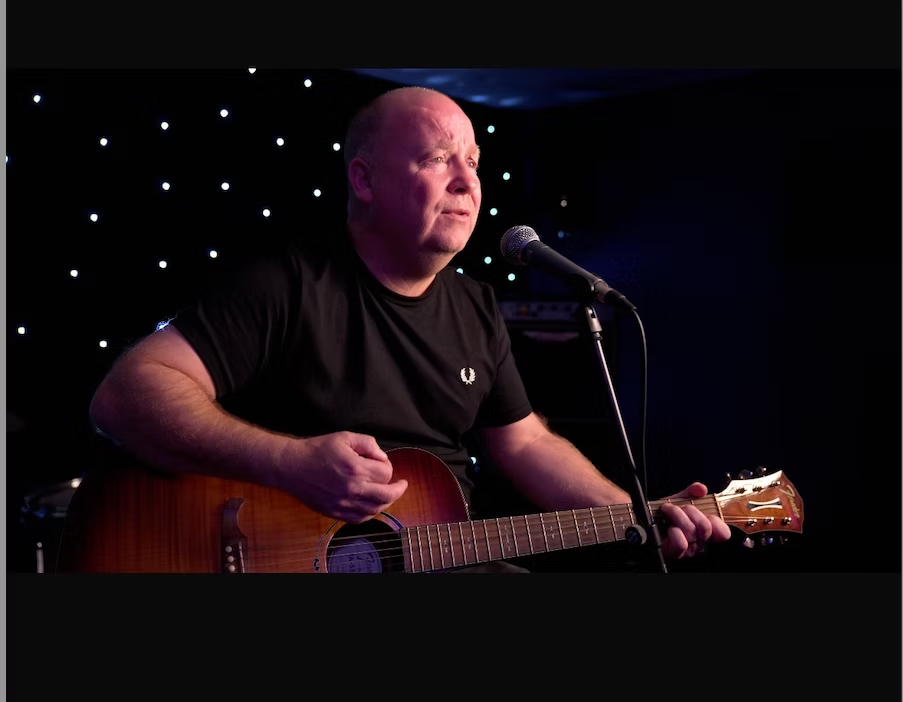
Mick Rochford Singer-songwriter Mick Rochford discusses the emotional honesty behind “Loving You,” his journey from drummer to solo artist, and the personal experiences shaping his forthcoming album. 1. “Loving You” explores the painful moment when you can still love someone while realising the relationship may no longer be working. What personal experience or emotion sparked the song, and how did you approach turning something so difficult into music? “Loving You” came from a very real place. It’s about that point in a long relationship where you can still love somebody deeply, but you start questioning whether love on its own is enough. I think that’s something a lot of people experience but don’t always talk about. You can have years of memories, a family, good times and bad times together, and still reach a point where things have become incredibly difficult. Writing the song was my way of processing those emotions. I didn’t want to blame anybody or make one person the villain. The line “Loving you is so hard to do” really captures it for me. You can love someone and at the same time be hurt, exhausted or unsure where the relationship is going. Sometimes the simplest words say the most. 2. The song also looks at the contrast between how relationships appear publicly and what can actually be happening behind closed doors. Why was that idea important for you to explore, particularly in an era dominated by social media? Social media gives us a snapshot of people’s lives, but it’s usually the snapshot they want us to see. You see the holiday, the anniversary dinner, the smiling photograph or the happy family moment. You don’t see the argument in the car beforehand or two people lying awake at night wondering what happened to their relationship. I think we’ve created this pressure to present a perfect life, and relationships are part of that. Sometimes the couples who look incredibly happy online can be going through enormous difficulties privately. That was important to me with “Loving You”. I wanted the song to say that you never really know what someone else is dealing with behind closed doors. There can be love there, but also loneliness and pain. 3. Your previous single “Sticks and Stones” tackled the lasting impact of bullying, while “Loving You” moves into much more intimate territory. What have you learned about yourself as a songwriter through writing about such different kinds of emotional experiences? Probably that I’m not particularly interested in writing songs just for the sake of writing songs. I need to feel something. “Sticks and Stones” came from seeing the damage bullying can cause and how something said to somebody when they’re young can stay with them for decades. “Loving You” is obviously much more personal, but they’re connected in a way because they’re both about things people carry around inside them. I’ve learned that I’m at my best as a songwriter when I’m prepared to be vulnerable. If something makes me slightly uncomfortable to put into a song, that’s often when I know I’m getting somewhere truthful. And the response to “Sticks and Stones” reinforced that. Millions of people watched it and thousands shared it. That told me that when you write honestly about something people recognize in themselves, the song can become much bigger than your own story. 4. You spent decades behind the drums and have performed with bands since the 1990s, including supporting Aslan. How has your experience as a drummer shaped the way you write, arrange and perform your music as a solo singer-songwriter? Being a drummer has influenced everything I do musically. I hear rhythm very quickly. Even when I’m sitting with an acoustic guitar writing a song, there’s a drum arrangement going on somewhere in my head. I was playing in bands in the ‘90s and had the experience of supporting Aslan, and then life took me in other directions for a long time. Coming back to music later has actually been a huge advantage because I’m not trying to be the person I was in my twenties. When I write now, I think about how the song will feel when a full band plays it. Where should it build? Where should it pull back? When should the drums really arrive? That’s the drummer in me. Performing is different now too because I’m stepping out from behind the kit and standing at the front. That’s been a completely new challenge, but I’m loving it. 5. Your debut albumI’ve Got Something to Say has now passed 528,000 streams, while “Sticks and Stones” reached millions of views on TikTok. How do you balance the opportunities that come with growing attention with your desire to keep the songwriting honest and grounded? The numbers are amazing, particularly because when I returned to music I genuinely didn’t know where any of this was going to lead. But I try not to write for numbers. If I sat down thinking, “I need another song that gets millions of views,” I think I’d probably write a terrible song. The success of “Sticks and Stones” actually taught me the opposite. I didn’t manufacture that reaction. People connected with the subject and started sharing it because it meant something to them. So my approach is to keep writing about things that matter to me and hopefully matter to other people. Of course I want the audience to keep growing, I want to play bigger shows and festivals and take the music as far as I possibly can. But the songs have to come first. If people can tell that what you’re singing isn’t genuine, you’ve lost the most important thing. 6. “Loving You” is the first glimpse of your forthcoming album. Without giving too much away, what can listeners expect from this next chapter, and how does it represent where Mick Rochford is today compared with the artist who released I’ve Got Something to Say? I think the next chapter is going to be more
Katya Redpath
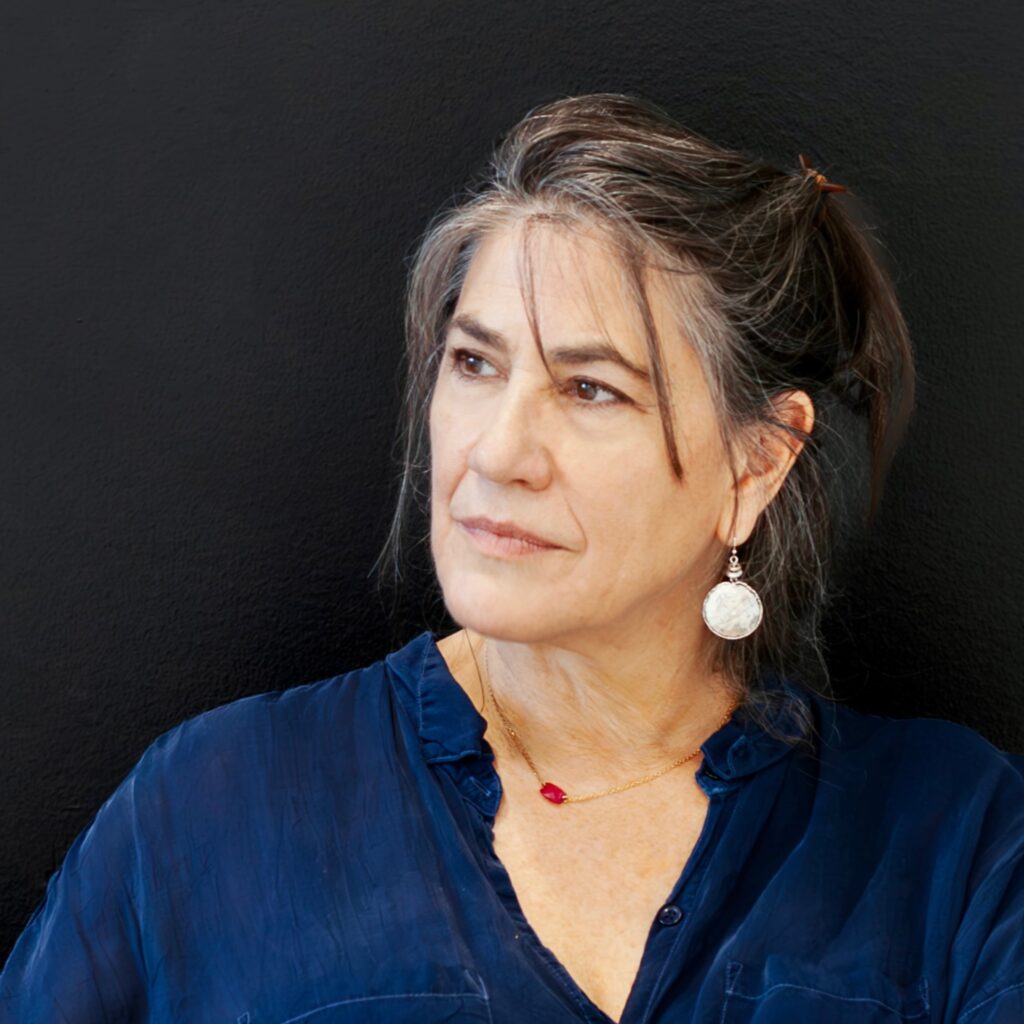
Katya Redpath Katya Redpath reflects on her late-blooming songwriting journey, diverse musical influences, recording debut Time Changes Everything, creative collaborations in Austin, and the life experiences shaping her evolving artistry. 1. Time Changes Everything is your recording debut, but the songs come from decades of experiences, travels and musical influences. What finally made you feel that the time was right to turn those experiences into an album? Well, thank you for the question, but that assumes my late-blooming career was all planned out ahead of time, which of course it wasn’t at all! It’s true, I began writing songs late in life, and I suppose organically my experiences and various musical influences all showed up in these creations. But up until that point, I was just living, and I had no idea I’d have enough material to make an album when I first walked into 6-String Ranch. I just started with one song, and that was “Wave.” 2. Your musical background stretches from classical music and Russian émigré songs to blues, bluegrass, Americana and global traditions. How did such a diverse musical upbringing shape the way you write and arrange songs today? That is such an interesting question. I think exposure to different kinds of music meant I never felt constricted to stay within any one song structure or sound. I could absorb everything really well, but my problem was figuring out where I fit in and what my own style was. This may seem strange, but I really think that all those broad influences were actually more responsible for delaying my musical career. I played and adored and explored music all of my life, but never believed I could enter the ranks of my heroes, the actual songwriters. I learned hundreds of songs, and if I put two notes together, I could instantly pick out a familiar tune, like a “Name That Tune” game, which would just kill my early attempts at songwriting. I was really hard on myself. Ultimately, I had to shift something quite deep to get kinder to my infant songs. I had to learn to be open within the creative process and trust myself. It was much harder than it sounds. But now it’s easy! (Yoo-hoo, can you hear that, past Self?) 3. Songs like “Wake Up,” “Put It in a Song,” and “The Phoenix” explore truth, resilience, music and renewal from very different perspectives. What connects these songs for you, and what were you hoping listeners would take away from them? I really have to think, because each song came to me so differently, and each has such different influences. “Wake Up” channels Carole King and John Lennon with its percussive piano; “Put It in a Song” has definite soul vibes, and “The Phoenix” took liberties like some British and acid rock, drifting in and out of classical music with even a melodic line adapted from Stravinsky’s “The Firebird.” In all of these, I feel I am speaking directly to someone, trying to be real, even though one of the songs is about a mythical bird! But mythology may be the most grounded response to the turmoil we are living through. I do like to connect to people, to bring hope, and a little lightness and humor. Somebody once told me I was earthy, fun-loving and philosophically loaded. I guess that sums it up pretty well, but I hope I’m compassionate, too. 4. “Hot Mess” brings a very different energy to the album, with humor, rebelliousness and a strong sense of personality. What inspired the song, and do you feel humor is an important part of how you express yourself as a songwriter? Haha, well, it’s funny you mention humor, because in that song, the joke was on me! All of my songs sort of write themselves, and often I don’t really find out what they are truly about until later. This one masqueraded for a while as a song about my daughters, and maybe some of their friends, and the reckless activities I knew they’d never fully admit to. But of course, duh, it was totally about me and my own wild escapades. That song unearthed some of my past for me and forced me to look in the mirror, and it was funny. I daresay we’ve all had those calls to the wild, and those close calls we’d probably prefer our mothers never knew about! So, in the end, I think “Hot Mess” is dedicated to all curious, passionate, adventurous women: We’ve been there! Thank your lucky stars, it’s going to be OK! 5. You play most of the instruments on Time Changes Everything and co-produced the record with Matt Smith in Austin. How did working in Austin’s musical community and collaborating with Matt influence the sound and direction of the album? First of all, I have to say that Austin is the most welcoming and supportive place for making music. Playing in regular jams, in several bands, and with kind friends and teachers has exercised my skills and helped my confidence so much. I owe so much to my producer, Matt Smith. With his forty years of experience, he always remained generous and open to my suggestions, allowing for a true collaboration, as well as for real fun and experimentation. We’ve had so many laughs along the way. It’s been fantastic. But at the same time, he really knows how to put in the screws and get the best performance out of me, even when it’s painful. We didn’t go about building a particular sound; the sound just arose from the body of work. I didn’t have a clear idea what my style or direction was going to be, and so we just treated each song as an individual and ended up with what we got. I love this quote from John Hartford: “Style is based on limitation.” That is so true. Although I play in a lot of genres, I guess it’s that weird patchwork combo that defines my
Felix Rockey
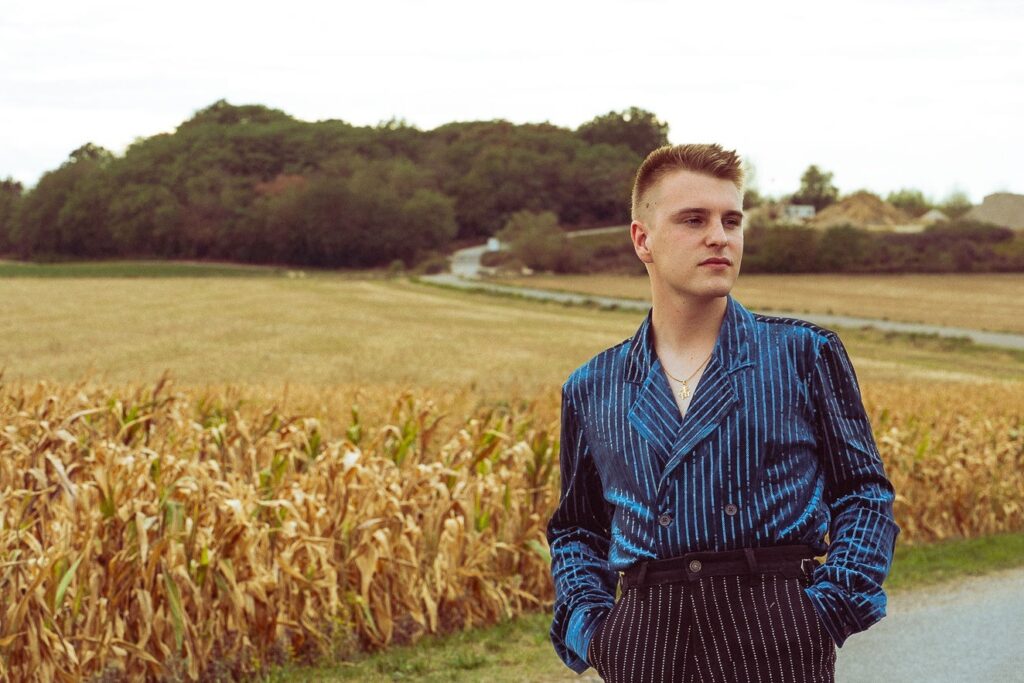
Felix Rockey French-British artist Felix Rockey discusses heartbreak, rediscovering love, creative collaboration, and the Paris-London duality behind his new single “Old New Feelings.” 1. Old New Feelings” was written more than two years ago following a significant heartbreak. What was happening in your life at the time, and what made you feel that this experience needed to become a song? At the time, I was in my final year of secondary school; I was part of a band with whom I’d played a few gigs, and everything was going well. Then I met someone; it was the second time I’d fallen in love, and it all happened very quickly – perhaps too quickly. The excitement of experiencing something as crazy as love all over again, but also the fear of losing the one I loved once more, made me want to write a song about it. The break-up that followed this second love made me feel ‘Old New Feelings’: I was lost between emotions and questions; I’d loved again, but I’d also lost someone dear to me. The best way for me to express what I feel deep in my heart is to write a song about it, so that’s what I did! 2. The song explores the idea that falling in love for a second time can feel even more intense and revealing. What did that second experience teach you about love and about yourself? After that experience, I realized that love isn’t a race and that it takes time to come to terms with your own feelings for the other person. Falling in love a second time is a wonderful thing, because you rediscover what is undoubtedly the most beautiful feeling one can experience: love. For my part, I’ve learnt that love isn’t just about always showing yourself in the best light; it’s also about being there for one another through thick and thin. I really like this quote from The Beatles, which perfectly sums up how I felt at the time: ‘The love you take is the love you make’. 3. You describe “Old New Feelings” as a way of helping listeners reconnect with their own happy memories. When you write a song, do you usually start from a personal emotion or from the feeling you want to create for the listener? I always start from a personal emotion, and I would never claim to know what someone else might be feeling. When I write a song, I try to create an atmosphere in which the listener can immerse themselves in their own feelings. That’s what I’ve done with ‘Old New Feelings’: it’s my personal story, but I invite the listener to interpret it however they wish. I sincerely believe that we all have these kinds of feelings – both old and new – buried in our memories, and through my song, I want to encourage the listener to reconnect with their own feelings, their own story. 4. This is the first track on which all the musicians who accompany you on stage recorded their own instruments. How did working collectively change the energy and sound of the song compared with your earlier, more independent work? It changed everything, and I absolutely loved the process. When I released my first EP, ‘Eos’, I was working on my own and didn’t have an outside perspective to guide me towards ideas I hadn’t thought of before. The fact that my musicians brought their own personalities, their notes and their own creative worlds to my new song really took it to a level I could never have imagined on my own. The energy of the song has changed, and I’m really glad it turned out that way. 5. The music video takes us between London and Paris, reflecting both your French-British background and the different sides of your identity. How did these two cities influence the visual world you wanted to create for “Old New Feelings”? I really like the idea of duality and I enjoy exploring this concept intellectually in my songs. ‘Old New Feelings’ embodies one of these dualities, just like Paris and London. Two of the world’s most important capitals, two cities that are both rivals and friends. Paris is my hometown, so it influences my view of love. London is the city closest to my heart, and its unique style influences the way I dress as well as the image I want to project on screen. 6. You’ve already released your debut EP Eos independently, and now you’re entering a new chapter with “Old New Feelings” and your first music video. Looking ahead, what kind of artist and musical world do you want Felix Rockey to become? Thank you for that question. I want Felix Rockey to stay true to himself and never hold back just because someone has criticized him or for any other reason. I’m lucky enough to work with some great musicians, so I’m looking forward to playing with them for as long as possible, and I want to create beautiful compositions and melodies that will resonate forever. As I say in my song ‘Step by Step’: ‘We’ve got to live up to our dreams’. What I mean by that is that if you think big, you’ve got to think big and not be afraid to admit that you have dreams that are beyond your reach. I think that’s the case for me: I have aspirations and dreams that go far beyond anything I can even imagine. So I try to do everything I can to live up to those dreams, and I always strive to do so with love and life. Thank you very much. FELIX ROCKEY Official: TikTok, Instagram | Linktree
Matt Tarka

Matt Tarka With Letter to the Editor, Matt Tarka channels political frustration into thoughtful folk-rock, blending social commentary, literary references, personal conviction, and melody while reflecting on democracy, media, and responsibility. 1. Letter to the Editor takes on institutional power and questions the role of the media in defending democracy. What inspired you to write this song, and why did you feel this was the right moment to address these themes so directly? This one was borne out of immediate anger at The Washington Post, and the decision made by its owner (Jeff Bezos) to not endorse either major political candidate in the weeks leading up to the 2024 U.S. Presidential Election. This was common practice at the paper since 1976 to share a formal endorsement and rationale for backing a candidate. For an institution that has prided itself for decades on journalistic integrity and educating its readership on the directions in which current and aspiring political leadership want to take the United States, it was disheartening to learn that their top brass pulled a piece outlining their position and endorsement. In my view, it was a betrayal of my country’s First Amendment rights, which includes the right to a free press, and the paper’s own adopted slogan “Democracy Dies in Darkness” in February 2017, following the November 2016 U.S. Presidential Election. As for the actual composition of the song, my coping mechanism as it were was writing short “letters to the editor” and expressing my anger and frustrations with the decision makers at the newspaper. These lyrics came pretty quickly, probably a day or two after the news hit about this decision. Weaving snippets of the 1911 version of Katherine Lee Bates and Samuel A. Ward’s song “America, the Beautiful” into “Letter to the Editor” was a conscious choice. We have another consequential midterm election here this November 2026, and I wanted to release “Letter to the Editor” a few weeks ahead of time for folks from all walks of life and political persuasions to listen and reflect on our collective and self-inflicted damage over the past several years. 2. Throughout your career you’ve balanced memorable folk-rock melodies with socially conscious lyrics. How do you approach writing songs that encourage reflection while still connecting with listeners on an emotional level? Thank you. This is a difficult question for me. I’ve never been a songwriter who makes deliberate attempts to write socially conscious lyrics, but that’s been driving a good chunk of my creativity on a consistent basis for the past couple of years. For people who can do that, my hats off to you! I never know what’s coming next, but I do enjoy it when I land in a spot where people can draw on their own experiences and color in the lines. Most people are looking for music that’s coming from a sincere place. If I can do that with a melody or words that convey a universal emotion, I’ve done a good job. 3. You recorded the single with longtime collaborator Jarrett Nicolay at Mixtape Studios, and the unexpected discovery of an old school bell became part of the song’s introduction. How did that moment shape the atmosphere of the track, and what was the overall recording experience like? Kind of by accident, really. Jarrett pointed out this large school bell that was sitting outside on the patio of his studio. It was given to him by some friends. A fortuitous thing happened – he learned that the bell was in the same key as this song we were hashing out in his studio. If your readers visit my or Jarrett’s Instagram feed (@mixtapestudios_llc ), there is some video footage of us recording the bell, which as you mentioned, introduces the song. It has an ominous type of feeling, a seriousness, which I think complements the song well. 4. The lyrics reference both Edward Bulwer-Lytton and Euripides, blending literary influences with modern political commentary. What drew you to those references, and how important is storytelling and symbolism in your songwriting? Again, this was sort of another happy accident. There’s a repeated and accusatory line towards the end of the song “How could you let the ink run dry upon the sword?” This was my attempt at a turn of phrase on the well-known quote “the pen is mightier than the sword,” which can be found in Edward Bulwer-Lytton’s play Cardinal Richelieu. And with regard to Euripides, the Greek tragedian writer from 400 BC, he had articulated something similar – believe it was how “the tongue is mightier than the blade.” For some reason, I always thought that “the pen is mightier than the sword” was a quote from Silence Dogood (an alias used by Benjamin Franklin) to get published in his older brother’s newspaper, The New-England Courant, when he was a teenager in the colonies during the 1720’s. Franklin was writing about everyday life, school, fashion, women’s rights, and free speech. But after learning this quote is not from Benjamin Franklin, I’m interested in learning more about Bulwer-Lytton and Euripides! As for the storytelling and symbolism aspects of my own songwriting, it tends to happen subconsciously. I’m much more of a non-linear writer. More “Up the Junction” than “Cat’s in the Cradle.” 5. Producer Jarrett Nicolay compared Letter to the Editor to R.E.M.’s Life’s Rich Pageant, a significant compliment given the album’s legacy. How did you react to that comparison, and which artists have had the greatest influence on your own musical identity? First off, absolutely about Life’s Rich Pageant! A stupendous album from cover to cover. Jarrett and I have a shared affection for R.E.M.’s music, and that era in particular. Coming from someone who I admire both as a person and musician to share that “Letter to the Editor” could easily fit on to “Life’s Rich Pageant” is high praise. Left me pretty dumbstruck, if I’m being honest. Which I am! (laughs) R.E.M. has left a lasting impression on me lyrically and musically.
Joe Nilson
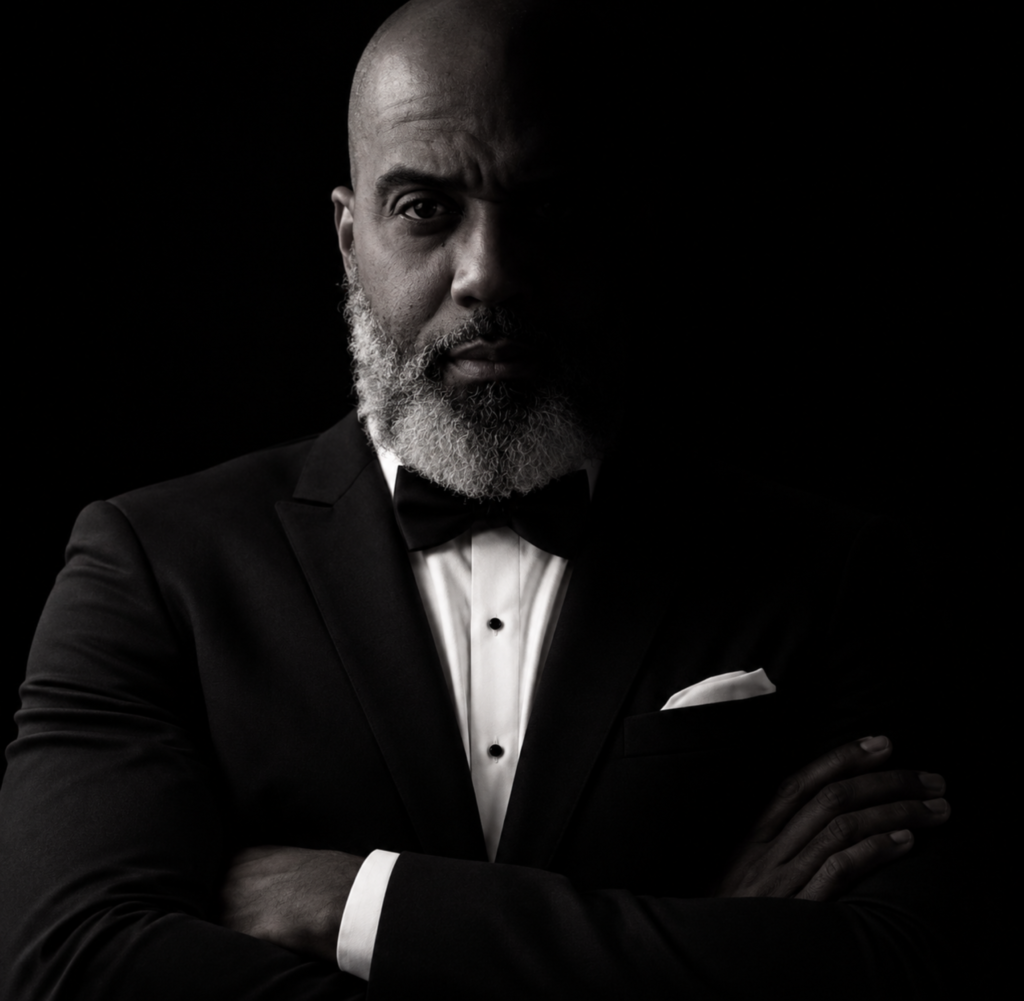
Joe Nilson With “Cuando despiertes con él”, Joe Nilson steps into the spotlight as a recording artist, transforming decades of songwriting into a deeply personal bachata-pop statement. Blending heartbreak, acceptance, and Dominican amargue, the song pairs his own voice with modern production tools while keeping emotion and storytelling firmly at its core. 1. “Cuando despiertes con él” explores the pain of loving someone who has chosen another person while still holding onto hope. What personal emotions or ideas inspired you to write this story? I think there is an important nuance in the song: the protagonist is hurt, but he is not waiting for that person to come back. In fact, he imagines the moment when the other person will finally understand what they lost. There is a line in the song that says, “You’ll wish this were a dream, that when you wake up I’d still be yours, but by then it will be too late.” To me, that line captures the essence of the song. It is about that moment when someone decides to leave, perhaps believing they will find something better, only to discover later the true value of what they left behind. There is pain, yes, but there is also acceptance and closure: you may regret it one day, you may wish you could return to what we had, but by then it will be too late. 2. The song marks an important transition from songwriter to recording artist, with you performing your own composition. What made you feel that this was the right song to introduce your voice as an artist? It was not specifically “Cuando despiertes con él” that made me decide to become a recording artist. It was the desire to find a new way to share my music. NL Latin Music has a fairly extensive catalog, with songs in different genres available across several platforms. Over time, however, I realized there was a barrier: many people become predisposed as soon as they learn that a voice was generated with artificial intelligence, and they dismiss the song before giving it a chance to tell its story. That made me rethink my role within my own music. If those lyrics come from my experiences, my emotions, and my way of looking at relationships and life, I thought perhaps the time had come for them to have my voice as well. So I decided to give my voice to my feelings and keep artificial intelligence as a tool used only in certain parts of the music production process. “Cuando despiertes con él” became the first song with which I took that step, and for that reason it will always have a special meaning for me. 3. Bachata-pop carries a natural sense of romance and emotional intensity. What attracted you to this style for “Cuando despiertes con él,” and how did you approach creating its overall musical atmosphere? “Cuando despiertes con él” is a song filled with emotion. Although, for me, the essence of the story is closure – the certainty that by the time that person understands what they lost, it will already be too late – I also understand that every listener can make a song their own and find a different story within it. Someone may hear it and feel that there is still hope for a return. But there was something that was decisive for me when it came to giving that story its musical identity. In very Dominican terms, “Cuando despiertes con él” is a song of amargue – that feeling where heartbreak, nostalgia, pain, and everything you experience when a relationship leaves a wound all come together. And if there is one genre in the Dominican Republic that knows how to tell the story of amargue, it is bachata. That is why I felt it was the natural musical language for this song. I wanted the music to carry emotion and melancholy, while still preserving that rhythm and identity that allow a painful story to be both sung and danced to. 4. You wrote both the lyrics and melody yourself. When developing the song, did the story come first, or did the melody and musical idea lead you toward the narrative? The first thing that came to mind was a very simple idea: “Cuando estés con él” – “When you’re with him.” But I felt I could express it in a more poetic way, and that is how “Cuando despiertes con él” – “When you wake up with him” – was born. That phrase became the starting point from which I began building the entire story. In this case, I wrote the lyrics first. The melody did not come immediately; several days passed before I finally found one that I felt could convey the essence and emotional weight of the song. And perhaps it sounds a little contradictory to say this as a songwriter, but I am not a musician: I do not play any instrument. My melodies do not come from guitar strings or piano keys; they come from my head. Some songs have remained stored away for months because, even though the lyrics are finished, I still have not found the melody that I feel belongs to them. Other times, the exact opposite happens: a melody suddenly appears in my head, and the first thing I do is record a voice memo of myself humming it so I do not lose it. Then the story that will eventually accompany it may emerge later. For me, songwriting does not follow a fixed formula. Sometimes the words find their melody, and other times the melody is waiting to find its words. 5. The production incorporates instrumentation and arrangement elements developed with the help of AI, while your lead vocals were recorded in the studio. How did you use these tools creatively while maintaining your own artistic identity? For me, artificial intelligence is an extraordinarily powerful tool because it has given me the opportunity to open a chest where songs
The Fatewell Project

The Fatewell Project The Fatewell Project embraces creative freedom without boundaries. From synthpop to visual storytelling, it explores technology, humanity, experimentation, and positive expression while constantly evolving toward unexpected new artistic possibilities. 1. You’ve made it clear that Fatewell isn’t tied to one particular genre. How important is that creative freedom to you, and where could you imagine taking the sound after “You’re Not So Human”? Sometimes I’m in the mood for a symphony, and sometimes I’m in the mood for heavy rock. Sometimes I listen to rap and hip-hop, while there are times when I want some good ’80s synth-pop. There are times when I spend an hour just trying to figure out what I feel like eating, and there are times when I crave a certain type of food immediately. I guess that is how I feel about the kind of music I write. It’s never one specific type. I might start off humming some kind of slow melody that comes to my mind while I’m walking to the grocery market, but when I get to the studio, something entirely different can come out that I had no idea would happen. Just like a movie where it plays with your mind, and in the end, what you thought would happen is completely different from what actually happens. It’s really fun letting the creativity naturally breathe. Creativity is always an important part of creating. It’s enjoyable experiencing the Fatewell project developing, breathing, and changing into a possibility. 2. Your latest release, “You’re Not So Human,” explores a synthpop direction. What is the story or idea behind the song, and what does the title mean to you personally? “You’re Not So Human” came out of a love-hate relationship I have with technology. I absolutely love technology, but sometimes when I’m trying to figure out how to use a device or create a program, I feel absolutely stupid. Oh, if I could only be as smart as my best friend, the computer…. But now it’s become such a wonderful companion, and I have become so dependent on it, yet there are times when I truly need to take a break from it. Sometimes this companion seems to really know and understand me while at times, I want my privacy. Well, it’s complicated. During the writing of “You’re Not So Human,” oddly enough, my CTRL button stopped working and I truly felt a lack of control. Then, a few weeks later, it started working again. I have absolutely no idea what that was all about. The title “You’re Not So Human” has an ambiguity where it can sound like an accusation or a compliment. The accusation would be that someone is maybe cold and detached, while the compliment would be that someone is amazingly beyond human. So in the song, the title turns around from: “More perfect than human.” “Much smarter than human.” “More flawless than human.” And then later: “More heartless than human.” The tension and contradiction are what I found interesting. 3. Visual art and video appear to be an important part of the Fatewell concept. When creating something like “You’re Not So Human,” do the music and visuals develop together, or does one usually inspire the other? For the most part, the song is written first. A song can go through hundreds of drafts and edits before I feel like it’s ready. I listen to it over and over, and after spending that much time with it, I start to develop visual ideas. The visuals all come from the feelings I get from the music. So most of the time, the music inspires the video rather than the other way around. However, there are times while making the video there needs some kind of music or sound that could enhance the video. That is when I go back to the song to edit it for the video. 4. At the heart of Fatewell is a very simple philosophy: “Being good and doing good.” How does that idea influence the music, art, and messages you want to put into the world through the project? Whatever I do in my life, I want to do good. I sometimes feel like the world already has enough pollution, and I don’t just mean environmental pollution. I think there can be a kind of pollution in music, video, film, and media too. Sometimes people try so hard to shock an audience that the shock itself becomes the point. And sometimes it works. But other times, it feels like there’s nothing underneath it. It reminds me of swear words in comedy. Swearing can make a joke funnier when it actually belongs there. But sometimes it feels like a crutch. If there’s no real joke, the swear word becomes a substitute for the joke. Fatewell is a place where I can create music and video. Whatever comes out of the project, I hope it can make someone think more deeply, feel something, notice something they hadn’t noticed before, or simply be influenced in a good way. Even if someone never consciously thinks about the motto, I still want “Being good and doing good” to be the anchor behind the project. There are symbolisms placed in most of the videos. That is one fun part of making videos. With music it is hard to place symbolisms but some sounds can be engineered a certain way to provoke a certain feeling. 5. Since Fatewell is deliberately designed to evolve without knowing exactly what it has to become, what would you most like to explore next? Is there a new song, visual project, collaboration, film, or completely unexpected direction already taking shape? I’m constantly exploring and experimenting with things. I want to keep testing my own limits and abilities. There might be something as little as a bug on the window that could inspire a new video chapter or a song. I’m expecting things to keep evolving and improving. It just takes little steps at a time. Inch