
Noah Hutton
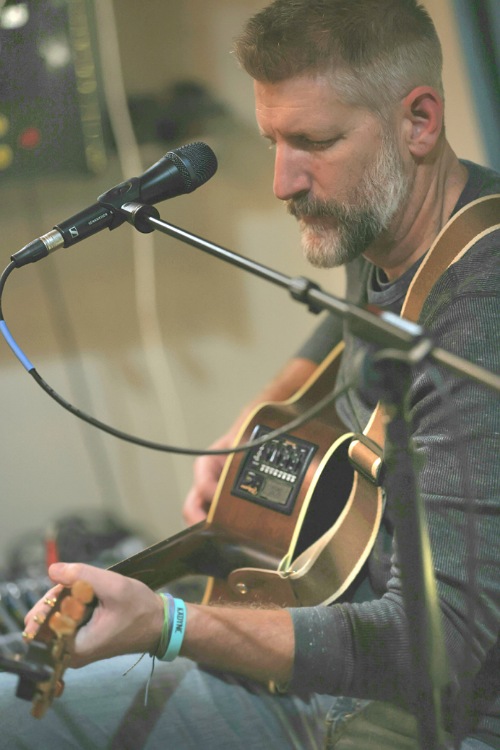
Noah Hutton Noah Hutton’s “Christmas Time” was born from a spontaneous spark and shaped by heartfelt collaboration. In this interview, he shares the family moments, studio magic, and creative instincts behind his modern holiday single. 1. “Christmas Time” was inspired by a spontaneous moment during a family car ride. Can you walk us through that spark of inspiration and how it turned into a full song just a few hours later? I’m not exactly sure when the spark hit. We were heading home after Thanksgiving lunch, listening to holiday tunes, and my wife, Tash, mentioned that the world needed new Christmas music. She felt we’d been hearing the same ones for too long. I joked that I didn’t write Christmas music and wouldn’t even know where to start. It honestly never crossed my mind again after that.Later that evening, I was practicing for a show and hit a wrong note. As musicians know, sometimes a good-sounding wrong note can be the key to finding the right song. It immediately had a very distinctive, ‘jiggly’ feel. I looked at Tash and said, ‘I think you’re going to get that Christmas song.’ A cute story started playing in my mind right away, and I wrote it out. 2. This track features contributions from Marco Freeman, Edgar Zambrano, and even your son Bryson. How did each collaborator help shape the sound and spirit of the single? I am incredibly grateful for each artist’s contribution to this project. Marco’s bass line is foundational; it provides a steady, rhythmic trot that evokes the feeling of a horse pulling a winter sleigh. Speaking of which, at the beginning of the second verse, you’ll hear a soft set of sleigh bells, added by my son, Bryson, which truly makes you feel the sleigh passing by. Finally, Edgar brought the Christmas magic, adding both lead guitar and keys. He is responsible for one of my favorite parts: a subtle sound effect of little feet sneaking out to catch Santa. 3. You recorded at Eclipse Studios in Normal, IL, marking your first time in a professional studio. What was that experience like, and did it influence the final direction of the song? Erik at Eclipse Studio is a fantastic studio engineer to work with. For Marco, Bry, and I—it was our first time in a professional studio—he immediately made the experience relaxing and a ton of fun.Erik jumped all in from the very first note, vibing with the energy, adding shakers and percussion, and suggesting creative elements I would have missed otherwise. He even switched the lights in the recording booth to red and green to add that extra touch of Christmas magic. We came in with a small idea of how the song should sound, and he took that vision and helped shape it into the tune we have today.My wife, Tash, was there for support and to be part of the experience, and honestly, I don’t think the smile left her face all day. I remember second-guessing myself at times, and she would immediately reassure me that things were sounding on point. The glow on her face when the project was finished let me know it couldn’t have come out better. 4. With the release of “Christmas Time” opening new doors, including recent live performances, how has this song changed your momentum or outlook as an artist? The release of ‘Christmas Time’ brought with it a wave of live shows and news performances, quickly pushing me past my comfort zones. For the first time, I achieved an understanding that I was going to be okay. I am now much more confident in sharing my authentic self and vision as an artist. 5. You’ve said you’re simply trying to tell your story as a singer-songwriter. How does this Christmas release fit into your personal artistic journey and the themes you gravitate toward? The story behind the song itself is part of my artistic journey. Almost all of my songs have some quirky, unexpected element that sparks their creation, For ‘Christmas Time,’ it really was Christmas magic. 6. Holiday music is full of tradition, but your song brings a fresh feel. What elements—musical or emotional—were most important for you to capture in creating a modern Christmas track? Thank you! When a story starts to reveal itself, it happens fast—I’m really just along for the ride. Once I had a chance to pause and process Christmas Time, I knew that was exactly what I wanted to try to capture: the simple, fun moments of Christmas. The kind of moments anyone can place themselves in, and hopefully ones that bring a smile to their face. Noah Hutton
Angerland
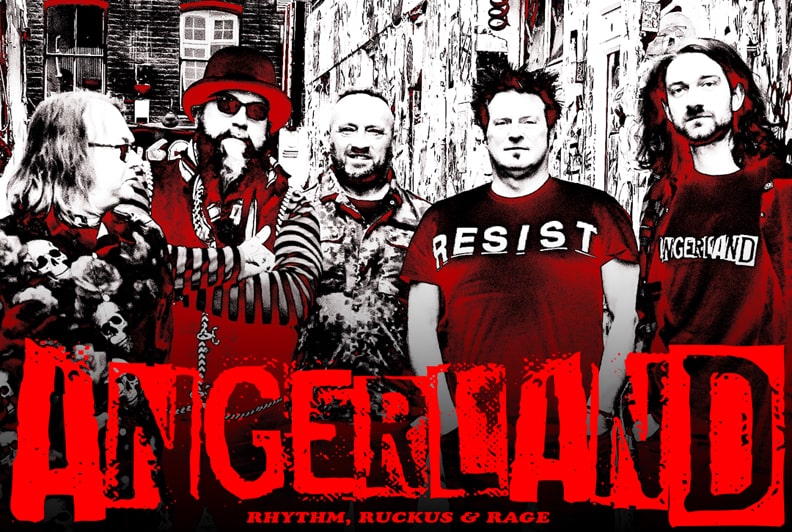
Angerland In this interview with Angerland, we explore the spark behind “Commit A Madness,” diving into its themes, creative process, chaotic visuals, and the fierce live energy shaping the band’s current era. 1. “Commit A Madness” feels like a call to arms for those who take risks and rise after every fall. What inspired the message behind the song, and how did it take shape musically? Kermit: We tend to write the same way. Someone brings a rough idea in. We knock it about, jam whatever feels right. Jon adds words and melody so he’s the man with all the messages. The arrangement is often the last thing to take shape depending on what feels like a chorus or mid 8 etc. 2. You quoted Alan Moore’s The Killing Jokein your announcement — “Madness is the emergency exit.” How does that idea connect with the themes or energy of the track? K: Good question! Jon? J: I guess it depends on what you think of as madness. Some might think it’s jumping off a cliff while other might think it’s forming a band and asking complete strangers to listen to your music! I see it as taking a chance, risking everything you have or hope for in that moment. Metaphorically jumping off that cliff and see how you land. 3. Your live history includes sharing stages with Evil Blizzard, Theatre Of Hate, and Ruts DC. How have these experiences influenced your sound or approach as a band? K: Made us hungry for more, I think. It’s been an amazing year. 4. The video, created by Paul Graham, adds a strong visual identity to the song. Can you tell us more about the creative process and how the visuals tie into the track’s message? K : Over to Paul P: The video was created using 14 different takes of live footage at various venues where the band played Commit A Madness during the show. These were synced to fit the studio recording and then graphics overlaid in a frenzied style to represent the confusion of madness. Some of the footage was treated as a duotone in the band’s red & black style and other graphics were created to enhance the confusion., including a video of the graffiti in Quadrophenia Alley, Brighton where the band were playing at the Piepline, a nearby venue. 5. “Commit A Madness” blends punk attitude with vibrant colour and noise. How do you balance raw aggression with melody and atmosphere in your songwriting? K: We just go with whatever feels right. If it ain’t broke don’t try and be clever. If it feels good and sounds right then that’s where it all should be? 6. You’re playing London’s legendary 100 Club in November. What can fans expect from your live performance, and how does this new single fit into your current setlist or era as a band? J: Lots of energy and hopefully a bloody big noise! K: We’re going to enjoy ourselves and hope everyone who comes along joins in. J: It’s a pretty iconic venue in our world so the challenge is to be the band people walk away talking about. Preferably because you’ve put on a great show rather than falling flat on your face! https://anger.land/
Hverheij
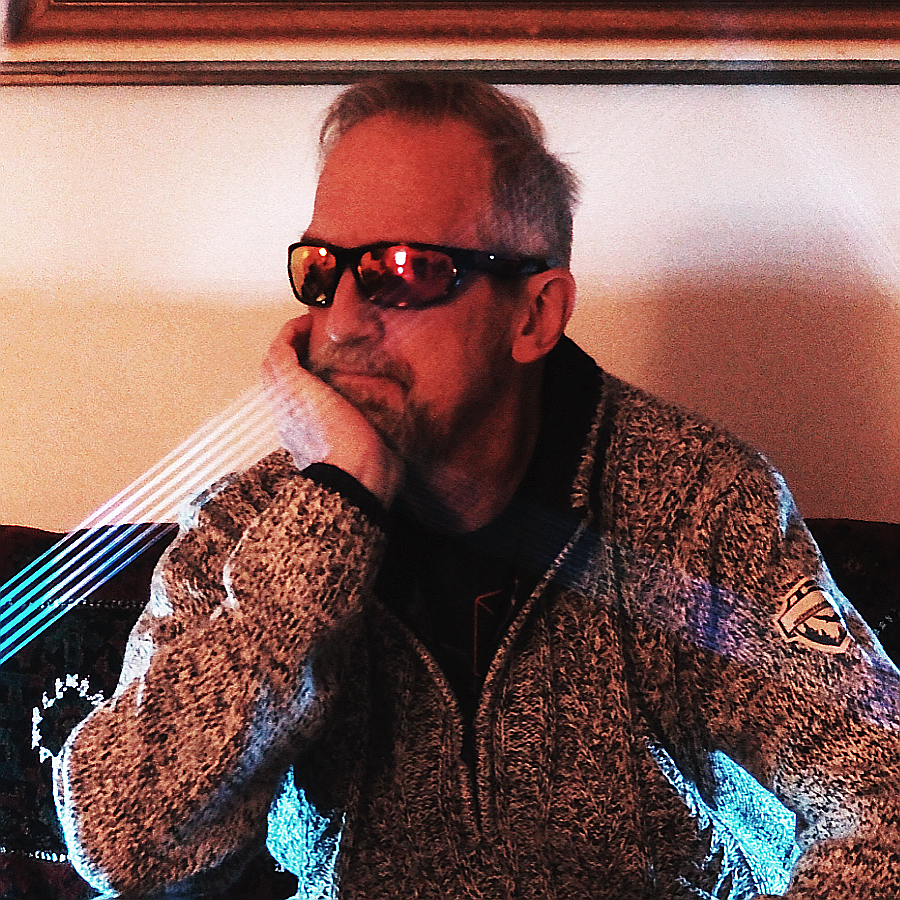
Hverheij Hverheij delivers a vibrant fusion of electronic, urban, and experimental sounds. “Mezmer Eyes” channels Vancouver’s dynamic energy, capturing city movement, color, and community through immersive rhythm and emotive production. 1. “Mezmer Eyes” captures the energy of inner-city life. What specific scenes or moments from urban environments most influenced the sound and mood of this track? Getting off sky-train rapid transit in the heart of downtown brings immediacy to Vancouver as a living inner city, where business people mingle with residents from the surrounding towers. The shopping district absorbs the hustle and bustle of traffic, pedestrians, and visitors. And from certain vantage points, the North Shore Mountains display a beautiful backdrop to all. So I would say it’s the lights, the noises, the movement, the vibrant colors mostly on sunny days. There’s a beat to it all – a pattern of artistry and rhythm that breathes with life. Seeing it is feeling it. Without consciously being aware, that rhythm plays to the soul of everyone who’s there – a strange understanding that links their lives and brings them together from over the miles. “Mezmer Eyes” captures all of these sights, sounds, energy and rhythm and shares that through the music. 2. The track blends electronic, urban, instrumental, and experimental elements. How did you approach balancing these genres while still keeping the song cohesive and engaging? It’s a funny thing that while working on it, the choices made to integrate the elements seemed to just click together as I went along; but thinking now about your question, it’s probably the percussion that kept things in check (probably also true of all the tracks on the album). On this track, the central beat was the first stem recorded, from which voice and all of the instruments followed in rhythm. I guess from that the heart was represented first and emotion followed, but only if you accept if those can actually be separated at birth. Can they really? 3. You used tools like the Arturia Mini Freak, Push 2, and MPC Live 2 in the production. Which piece of gear played the biggest role in shaping the emotional build-up of the song—and why? Keeping in line with my previous thoughts, if the MPC Live 2 delivered the heart, then I would say the Arturia Mini Freak provided the most colorful nuances to emotional buildup on this track due to the touch sensitivity of the keys and the playfulness of using the control wheels with plugins. Fun and easy to use. 4. The mastering process involved Michael Southard (Time Rival) and Triplicate Records. How did their involvement elevate the final version of “Mezmer Eyes”? Triplicate Records is a label that supports releases of all types of electronic music: ambient, idm, urban, experimental – you name it. So they encourage new directions, innovations, quality of sound and forward driven music, which is a good thing for me because my projects tend to go in many different directions from one album to another. When I forwarded the concept of this album to TR, they openly embraced it under the label’s banner for this release. I should add that my first ever album release was through Triplicate Records in Dec 2020 (a kind of 2020 vision), from which I have released numerous albums on my own, plus 7 additional albums – including the current one – through the TR label. It’s safe to say in general that all 3 founders of the TR label – that’s Michael Southard (Time Rival), George Ernst (Suncastle) and Bryan Kraft (BVSMV) – have taught me a great deal about music production and they have been very positive in promoting my work. Michael provided final mastering for Let’s Be Clear, including “Mezmer Eyes”, by taming the sharper edges and allowing highlights within certain frequencies to shine. The distorted guitar and tubular bells are prime examples on this track. Since Michael has mastered the majority of my own album releases, in addition to my TR releases, he has an intuitive understanding of my music and is able to bring out the finer nuances while enhancing fidelity in the music’s heart-of-sound. Over time, I believe Michael’s skill has taught me to be more precise in my initial pre-mastering work. I like to think that “Mezmer Eyes” is produced better as a song because of those things. 5. Your music often emphasizes positive energy and momentum. What emotions or reactions do you hope listeners experience when they first hear track 8 on the album? Exactly that. To feel positive about urban community, to experience a sense of being at one with it’s energy, and to embrace connection with a city’s internal rhythm, is an emotional response to that which encourages love, artistry, and freedom. Isn’t that what life is really all about? So when someone listens to track 8, I hope they can feel through the music all that gives those feelings light and life. 6. The album Let’s Be Clear explores unique rhythms and modern sonic shifts. What do you feel sets “Mezmer Eyes” apart from the other 11 tracks on the record? I hope an unbridled joy in the moment of where you are by viewing things in the best direction possible. The interconnection between community and individual I believe is felt most positively in this track through the eyes of the beholder. Musique | Hverheij
Salyse

Salyse Salyse returns with a deep house reimagining of “BARE,” blending vulnerability and movement. In this interview, she explores emotion, spirituality, and how the Sainte Francis remix expands her evolving sonic universe. 1. “BARE” was originally a soulful and intimate confession. What emotion or intention felt most essential to preserve when allowing Sainte Francis to reinterpret the track? “BARE” was originally a soulful and intimate confession. What emotion or intention felt most essential to preserve when allowing Sainte Francis to reinterpret the track?The heart of “BARE” has always been about vulnerability, that soft, trembling honesty that comes from letting someone really see you. Even with the shift in genre, I wanted the remix to keep that feeling of emotional nakedness. The tempo and texture could change, but the vulnerability had to stay intact. Sainte Francis understood that immediately, and built the entire remix around protecting that emotional core. 2. The remix transforms vulnerability into physical movement. How did it feel hearing your voice placed inside this deep, pulsing, club-driven soundscape for the first time? The remix transforms vulnerability into physical movement. How did it feel hearing your voice placed inside this deep, pulsing, club-driven soundscape for the first time?Hearing my vocals wrapped in this deep, pulsing world was liberating. It was like my softness became the heartbeat of the dance floor. The remix made the emotion feel embodied, like the confession could now live through rhythm instead of stillness. 3. Sainte Francis is known for blending deep house, disco, and underground club culture. What drew you to collaborating with him specifically, and what surprised you most about his approach?Sainte Francis blends deep house, disco, and underground club culture. What drew you to collaborating with him, and what surprised you most about his approach?House and disco have always been part of my musical roots; those sounds raised me, shaped my rhythm, and taught me that movement can be spiritual. So when Sainte Francis came across my TikTok FYP talking about the history of house music, it stopped me. The way he honored the culture and the lineage, it truly resonated with me instantly. I was impressed, and I felt this pull like “I need to work with him”.When I reached out, he responded immediately and with so much intention. The connection felt fated; the universe really did its thing!What surprised me most was how deeply he respected the emotional world of “BARE.” Instead of overpowering it, he built the production around my vocals and my roots. He understood exactly where I come from musically, what I am trying to achieve sonically, and expanded it in the most natural, beautiful way. 4. Your music often bridges soul, spirituality, and sensuality. How does this remix expand or shift the spiritual dimension of “BARE”? Your music bridges soul, spirituality, and sensuality. How does this remix expand or shift the spiritual dimension of “BARE”?The original was a poem whispered in someone’s ear during pillow talk. The remix feels more like a release, a surrender of whatever you’ve been holding onto. It adds a communal, ritualistic layer to the spirituality of the song. Instead of one-on-one intimacy, it becomes a collective moment where bodies, breath, and bass create their own kind of communion, but all working together to move your vulnerability and welcome it. 5. The remix invites listeners to ‘let go’ and experience emotional release through dance. What kind of space or experience do you hope this version of the song creates on the dance floor? The remix invites listeners to let go and experience emotional release through dance. What kind of space or experience do you hope this version creates on the dance floor?I hope it creates a space where people can feel free inside and outside themselves, to sweat out the bad vibes, to feel sexy and soft at the same time, and to dance without performing. I want it to be a safe space to release and heal. Imagine a room where the lights are low, the bass is warm, and everyone is allowed to be both powerful and vulnerable without any judgment at all. 6. This collaboration feels like a step into a broader sonic universe. How do you see “BARE (Sainte Francis Deep House Remix)” influencing the direction of your future music? This collaboration feels like a step into a broader sonic universe. How do you see “BARE (Sainte Francis Deep House Remix)” influencing the direction of your future music?Honestly, this was the plan all along. My next single, coming at the top of the year (stay tuned), and the music I’m creating for my debut project all live in this world of house, disco, deep groove, dancehall, and SOUL. I’ve been leaning into music that speaks to the mind, body, and spirit, and also at the same time to rhythms that move you, lyrics that open you, and sonics that feel like ceremony and release.So this collaboration with Sainte couldn’t have come at a better moment. It aligned perfectly with where I’m headed creatively. It feels like the universe gave me a little wink, like “yep, you’re on the right path.” And trust, this won’t be the last time you hear from this duo. We’ve unlocked something special, and there’s more fire on the way. Home | SALYSE
Marc Soucy
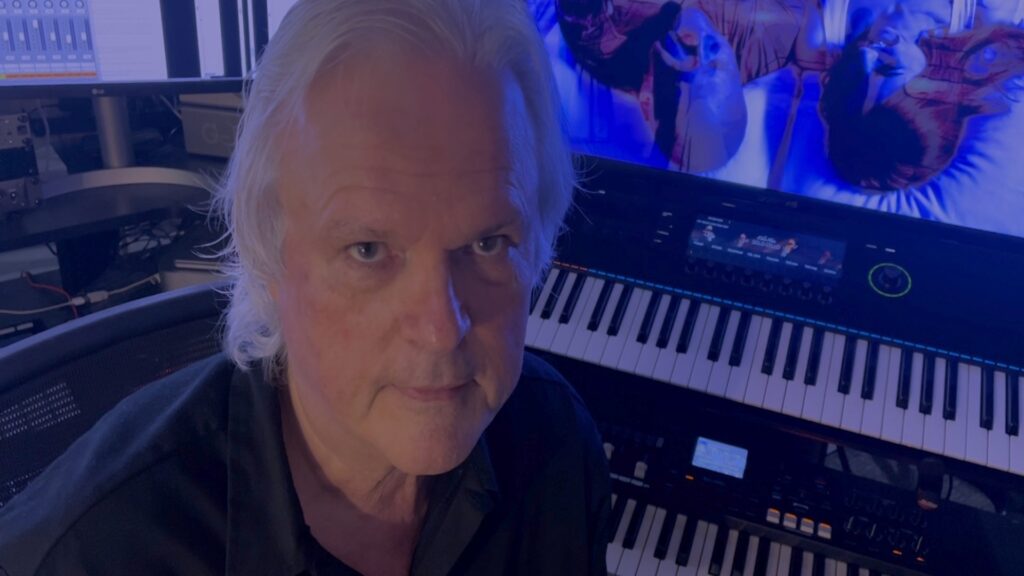
Marc Soucy This interview explores Marc Soucy’s creative world—his “mini soundtracks,” genre-blending compositions, lifelong bond with technology, and the visual dimension that shapes his immersive musical journeys and ever-evolving artistic identity. 1. Your work is described as “mini soundtracks” that blend world music, electronic elements, and cinematic storytelling. When you begin composing, what usually comes first—an emotion, a visual scene, or a musical motif? I begin by coming up with a musical motif. If I like it from a pure musical perspective, I’ll start to compose additional parts. As I’m doing it, it feels to me like I’m improvising. I have really good recall of music I’ve encountered my entire life, and I’m quite sure snippets of them all make their way into my thinking as I’m working. I believe this is how authentic music composition works anyway. Originality has become truly fragile and difficult to achieve, since so much has been done and is being done now. I do have the advantage of having studied classical piano for my entire childhood. This gives me a sense of structure, execution, and knowing when something’s right, even if it has nothing to do with classical music. My growing music catalog is made up of many different mixtures of styles: unpredictable, and hopefully emotionally provocative. Getting back to your question, once the musical piece has developed some, I start to examine how it makes me feel, and what visual events might accompany that feeling. Is it ominous? Is it tense and stressful? Is it loving and nurturing? Is it surreal and otherworldly? …and on and on. This thinking gives me a direction to continue developing the piece and the concept I want it to convey. Once many of them were done, the pattern for me became “mini soundtracks”, because of the twists and turns each piece can take as it progresses. 2. You’ve been connected to music since childhood and have witnessed the evolution of music technology from the early days of MIDI to today’s digital tools. How has this lifelong relationship with technology shaped your creative process and the sound of your recent releases? That experience with both music studies and music technology has allowed me to progress beyond what the normal approach to this technology is. As I said, I have a very improvisational approach to this, and finding “that sound” I think I need in a given passage is part of the process. I never let the sound library dictate anything. That’s not my thinking at all. I’ve been asked what sound libraries I prefer. I own seven or eight of them, plus a couple dozen virtual instruments, besides my keyboard rig. I find and use a sound without committing my self to any specific approach or formula on how each thing is used. This gives me even more freedom to create what I hear in my head. The sound of my recent work is indicative of this process. Electronic sounds often appear almost anywhere, or a keyboard instrument from recent history—say a Mellotron or a Clavinet—might appear suddenly. Just because it captures the feeling for that moment. On top of all that, overall, I use organic “acoustic” sounds even more often than the electronic ones. Violin, trumpet, cello, string sections, French horns, tin whistles, you name it. Mixing it up constantly, and never sitting still with a style is what I’m all about. 3. Your compositions often feel like immersive journeys with influences from classical, rock, jazz fusion, world music, and more. How do you approach merging so many genres into a cohesive piece while still maintaining your unique artistic identity? That question is a good one, and also a hard one to answer accurately. I guess I simply refuse to follow ANY of the “rules” out there about how to arrange a song. Any piece of mine might start with a minute long soundscape and suddenly erupt into a dynamic musical thrust. A minute later, it might become introspective, or awe inspiring. It could go silent and crawl its way back. If anyone wants me to “get to the point” or “where’s the hook?” forget about it. You won’t get that from me. I am not a creator of “popular music” in any form. I might touch upon it briefly here and there, but that’s it. 4. Each track is accompanied by a music video and often carries elements of sci-fi, surrealism, or spirituality. How important is the visual dimension in your artistic vision, and what role does it play in deepening the listener’s emotional experience? Creating my music videos is my hobby, whereas music itself is my art. Let’s be clear about what my intentions are. I consider my music “sync ready” and I am working to make it so for the entertainment industry. That said, I see the videos as just one possible interpretation (among many) of what the music implies. That “mini soundtrack” concept really kicks in when you watch the videos. Most listeners have a much more immersive experience when they watch them. The industry people may have little use for my music videos, but the public might. Plus they are fun to do. 5. Reviews have compared your work to cinematic giants like Hans Zimmer and Max Richter, yet highlight that your sound remains unmistakably your own. How do you navigate the balance between recognizable influences and forging a distinct personal signature? I keep my distinct musical signature my being free of any rules. That constant exploration, and willingness to add another style to any piece is my approach. I never sit still in a given genre or sound. There are many very gifted music artists and composers out there that can cross stylistic boundaries, and really master them at a level that I can’t. I listen to people like that for enjoyment. For me though, it’s all about the constant change and unpredictability of my music that keeps it “me”.. You can’t listen to ANYTHING that I’ve done, and assume
Eastar and Karlie

Eastar and Karlie Eastar and Karlie discuss their collaboration on Moonlit Dreams, a late-night, cinematic pop track capturing freedom, emotion, and that magical 3 AM feeling, exploring creativity, chemistry, and the power of musical connection. 1. Moonlit Dreams feels like a song about freedom and that late-night magic where time stands still. What inspired the idea behind the track, and how did it come to life in the studio? Eastar: First I had the beat and gave it to Karlie to write the song. Karlie: I immediately felt the world of it — that clean, late-night vibe. We didn’t force anything; the topline came fast. It had that “everything quiet, mind awake” energy from the start. You know what I mean? 2. Eastar, you mentioned that Karlie’s vocals gave the song the emotional edge you’d been searching for. Can you both describe that creative chemistry between you? What makes your collaboration “click”? Eastar: Karlie is easy to work with and open for ideas and suggestions. Honest if she likes it or not. Karlie: There’s a lot of trust between us. We both show up with good instincts and no ego, so ideas move fast. He creates a world I can step into, and I know I can try things without overthinking. That’s why it clicks. 3. The song captures that special 3AM feeling — where the night feels endless. Was there a real-life moment or memory that shaped that mood? Eastar: I had to dig back in my memories, but then I remembered a moment when I was young and went back to my grandfather’s village, Seri, on the island of Ambon, Maluku. I remembered the big clear full moon in the dark sky at night — almost unreal. Karlie: For me it’s that mix of calm and focus you get when the world goes quiet. Especially surrounded by close friends and family. A twirl is your stomach, that feeling of happiness. Those moments always feel a bit cinematic, and that mood ended up shaping the whole track. 4. Karlie, this single is part of your upcoming debut album, which Eastar is also producing. How does Moonlit Dreams fit into the bigger story or sound of your album? Karlie: It’s part of the lighter, more fluid side of the album. The record has depth, but it’s not heavy — it’s confident, sleek, emotional pop. Moonlit Dreams shows that late-night clarity and freedom that runs through the whole project. And ofcourse it’s so special to have this collaboration with EASTAR on the album. To work together on another level. 5. Two weeks after Moonlit Dreams, you’ve released the See Her (EASTAR Remix) — a deeper, late-night version of an earlier single. How does the remix transform the original, and what do you hope listeners feel when they hear it? Eastar: I wanted to create a more danceable club version of the song, which is more pop. Karlie: The remix takes the message from reflection to release. It’s the See Her world — but turned up, brighter, faster, louder. It even touches that late-night rave feeling. It’s the kind of freedom where you stop thinking and just move. The best feeling 🙂 I hope listeners will feel that vibe. To feel strong, powerful. Like an anthem for self love. 6. Both of you seem to blend emotion and nightlife energy in your music — that mix of vulnerability and freedom. How do you balance those two sides when creating? Eastar: I follow my heart and feeling, hoping to inspire Karlie to finish the song. Karlie: For me it’s always about balance. The track has energy, but it never loses emotion. That’s the sweet spot — pop you can feel, the kind that makes you move but makes you think and feel as well. THIS IS KARLIE
The Mikols/Goble Project

The Mikols/Goble Project The Mikols/Goble Project began when Karl Goble discovered Philip Mikols’ music online, sparking a faith-driven collaboration that merges diverse styles into heartfelt, soulful songs filled with meaning and musical ingenuity. 1. This collaboration started from a simple online message. Can you walk us through that first connection and what made each of you feel that this partnership was worth pursuing? Philip: Karl sent me a DM saying that he found my music online and if I would be interested in doing a collaboration. I checked out his Cosmic Silk Project and responded by asking him to send me some demos of what he had in mind. The first song was Under the Wings and I thought it had potential. Then he sent me Much Wiser Than That Now, and I said, “Let’s do this.” The lyrics to Much Wiser Than That Now really hit home. Any man who has been through the wringer in life can instantly relate to this song. Karl: When I first thought of collaborating with Philip, I was thinking lyrics. Wow, was I surprised! He sent me back this music that caused my heart to leap. I mean, you don’t get a chance to play with this caliber of musician, but maybe once in a lifetime if you are lucky. So, Philip wrote me, let’s do an album. Here we are now with an album. 2. Your musical backgrounds are vastly different — from folk and gospel to classical and progressive rock. How did you approach merging these styles without losing the essence of what defines you individually as artists? Philip: It all starts with a good song, and the song itself will dictate what needs to be done with it. No amount of technical wizardry and virtuosity can fix a bad song. Many of the songs I actually reworked to be much simpler than what was on Karl’s demos. With the simpler chord progressions and song structures of Karl’s songs, it gave me the opportunity to do some interesting things that I don’t normally hear in this genre of music. Things like using different chord voicings and chord inversions for each section of the song instead of playing the same thing each time. Plus, I was able to let the bass take a lead role in many songs by playing subtle counter melodies throughout the song. Karl: I never really thought about our styles merging. I just think of it as two musicians improvising and having a great time doing it. 3. Faith appears to be a central thread in both of your creative identities. How does your shared spirituality influence the themes, lyrics, and emotional direction of your music together? Philip: It is all for the glory of God. Our coming together for this project was quite a synchronicity. I have released seventy-four of my own instrumentals and was working on some new ones but was not feeling very inspired. I was thinking that I would like to do something really different with someone else, and shortly thereafter, Karl’s DM showed up. Karl: Well, I pray a lot and count my blessings just for being in life with God. The ideas come straight from Him, and they are all His songs. If God doesn’t write it, I can’t. I personally believe God brought us together for such a time as this. 4. Karl, your songwriting often feels deceptively simple on the surface while carrying deep meaning underneath. How did Philip’s arrangements and instrumentation help expand or reinterpret the messages in your songs? Karl: I write the songs, the basic melody, and send them to Philip. He interprets them in what ever way he does. Philip may ask for more lyrics to be added, but usually when I send a song to him it develops. I write by feeling, and that feeling comes from God. 5. Philip, you come from a classically trained perspective with a strong focus on composition. What was it like adapting your instrumental style to complement Karl’s storytelling and vocal approach? Philip: I am actually not a fan of any of the genres that Karl writes in, but there was something very unique about his songwriting that really appealed to me. There was a lot of really good raw material to build from. I started putting some backing track ideas together and found myself having way too much fun with them because I have never done anything with this style of songwriting before. It was really easy to adapt my compositional style to Karl’s songs because they are just so good. I was able to do something with them outside of the same, tired old pentatonic and blues scale licks. “Honest With You” is a song that is really different from Karl’s original demo. It was a techno rock song, but I started playing around with 7th and 9th chords, and it became a 1970’s style “yacht rock” song and is a favorite of mine. The mood of the song really fits with the moody lyrics. There were little bits and pieces of melodic ideas in the demo that I was able to develop more fully, and am really pleased with how that song came out. 6. As this project continues to grow, what can listeners expect next? Are there themes, sonic directions, or messages you’re excited to further explore in future releases? Philip: It is anybody’s guess as to what comes next. There are a few of Karl’s demos that did not make it on this album that I will be revisiting. I also have a few musical ideas floating around in my head that would work with Karl’s lyrics and voice. Karl: God is in charge, so I just hang on. Cosmic Silk Project Musique | Philip Mikols
Vanessa Tottle

Vanessa Tottle Trip Hop singer, songwriter, and producer Vanessa Tottle opens up about her deeply personal track “Can I Go Now?”, sharing the grief, memories, and creative process that shaped its haunting beauty. 1. “Can I Go Now?” was written after the passing of your mother-in-law and described as a love note to your four children. What moment or emotion first pushed you to sit down and write this song? Ma passed on a Monday, my husband had travelled to be with family to help with arrangements. I had been told that her last words were can I go now? Or to that effect, and so when no one else was home I sat on the couch to take a moment and the words just came to me. I started to write them and after the funeral I shared this with my husband who in turn passed my phone around the table for them to read. That’s where the song sat for a year before I recorded the vocals, it was too much to deal with even after that year! 2. You chose to keep the tremble in your voice during the recording. How did embracing that rawness shape the track’s emotional impact and your own connection to it? With songwriting and singing it’s a great vehicle for the grief train and I was riding that train daily so for me to keep that rawness – it was easy! It was a good outlet for me, it was about a struggle with an illness that took Ma in 3 short brutal years – yet this track needed to be beautiful, a love letter. 3. The song references sand and uses vintage-style vocals with subtle reverb. How did you craft the sonic atmosphere to reflect June’s spirit and the story you wanted to tell? Waihi Beach is where all the family would congregate for years and she simply loved life at the beach, my daughter and all of the cousins have memories as well as her own children of being on the beach and Ma going in for a swim herself. The vintage style for me was about how I saw her – an English rose born in Wales and when I think back to the stories we would discuss over tea and Coronation Street, it just felt extremely fitting to have that element in the songs creative process. And who can say no to a subtle reverb? Can I Go Now? de Vanessa Tottle 4. Trip Hop isn’t always associated with deeply personal narratives. How do you balance intimate storytelling with the genre’s dreamy, atmospheric production? One of the many things I love about Trip Hop is its ability to let you be expressive – with the music, and lyrics. With it being a blend of different elements, R&B Regge, Electronica, Soul, Jazz – I find it easy to translate it into Trip Hop together with my strong vocals – I feel the music I create and I hold the lyrics to it and constantly check if this is staying the course, kinda like a Jedi knight I feel the genre flow through me, its a surreal euphoric feeling – does that sound weird ha! I also have other songs that are a little faster, different shape but they all fall under the Trip Hop genre. With every song I create there is a story, even with the instrumental tracks I produce for Radio Trip Hop Brazil – in my head there are full length videos playing – if only money was no object! 5. You’ll be performing “Can I Go Now?” live in Brisbane at the Stone Corner Hotel. What can listeners expect from hearing this song in a live, open-mic setting compared to the recorded version? They can expect a strong performance and from someone who has had to battle the grief journey since 2023. That emotion will certainly still be there as the anniversary of her passing will be the next day. Hopefully they can connect with me through my set and come for a chat afterwards – perhaps my journey can help someone else. 6. This is your final release of 2025. After such an emotionally significant project, what direction do you feel your music and creativity will take moving forward? I am staying the course on my musical journey. I am very proud of myself for staying in the Trip Hop genre even though not classed as mainstream. I have never been one to follow the pack so it’s fitting I have fallen into this genre. A few people including my sound engineer has said to me “you can tell this is your work, there are certain things you do with the production that is signature”. Those comments are unreal but I am so grateful to be seen as that – one of my aims is to be seen more, so thank you for allowing me to answer questions on your platform. I have my release plan locked till March 2027 with more songs to produce and write. My next single to be released is in February 2026 and I can’t wait to share that with everyone. Vanessa Tottle Music (@vanessa_t_music) • Photos et vidéos Instagram
Stray Planets
Stray Planets Stray Planets return with Are You Real, Cristobal Leedy?, an EP blending surreal humour, nostalgia, and digital-age unease. In this interview, they explore inspiration, collaboration, and the art of feeling unreal. 1. Your new EP Are You Real, Cristobal Leedy? feels like both a continuation and a reinvention of your earlier work. How did your creative process evolve between Messed Up and this new collection? I don’t think there was an evolution in my own creative process, maybe a slight evolution in the nature of my collaboration with Rian (in so far as we know each other better). ‘Artificial Love’, for instance, is based off a very early instrumental I recorded before I learned to write lyrics. ‘Hallucinations’ started as a melody/chord progression hummed/played into my phone drunk four years ago. Stuff often evolves in a non-linear, vague way, for me anyway. 2. The EP’s title track reflects on “the strange unreality of making art in the algorithmic age.” What inspired you to explore that tension between authenticity and artificiality so directly? That track was inspired by a YouTube comment from a probable bot called Cristobal Leedy that read, “Truly astonishing beat and music”. The idea of someone obsessing over whether a person who likes them is real or not, wishing they were, knowing they’re probably not, appeals to me. Probable bots often pop into my Instagram inbox telling me I’m great, likely trying to scam me, and on some level I think I’m happy to be scammed as long as they keep the compliments coming. It’s amusingly tragic also to contrast love from bots with the indifference of real people. My primary fanbase at the minute are TikTok dancers looking for paid collaborations, showering me with generic praise. Part of me wants to see what an “Hallucinations” TikTok dance would look like and a greater part of me wants to bring them all together and form a TikTok dancer supergroup. Alas, Instagram forbids me from responding, some kind of protective scam blocker thing I cannot override. Reminds of the time I got a telemarketing call about toothpaste where I effused about the aesthetic beauty of Aquafresh and in the end it was they who wanted to hang up. Also, Cristobal’s photo looks real so maybe he is real. I really hope he is… maybe… well maybe not now at this stage. Also, I always like the idea of giving pathos to non-living things. I anonymously wrote songs about pasta sauces once and found I could empathise with the crappy ones perpetually on special offer. 3. You’ve described Your Revolution as a song about AI’s inability to suffer — which is such a fascinating concept. How do technology and emotion intersect in your songwriting? Not sure how technology intersects with emotion — every song I write is based on some emotion though. I find they’re no good otherwise. That song suggests that the constant low level anxiety of being alive is a privilege/power we humans will always have over our would-be robot overlords. Not sure if that paints a bleak picture or not. 4.“Hallucinations,” featuring Dara Kiely of Gilla Band, has this vivid, technicolour energy. Can you tell us how that collaboration came about and what Dara brought to the track’s vision? I’ve known Dara a long time, first met him when he was a kid doing work experience in the now defunct Asylum Studios. He liked my early anonymous food-based material, initially not being aware it was me. Dara’s voice is great, sort of like a damaged crooner. In the studio, he has great instincts, and is very discerning, more so than me. I quite like the Care Bears movie soundtrack for instance (I wrote that in jest and am right now listening to said soundtrack assuming I liked it but it is in fact quite bland). 5. Your music often feels like it’s time-traveling — weaving elements from 60s psychedelia to futuristic synth textures. What eras or artists most influenced ‘Are You Real, Cristobal Leedy?’? Rian would mention some of MGMT’s recent work as a production reference, though I’m not sure how much of that came through in practice. He’s generally drawing on a vast palette. I think I was trying to write a post-modern surf song a la “Bros” by Panda Bear with “Your Revolution” which you can sort of hear in the verse melody maybe. The chorus melody is a bit Sonic 2-ish I think though. From a songwriting perspective, I’m generally drawing on lots of things unconsciously, and always I suppose indebted to my old faves from when I was starting out — Cole Porter, Burt Bacharach, Ennio Morricone, High Llamas and such. 6. You’ve said you make the kind of music your 19-year-old self would want to stumble upon. What do you hope today’s 19-year-olds feel or discover when they hear this EP for the first time? I just hope they like it. I genuinely don’t know if there are any 19-year-olds out there like 19-year-old me. I sort of hope not, for their sake. strayplanetsmusic | Instagram, Facebook | Linktree
Martyrs
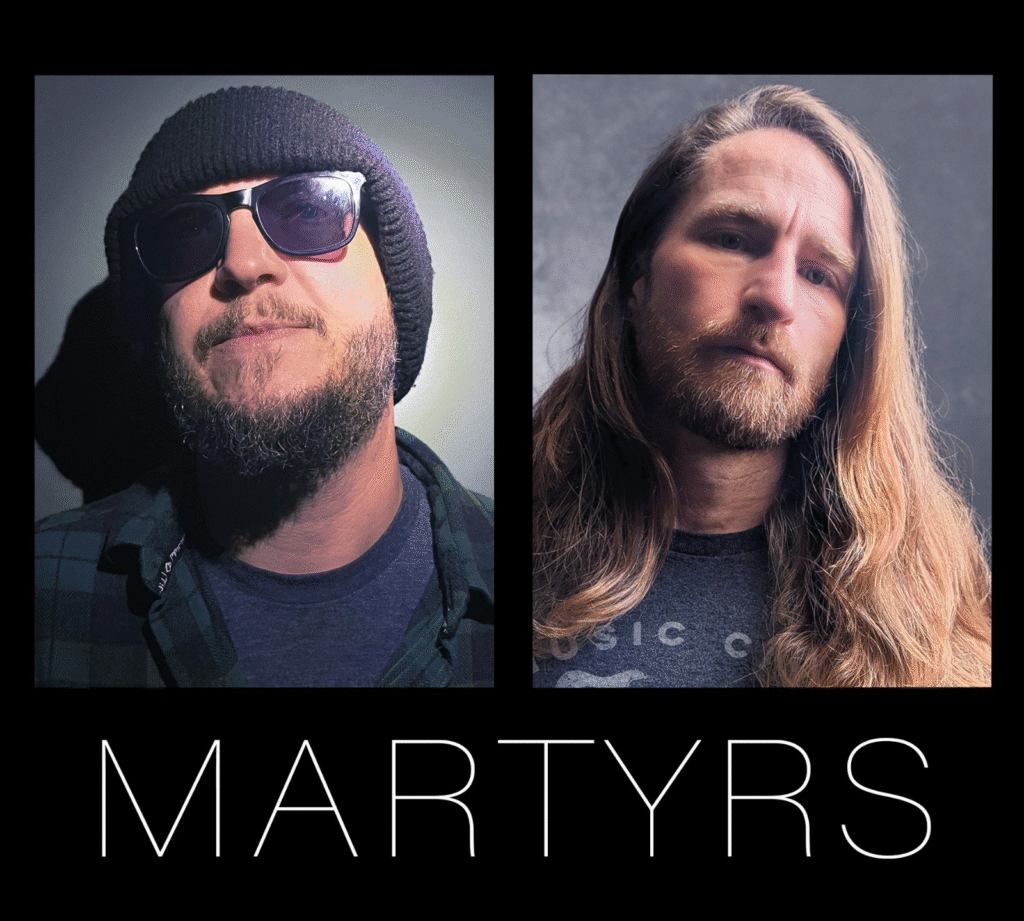
Martyrs Martyrs return with Halloween Dream, a haunting fusion of nostalgia, folklore, and DIY artistry. Michael Hall dives into the EP’s eerie inspirations, evolving sound, and the duo’s ambitious ten-release journey. 1. Your new EP, Halloween Dream, feels steeped in atmosphere — equal parts nostalgia, melancholy, and magic. What draws you to the autumnal and supernatural imagery that runs through these songs, and how does that connect to your broader creative identity as Martyrs?I think growing up in Wales, which is steeped in folklore and mysticism,was the seed of the obsession. Also, writers like Algernon Blackwood and MR James, then more modern authors like Susan Hill and Stephen King instilled a desire to make strange art, that has something more beneath the surface, something unexpected. There’s definitely a darker side to what we do, and that’s informed by the kinds of books and films we grew up with, the kinds of art I still enjoy now. Giallo movies, folk horror, gothic literature…I think there’s comfort to be found in the strange and eerie, and there’s a great deal of humanity to be found in a lot of horror writing – you look at how Stephen King or a filmmaker like John Carpenter can depict community and relationships in the face of terror and it’s quite beautiful. It’s not like we brand ourselves as a folk-horror band or anything, but elements of that are often found in what we do. Nostalgia seeps into everything I think, and we all have a different relationship with it. I think it features quite prominently for Jon and I simply because we grew up together and we share the same reference points both culturally and with regards our home town, Merthyr Tydfil. I think the melancholy element is just part of being Welsh to be honest. 2. You’ve recorded, mixed, produced, and even filmed everything yourselves — an impressive commitment to the DIY ethic. How does total creative control shape the final sound and feel of your music, and do you ever miss the outside perspective that comes with working in a studio or with a producer?It means we’ve no-one else to blame, which is unfortunate. I think the complete DIY approach is essential to the band. We wouldn’t be doing any of this without it. Neither of us had any interest in starting a band in the traditional sense, dealing with egos, losing endless money on shows no-one goes to, trying to make music to please other people etc. etc. So if you have no interest in doing things the traditional way, you have to do everything yourselves. I’ve always admired DIY scenes, and I’ve been lucky to be a part of them a few times in my life, making zines, putting on shows. I’m a strong believer in that ethic. We may not sound much like Minor Threat or but I certainly love them and have definitely learned from them and similar artists who take responsibility for their work and how it’s both conceived and released. The way we’re working though, if it has a downside, it’s that we’re doing all the work but we’re not really a part of a broader community, aside from conceptually or in terms of other artists we meet online who work in a similar way. We’re very much on an island. Artistically, we try to entertain one another, surprise one another, and that’s the only approval we need to move forward. I trust Jon’s instincts, I think he trusts mine, so we’re golden. Obviously there are benefits to working in a studio and working with an outside producer, but I think Jon’s production is phenomenal and we’re pretty stubborn about doing everything ourselves. It’s just not in our collective DNA to do it any other way. The way it ultimately shapes what we do is that we end up making very specific music that could only come from us, it’s got our personalities all over it, for better or worse. 3. You’ve mentioned that Delta Rain and October Kind mark a shift toward acoustic textures and more impressionistic writing. What sparked that evolution, and how do you balance this new warmth with the electronic and experimental edge you’re known for?Jon bought a new acoustic guitar. It was all downhill from there. We always want to try new things. We give ourselves room to try whatever we want – metal songs, ambient stuff, sound collage, disco…and doing something more traditional, more organic, that’s also experimental to us. Hearing the music Jon was putting together, I wasn’t moved to write the kinds of characters or narratives that usually populate our songs. I was inspired to say something personal, albeit in quite an oblique way. It became about conjuring atmosphere as a way to express emotions that are very hard to pin down in a literal sense. I think Jon is able to balance the organic and electronic very well, he’s able to keep an eye on both angles and that’s given us the opportunity to widen our sound. Halloween Dream EP de Martyrs 4. Your reimagining of The Man Don’t Give A Fuck is both reverent and radical. As lifelong fans of Super Furry Animals, how did you approach deconstructing such a cult classic without losing its original spirit — and what made this song feel relevant to reinterpret right now? I think it’s the right time for protest songs for so many reasons. The rise of fascism, the entropy of late stage capitalism, the kind of power the wealthy wield over the population…these are big topics, overwhelming. But because TMDGAF is a sort of multi-purpose protest song, it gathers all that in one place. You’re angry at everything, frustrated, so you want to lash out, and this was a good way to do it artistically. We’ve both loved Super Furry Animals since we were kids so it was a perfect choice for our first cover. Gruff Rhys from the band gave us a shout-out when we released