
Dick Cole
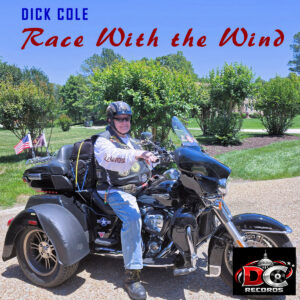
In this interview, Dick Cole discusses his passion for motorcycling, his experiences in Vietnam, and the life stories, freedom, and adventures that inspire his songwriting.
1. Your music draws heavily on motorcycling, biker culture, and the people you encounter along the road. What inspired you to make these subjects such an important part of your songwriting, and how do your personal experiences shape the stories you tell?
I found that there wasn’t a lot of music being written and recorded by motorcyclists for motorcyclists. Many of the themes of my music are things they can identify with — especially some of the people I meet on the road — and that’s what got me started in that direction. So, I try to tell stories about speed, curves, scenery, smells, the freedom of riding, “knees in the breeze,” and the pleasures of a cold beer at a biker bar. I love storytelling and I hope I am crafting songs that will endure.
2. One particularly personal song reflects your experience as a 19-year-old Air Force medic flying helicopter rescue missions in Vietnam under the radio call sign “Pedro.” What motivated you to revisit this chapter of your life through music, and what does sharing that experience mean to you today?
I wrote the song “Pedro in the Fireline” because, at the time, we were creeping toward Memorial Day on the calendar. I often think of my experiences in Vietnam and how lucky I am to be here. We Vietnam vets are the “old fogies” now. Many younger folks don’t know much about our experience in Vietnam except that there were a lot of protests and it caused a resumption of the draft. Also, Maj. Gen. Walter S. Hogle, Jr., who was my pilot on those missions as a captain passed away last year, and I’ve thought a lot about “Woody.” I missed working for him in the Pentagon by only a few weeks. I retired in 1992. Had I known I would have had the chance to work with Woody again, I would have stayed in the Air Force longer.
3. You’ve lived an eventful life as a military officer, pilot, photographer, published author, and motorcyclist before focusing on recording your own songs. How have these different experiences influenced your musical identity and the way you approach songwriting?
I was writing poetry beginning in high school. I found poetry and writing, in general, the easiest ways to express myself as an awkward teen. I continued to write through the years until it eventually became my job. Beginning in elementary school, I also was learning to play music. First there was the clarinet and saxophone. Then, after The Beatles appeared on Ed Sullivan’s show in 1964, I switched to drums. In high school, I played in the concert band, stage band, and marching band. I had to take piano lessons to help learn how to play the xylophone for concert band. Then, while stationed in the Philippines in the mid-70s, I bought an acoustic guitar and took lessons at the recreation center on the base. From the early 2000s for 20 years, I played and sang as a drummer in a succession of Northern Virginia cover bands. While doing so, I also studied bass guitar to make me a better drummer with my primary partner in creating the groove. The music started flowing then, when I had the multi-instrumental skills to be able to write, and other musicians to bounce my ideas off of. I stopped gigging regularly six years ago but still get together with musician friends to gig in my home every week. We record those sessions and it has been a good vehicle for trying out some of my music. They’ve also helped me in recording my songs.
4. Your music has found radio support in several countries, including the UK, France, Germany, and Brazil, yet gaining airplay in the United States has been more challenging. Why do you think your music connects more easily with international audiences, and what obstacles have you encountered in the American radio market?
Some of those foreign countries speak English, but many do not. I’m not sure if it is simply the melody and rhythms that have gotten my music played on radio overseas or something else. It would be nice to think that the lyrics and emotions in my music resonate with them, too, but I don’t know if that is true. I know radio has certainly changed in America over the past 25 years. (I was a DJ on a commercial radio station during my college days.) There aren’t many independent artists getting signed to record labels and the major labels aren’t spending big money to record or promote artists. Many artists are paying all of their expenses themselves and hoping to recoup that investment in touring. That’s why so many major artists are on the road all the time these days! I’m hopeful I’ll make it someday, or that one of my songs will be re-recorded by a major artist, proving the quality of my songs.
5. Motorcycling and biker culture are central themes in your work, but they also carry a strong sense of freedom, adventure, and community. Do you believe these themes can connect with listeners who have never ridden a motorcycle, and how do you make your songs relatable beyond the biker community?
I think people who aren’t active in the biker culture can still identify with the themes of freedom, adventure and community; however, the songs were really written for bikers. That’s my niche!
6. After spending many years playing drums with cover bands in Northern Virginia, you’ve developed your own material as a songwriter and recording artist. Looking ahead, what would you most like to achieve with your music, and what kind of feedback or opportunities are you hoping this latest release will bring?
I would love to get some of my songs into films and TV or, as I said before, recorded by a major artist. Songs like “Bring Back the Republic,” or “Brothers and Sisters of the Eleventh Hour” would be great on the radio performed by a contemporary country artist. Those themes resonate with country audiences, and, although I write the songs as more country rock, there are a lot of crossovers these days and I think some of my music would be a great fit.