
El Cachivache
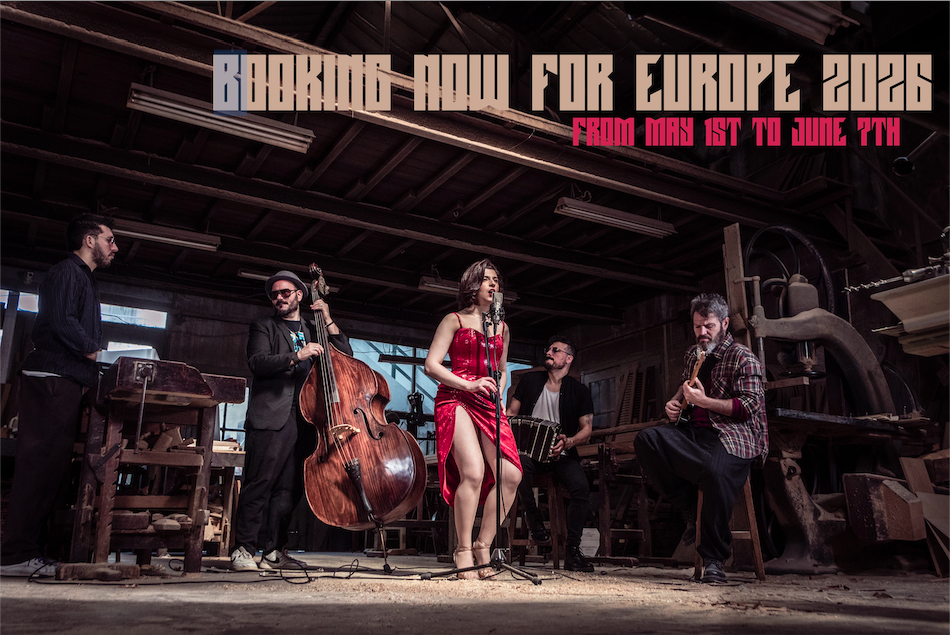
Blending rebellion with tradition, El Cachivache reinvents tango through humor, energy, and raw emotion. In this interview, the band reflects on their “tango punk” spirit, new album, and ever-evolving journey.
1. Your music has been described as “Tango Punk” — a blend of tradition, rebellion, and raw energy. How did this sound come to life, and what does it mean to you to reinterpret tango in such an unconventional way?
The term tango punk actually came from the audience, not from us. For us, this way of playing is something natural. Tango coexists with our other influences: rock, punk, heavy metal, but also jazz, bossa nova, and many different musical and cultural backgrounds that shaped who we are.
Our approach is about freedom — not treating tango as something fixed or untouchable. We let it mix, evolve, get influenced, expand. People started calling it tango punk, and we actually like that label, because it describes the attitude behind the music rather than a strict genre.
2. Your new album, “Justo a Tempo,” leans back toward traditional tango. What inspired that direction after years of genre-blending experiments? Is it a return to your roots or another playful twist?
Our latest album, just released, is called “Dance Me to the End of Noise.” It features 11 tracks: four original compositions, five reinterpretations of classic tangos, and a version of Leonard Cohen’s “Dance Me to the End of Love.” The title plays with that idea of love and noise, which really captures the essence of what we do.
We’re very happy with this new release and with the response it’s been getting both within the tango community and from new audiences as well.
3. You’re known for mixing humor and theatricality into your live shows — the “modern buffoons” of tango. How do you balance that sense of fun with the deep emotional weight that tango usually carries?
That’s a great question. Maybe because of its dramatic nature, tango can sometimes turn into a bit of a caricature of itself. We do feel the drama — we live it with depth and passion — but we also believe that music should be enjoyable, playful, and surprising. It’s live music, it’s a show, it’s energy — there’s humor there too.
And of course, not all tango is dramatic. Tango also has joy, festive milongas, dance rhythms, and space for our own compositions, where different colors and emotions appear.
In the end, I think it reflects that well-known phrase: “tango is a sad feeling that you dance to.” And we like to live exactly in that balance between deep emotion and the joy of playing.
4. El Cachivache has become a symbol of the “new tango scene” in Buenos Aires. How do local audiences react compared to international ones? Does the meaning of tango change depending on where you play?
The audience in Buenos Aires is different from the audience in New York or Tokyo. Each city has its own way of listening, feeling, and responding to music.
In Buenos Aires, tango is part of everyday life — part of personal and collective identity. So people listen with a lot of emotion and a very intimate connection.
In New York, the reaction is more about curiosity and openness — there’s a strong interest in discovering something new.
And in Tokyo, what always impresses us is the attention. People listen with deep focus, as if every detail matters. It’s a quieter connection, but just as powerful.
Experiencing these differences is enriching for us, because it reminds us that music is never the same — it changes with the people who receive it.
5. You’re about to hit the road again — Europe in May and Asia in October 2025. What can audiences expect from these upcoming tours? Any surprises or collaborations in store?
Yes, in 2026 we have our usual European tour in May, as we do every year. And we have also received a proposal from Japan, so we’re currently organizing a tour in Asia for October. I wouldn’t call them surprises, but definitely important new developments for us.
The biggest one is the incorporation of Janina Druta on bandoneón, who will be joining us on these upcoming tours. And for the Asia tour we’ll also be collaborating with the violinist Keiko Cadby, so that tour will be in sextet format, which we’re very excited about.
We haven’t toured Asia since 2019, so returning after several years is also a meaningful step. Going back to Japan — to that audience and that connection — is always a real pleasure for us.
6. From underground milongas in Palermo to WOMEX stages and the Putumayo catalogue — that’s quite a journey. Looking back, what’s been the most defining moment for El Cachivache so far, and where do you want this wild ride to go next?
Yes — it’s been 15 years, 15 albums, and over 30 tours across four continents. It’s been a long road. We’re very grateful for everything we’ve experienced: the 50 countries we’ve played in, our participation in WOMEX, the Putumayo release, and the reception of our music in so many different places. And of course, for this new album, which really reflects who we are today.
But at the same time, we believe that the most important moment is always the present. And what comes next. We’ve just released a new album, and in January we’ll be releasing another one, which we recorded in the United States. So we’re happy, appreciative of the journey so far, but always looking forward.
The project is alive — growing, transforming. And that’s what keeps us going.