
Lada Blank
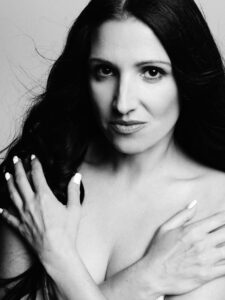
In this interview, Lada Blank discusses her debut EP “THERAPY”, exploring emotional transformation, cinematic musical storytelling, personal experiences, and her vision for future artistic projects.
1. Your debut EP, THERAPY, is presented as a journey through five emotional territories. What inspired you to build the release around this concept rather than create five independent songs?
EMPTINESS was the first song I wrote, and I almost released it as a single. It grew out of a poem I had written about fifteen years earlier, which had been sitting in my creative archives until it finally found its musical form.
But EMPTINESS opened the door to something larger. As I continued writing, the world of THERAPY began to take shape — its atmosphere, emotional landscape, and underlying narrative becoming increasingly clear. Other songs followed, and I began to recognize how they belonged together, almost like different rooms within the same inner world.
That’s how the idea of five inner rooms emerged — five distinct emotional states forming a single journey. It begins with our search for love, support, and someone or something to save us. We look for what we need outside ourselves — in relationships, family, nature, and other people. But the journey gradually takes us inward. We encounter memories, fears, and losses we’ve tried to avoid. We begin to see ourselves more clearly, to recognize difficult truths, and to accept what we find. And through that awareness, something begins to change. Pain can become a starting point rather than an ending.
Each song became a chapter of this journey. EMPTINESS is about facing the emptiness within — not overcoming it, but learning to acknowledge and accept it. MOUNTAIN RIVER is about searching for strength in nature, in something greater than ourselves, and discovering that this strength has been within us all along. BLUEBERRY EYES explores loss and the scars it leaves behind, but also the possibility of rediscovering love by finding its source within ourselves. TOXIC MOTHER confronts the pain that those closest to us can cause, and the possibility of moving beyond that pain to choose love and forgiveness. And finally, THERAPY asks what happens when we can no longer rely on something outside ourselves to save us — and have to turn inward to find our own way forward.
Perhaps my background in fiction played a role. I’m used to thinking in stories, sensing their beginnings, development, and transformation. But what fascinated me most about THERAPY was how naturally the whole story unfolded. I didn’t plan it from the beginning — I discovered its direction as I wrote, gradually shaping the songs into a coherent whole.
Watching the EP come to life was an incredibly inspiring experience. I believe that the whole can be greater than the sum of its parts, revealing qualities and meaning that no individual element could express on its own. That’s exactly how I feel about THERAPY: it’s not just a collection of songs, but a living, breathing work of art, with a life and energy of its own.
THERAPY is a musical journey home — back to yourself.
2. You combine cinematic baroque indie-pop, orchestral arrangements, chamber-pop, and musical theatre. How do you choose the musical elements that best express the story behind each song?
I’m deeply inspired by musical theatre and film music, where every instrument can help tell a story, build dramatic tension, and bring emotions to life.
A piece might begin with a melody, a few words, or an image that gradually develops its own musical narrative. Then, in the studio, I experiment with different sounds and instruments to find what best serves the story.
For example, I don’t use guitars on THERAPY. Instead, strings, harp, choral textures, and instruments such as the harpsichord, glockenspiel, and melodica help create the particular atmosphere I hear in my mind and give the music the depth I’m looking for.
Several tracks on the EP feel almost like scenes from a musical or a film. Some listeners have described MOUNTAIN RIVER as sounding like a film soundtrack, which I find particularly meaningful. The song is about searching for strength in nature, and I wanted the music to convey that sense of scale and emotional intensity.
The closing track, THERAPY, is even closer to musical theatre. It unfolds through three voices: a narrator, a client, and a therapist. The client and therapist are not specific individuals, but representations of experiences and inner conflicts that many of us can recognize. The narrator adds another perspective, while the interplay of voices and musical shifts drives the story forward. It’s a miniature musical scene rather than simply a song about therapy.
For me, meaning always comes before genre. The story and the emotions I want to express determine the musical language — the choice of instruments, the structure, and the form of each piece. I don’t begin by deciding what genre a song should belong to. I let its meaning guide the way it takes shape.
3. Tracks like “TOXIC MOTHER” and “BLUEBERRY EYES” explore deeply personal subjects, including family wounds and lost love. How do you approach turning such intimate experiences into music?
I’ve always been interested not only in what happens to people, but in why it happens. What lies beneath our actions, attachments, fears, and the patterns we keep repeating?
I believe that even our most personal experiences contain something universal. Lost love, difficult relationships with parents, loneliness — these are all part of being human, although we often prefer not to talk about them openly.
When I turn these experiences into music, I’m not interested in simply retelling my own story. I want to explore the emotions and inner conflicts that others might recognize in themselves. In TOXIC MOTHER, for example, I explore not only the pain that family relationships can cause, but also the possibility of breaking free from its influence. BLUEBERRY EYES explores the scars left by lost love — and the discovery that the source of love can still be found within ourselves.
Something remarkable happens when a personal experience becomes a work of art: it no longer belongs only to you. Other people can recognize their own stories in it. In everything I create, I’m searching for light. I believe that sometimes the very things we try hardest to avoid — painful memories, uncomfortable truths about ourselves, the parts of life we cannot control — can become a source of inner strength when we find the courage to face them.
Perhaps that’s why THERAPY is not so much about trauma as it is about transformation — finding the courage to face who we really are, accepting both our strengths and imperfections, and ultimately making peace with others and with life itself, however complex, harsh, or unpredictable it may be.
4. Before focusing on music, you studied psychology, worked in marketing, and published fiction. How have these different experiences influenced your identity and approach as a songwriter?
Psychology taught me to look more closely at our inner conflicts, contradictions, and hidden motivations. Writing fiction gave me a sense of narrative, structure, and character — the ability to turn fragmented experiences into a story.
Marketing taught me something different: how people respond to ideas, what captures their attention, and how meaning can be communicated.
These experiences gave me different ways of understanding people, exploring their inner worlds, and communicating ideas. Music became the place where they could all come together — through melody, lyrics, and my own voice.
I see myself as an author who creates not just individual songs, but musical stories that can grow into entire artistic worlds. I write and perform my own music, and I’m deeply involved in shaping its visual and theatrical expression.
To me, these aren’t separate creative activities. They’re different ways of bringing the same artistic vision to life.
5. You’re expanding THERAPY beyond music with a video for “EMPTINESS” and a live musical film recorded in a palace setting. How important is the visual and theatrical dimension to the way you communicate your artistic vision?
When I write music, I often see it before I hear the finished song. I imagine spaces, light, movement, and sometimes entire scenes.
For me, the visual dimension isn’t an addition to the music. It’s another language that allows me to express my artistic vision more fully. I’m drawn to cinematic visual art, where architecture, space, and the interplay of light and shadow become part of the narrative. Light is especially important to me — it’s the guiding star behind everything I create.
In the EMPTINESS music video, I wanted to bring to life the inner landscape I envisioned while composing the music.
With THERAPY | THE ALBUM – LIVE, we took this idea further, performing the entire EP as a 22-minute live musical film in a palace setting, with a grand piano, strings, a rhythm section, and backing vocals. I wanted to go beyond a traditional concert recording and create a cinematic experience in which architecture, lighting, musicians, and performance all become part of the same artistic experience.
I’m fascinated by the idea that a single story can exist in different artistic forms — a song, a film, a stage production, or something I haven’t even found a name for yet.
I want to keep exploring these possibilities, creating artistic worlds that people can enter and perhaps discover something about themselves along the way.
6. With your next project already in development for 2027, what can listeners expect from the next chapter? Will it continue the emotional journey of the first EP or explore entirely new territory?
The new songs continue my exploration of the inner world, but the themes are becoming broader, and I’m discovering new ways of expressing them.
I’m particularly interested in our need to be seen, recognized, and loved — and in the ways we try to fill an inner emptiness with achievements, admiration, and success. There’s something both tragic and absurd about an ego that constantly demands more but can never feel satisfied. I’m drawn to exploring these contradictions through irony, theatricality, and even the grotesque.
Another theme I’ve been exploring is time — its irreversible passage and the finite nature of human life. Death is perhaps the one certainty we all share, yet we often avoid even thinking about it. I’m interested in how acknowledging our mortality might change the way we live, the choices we make, and what we consider truly important.
Although I’ve been thinking of the next release as THERAPY II, I’m not yet sure whether that will be its final title. I want to see how the songs develop and what kind of story they begin to tell together, rather than impose a concept on them too early.
Visually, I’m continuing to explore the intersection of music, cinema, and theatre. Some of the new songs are already taking shape as images and scenes in my mind.
I don’t know exactly where this next chapter will lead, and I find that exciting. For me, the most important thing is to remain open to discovery and allow each new work to find its own form.
LADA BLANK
Music is a place where we meet ourselves.