FADED
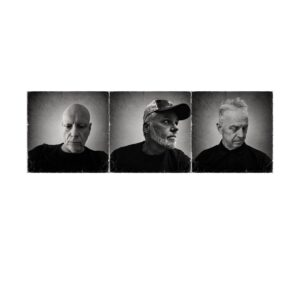
FADED discuss their evolving sound, the emotional themes behind Lost Like You, their musical influences, and the journey of remaining independent while reaching listeners worldwide.
1. FADED have developed a distinctive sound that brings together alternative electronic music, Balearic influences, groove and classic songwriting. How did the band’s musical identity first take shape, and how has it evolved since forming in 2020?
Dave Bass (guitarist and co-songwriter) and I have been writing together since our early twenties, so we’ve been at it for quite a while! We started out knocking out covers of R.E.M. and The Clash before gradually finding our own sound, which initially leaned towards Americana.
That influence was still very much present on our debut album in 2023, but as FADED has developed, so have our musical influences. We’ve gradually introduced more electronic elements, drawing inspiration from bands like New Order and Joy Division, alongside Balearic sounds, indie and alternative music.
I suppose the biggest change is that we’ve stopped trying to fit into any particular genre. We just follow whatever direction the songs take us. That’s probably what makes FADED what it is today.
2. Your upcoming fifth album, Lost Like You, marks a return to the guitar-driven pop elements of your earlier releases while exploring darker and more melancholic territory. What inspired this creative direction, and what makes this album different from your previous work?
We loosely subtitled the album ‘Ten Songs of Disconnection’, as there’s a common thread running through the subject matter. A lot of the songs deal with feeling alone, feeling out of place or simply not quite fitting in at certain points in your life. It’s not necessarily a dark album, but there’s definitely a more melancholic undercurrent running through it.
Songs like ‘Younger By July’ explore themes of grief, while the closing track, ‘Ain’t The Same Girl’, was written about early dementia, and the impact on families.
Musically, the guitar-driven approach came quite naturally. We tend to let the songs dictate the direction, and on this particular collection, guitars just seemed to work best. I think what makes the album different is perhaps its emotional honesty. There’s a more reflective and personal feel to it, but hopefully we’ve managed to balance that with some melody and moments of light along the way.
3. The song’s description presents Central Park as a metaphor for the enormity of love and the emptiness left behind by loss. What inspired this particular imagery, and how did you translate such deeply personal emotions into music?
I spent some time in New York in May and found myself walking around Central Park, just taking in the atmosphere and the sheer scale of the place. It’s quite surreal having this enormous expanse of green space sitting right in the middle of such a busy, chaotic city. That contrast really stayed with me and opened up a lot of imagery.
I started thinking about how love can feel just as vast and all-encompassing, and how the space left behind when you lose someone can feel equally enormous. The park became a sort of metaphor for those feelings. I suppose I took something I’d experienced visually and used it as a way of exploring something much more personal.
Musically, we wanted to keep things relatively simple and let the melody and lyrics do the work. Sometimes the simplest ideas carry the most emotion.
4. Your February 2026 EP explored a darker side of FADED, while Electrique offered a warmer, more optimistic and sun-soaked atmosphere. Do you see these contrasting musical worlds as two sides of the band’s personality, or does each release represent a completely different creative chapter?
We have many personalities! I think that’s probably what keeps things interesting. The Balearic-tinged, sun-soaked direction of Electrique was always going to happen at some point. I’m a summer baby, so there’s probably a bit of that built into me!
I think it’s important to experiment and not get too comfortable making the same record over and over again. We enjoy exploring different styles, whether that’s something darker and more electronic or something warmer, more melodic and guitar-driven.
For us, the common thread is always rhythm and melody. It doesn’t really matter what genre we’re dipping into, if a song has those two things at its heart, it feels like FADED. That’s what we do.
5. FADED have received airplay from respected broadcasters including BBC 6 Music, BBC Scotland, BBC Introducing and RTÉ. How has this recognition influenced your journey as an independent collective, and what has been the most rewarding aspect of connecting with listeners beyond Scotland?
It’s always great to get airplay, particularly when it’s because somebody has genuinely connected with a track and believes it’s worth playing. That’s what means the most to us. We’re an independent band, so getting recognition from broadcasters like BBC 6 Music and BBC Scotland is a real boost.
We’re much more interested in genuine support than the whole pay-to-play culture that’s crept into the music industry. There’s a difference between somebody choosing to play your music because they believe in it and effectively paying for exposure. We’re not really interested in buying our way onto playlists or college radio just to create the illusion of success. I think people can see through a lot of that these days.
The most rewarding thing is knowing that songs we’ve made in our own little corner of the Scottish-English border are finding their way onto radios and into the lives of people much further afield. That kind of recognition means far more to us because it’s genuine.
6. Lost Like You is scheduled for release on January 29, 2027. As you look ahead to this new chapter, what do you hope listeners will take away from the album, and what can they expect next from FADED?
I just hope people get the chance to discover and spend some time with the album. It’s incredibly difficult to get music heard these days, with so much being released all the time. We tend to think of each FADED album as a kind of ‘lost album’ – something that might pass people by initially but could be discovered years down the line by somebody who really connects with it. There’s something quite nice about that idea.
As for what’s next, we’re already writing and recording the next batch of songs. Whether that eventually becomes album number six or a run of singles, we’re not quite sure yet.
One thing I can say is that we’ve definitely picked up the tempo! There’s a bit more energy creeping into the new material, so it’ll be interesting to see where that takes us. We don’t tend to plan too far ahead – we just follow the songs and see where they lead.