
M3TIN
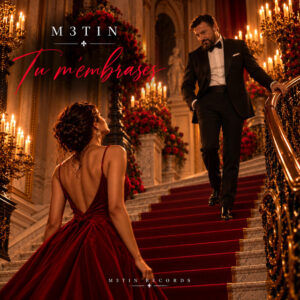
In this interview, M3TIN’s founder Ahmet Metin Oktay discusses multilingual songwriting, creative vision, AI-assisted production, and his ambition to connect listeners worldwide through music and universal human emotions.
1. M3TIN is an independent musical project founded by Ahmet Metin Oktay. How did the project come together, and what was the original artistic vision behind creating M3TIN?
M3TIN began with a simple, stubborn idea: feelings do not need a passport. I launched M3TIN in January 2026 — not initially as a conventional record company, but as an independent musical initiative built around one principle: “One artist. Many voices.” Most artists start local and dream of going global; I reversed the map. The project was born international, releasing songs natively in many languages while the Turkish originals wait for 2027. And the experiences behind my lyrics are real. They come from my own life, my own experiences — lived first and written after. Technology may help me give those experiences a musical voice, but it does not invent the feelings behind them. That is the vision, and it has not moved an inch since day one.
2. Your new single, “Tu m’embrases,” explores physical attraction, temptation, and desire rather than the heartbreak found in some of your previous material. What inspired this change in emotional direction?
Life is not only endings — it is also beginnings, and the moment before a beginning is one of the most intense feelings a person can carry. After telling stories of parting with dignity, I wanted to capture the opposite pole: a look held one second too long, an attraction that overrules reason. But I wasn’t trying to describe conventional romantic love or make another declaration of devotion. I wanted to capture something more instinctive: the physical tension between a woman and a man, the anticipation of a touch, the way desire can overwhelm reason before either person has said a word. That is what “Tu m’embrases” is really about. A woman feels herself being consumed by her attraction to a man. She tries to maintain control, but the closer he comes, the less she wants to resist. “Tu m’embrases” opens a new song family precisely because it opens a new emotional territory. The catalogue should map the whole heart, not just its broken side.
3. “Tu m’embrases” is a French adaptation of your original Turkish composition, “Yakıyosun.” What motivated you to revisit the song in French, and how challenging was it to preserve its original emotional identity while adapting the lyrics to another language?
“Yakıyosun” is a Turkish composition of mine that remains unreleased — like my other Turkish originals, it waits for 2027. The French voice came first because this particular feeling — desire expressed with elegance rather than crudeness — speaks French naturally. The challenge is always the same, and it is the heart of my method: nothing is translated. I rebuild the lyric within the emotional and musical logic of each language, preserving the original experience while allowing its expression to change. The French lyric was reconstructed line by line, with native French speakers reviewing the wording, pronunciation and naturalness of the expressions. The goal was for the words to belong to the music as though they had been born together. I don’t translate songs — I rebuild them so the feeling lands the way it would in its own mother tongue. Experiences are universal. They are felt in much the same way across cultures, but expressed differently. The feeling is the constant; the expression is the craft.
4. French is known for its expressive and melodic qualities. How does writing and presenting your music in different languages influence your songwriting process and the way you communicate emotions?
Each language changes how I write before I write. In my own writing, French encourages me to explore subtlety, sensuality and the emotional power of a whisper. German often leads me toward more direct, unadorned expressions, while Arabic gives me extraordinary room for melodic ornamentation and longing. These are not rigid rules about languages; they are the creative possibilities I discover as I work within them. So I do not write a song and then simply dress it in another language. I let the language shape the phrasing, the imagery, the rhythm and even the silences. What never changes is the emotional spine. That is why a listener in Cairo and a listener in Paris can meet the same heart in completely different words.
5. The track combines French pop, electronic textures, alternative R&B phrasing, deep bass, piano, and syncopated percussion. How do you approach blending these different musical elements while maintaining a recognizable M3TIN sound?
The anchor is always the story. For “Tu m’embrases”, the slow-burning desire dictated everything: the intimate opening, the piano adding weight, the syncopated percussion and deep bass pulling the track toward dark pop and R&B as the feeling intensifies. The rhythm is seductive rather than designed for a dance floor. It creates movement and tension without overwhelming the voice. The M3TIN signature is not one genre — it is this discipline of letting the emotion select the instruments, plus a cinematic build that mirrors how the feeling itself unfolds. If you removed the vocals, the arrangement alone should still tell you what is happening between these two people.
6. The female vocals are intimate and breathy, gradually building from whispered invitation to a more intense chorus. What kind of vocal character and emotional atmosphere were you aiming to create for this particular song?
I wanted the voice to be the attraction itself: close, breathy, almost confessional at first — a whispered invitation — then opening into something far more expressive as restraint gives way. The listener should feel the distance between the two protagonists shrinking. By the final chorus, there is no distance left. That arc, from control to surrender, is the whole song in miniature.
7. M3TIN is transparent about using AI-assisted tools for vocal and instrumental performances, as well as music video production. Why did you choose this creative approach, and how do you maintain your artistic identity and personal vision throughout the process?
My line is simple: the brush is not the painter. I decide the story, the lyrics, the concepts and the emotional direction of every work. AI contributes generated vocals and instrumental audio, and it is also used to create the video imagery. I have never concealed this. On the contrary, I explain my use of AI openly in my submissions to music curators, on my website and in my press releases. I’m not presenting an AI-generated singer as a real human performer. I’m presenting the work of a real author and musical architect, using contemporary tools to bring his compositions to life. A generated passage can sound impressive and still be wrong for the song. Recognizing that, rejecting it and reshaping it until it serves the story is part of my creative process. But let me say what this is really about: I do not claim to be producing the world’s best music. My goal is to prove something simpler and, I believe, bigger — that a listener can encounter these lyrics in their own language and recognize something of their own life in them. And my hope goes one step further: that one day local singers and instrumentalists — real voices, real instruments — will take these compositions and interpret them through their own musical traditions. Nothing would make me prouder.
8. You describe yourself as the author and musical architect behind the project, while Indonesian sound engineer Senna SB handled the mixing and mastering. How important is the collaboration between your creative direction and human technical expertise in shaping the final sound?
It is essential — and it is where the human chain around this project becomes visible. I shape the material through selection and revision until it serves the story; Senna SB then takes the chosen audio through mixing and mastering with a professional’s ear. But the final authority is mine. I guide him through what each song needs, and my ear dictates the ending: there are musical norms and standards we respect, yet the finished sound is his experience coupled with my taste. The native reviewers play the same role for the lyrics. One vision, but never one pair of hands — the decisions are mine, and the craft that polishes them is deeply human.
9. The official music video features crimson velvet, golden staircases, chandeliers, and a cinematic encounter between two characters. How did you develop this visual concept, and what role does storytelling play in your overall musical identity?
The video is the song made visible: crimson velvet, golden staircases, candlelight — fire expressed through colour and architecture instead of flames. Two people encounter one another on a grand staircase, and their movements slowly become a dance. The building itself feels like the inside of the feeling. I deliberately wanted the film to remain suggestive rather than explicit. Sometimes a glance, a hand resting on a waist or the hesitation before a kiss can communicate more desire than anything overtly sexual. Storytelling is not decoration in this project; it is the backbone. Every release is a short film about a universal moment, and the characters’ story continues across the visuals the way the melody continues across languages.
10. Your press release describes “Tu m’embrases” as the opening chapter of a two-song French release, followed by “Ça nous ressemblait pas.” What connects these two songs, and what can listeners expect from the contrasting emotional atmosphere of the second release?
They are two sides of the same French month — and deliberately opposite — but they belong to two different song families. “Tu m’embrases” is ignition: desire taking over, the moment physical attraction overwhelms restraint. “Ça nous ressemblait pas”, released on 13 November, is the opposite emotional territory: two people recognising that what they built together has stopped resembling who they once were, and finding the dignity to let it go. The first comes from my Turkish composition “Yakıyosun”. The second comes from “Yakışmadı Bize”, which also gave rise to my German single “Das waren wir nie”. What connects these songs is not necessarily the same couple or the same relationship. It is the range of experiences a human heart can contain. Fire and farewell, back to back. That contrast is the point: one heart, its whole range.
11. M3TIN’s press archive already includes 69 press features across 20 countries. How has the international response to your multilingual catalogue influenced your ambitions, and which markets or audiences would you particularly like to reach next?
The response has grown remarkably quickly — even since your question was written. As of November 2026, the M3TIN Records website records 76 press features across 21 countries, with radio support from 23 stations in nine countries. Our music now spans 14 languages and six continents, with 28 releases so far in 2026. The digital audience has also grown: more than 130,000 TikTok followers, over 61.8 million TikTok views in the past twelve months, more than 2.9 million TikTok likes, and over 466,000 YouTube views. Recent milestones include an in-depth interview with Italy’s Parkettchannel and daily rotation on Formula Indie for my German single “Das waren wir nie” — Formula Indie is syndicated to more than 60 radio stations internationally, separate from our station count. But the numbers are not the most important part. What the response has taught me is that the original thesis works. A Brazilian editor, an Egyptian reviewer and a Russian blog have each approached these songs through their own cultural perspective. That is precisely what I hoped would happen: the songs become familiar to listeners in different places because the emotions arrive in their own languages. Next, I am particularly interested in reaching more listeners across the Arabic-speaking world, where 2027 will bring four new adaptations, while continuing to develop the French and Spanish markets. For me, international success is not simply having a song played in many countries. It is creating something that listeners in different cultures can genuinely feel belongs to them.
12. Looking beyond “Tu m’embrases,” what are your plans for M3TIN? Are you intending to explore more languages, musical styles, and collaborations, or do you have a larger creative project in mind for the future?
The map keeps expanding. “Me Quemas Lentamente”, the Spanish interpretation of the same Turkish composition behind “Tu m’embrases”, is on its way. An English-language release from another song family is also coming, along with more interpretations that will take existing compositions into different musical and cultural settings. There is also one more song — the strongest I believe I have ever written — whose name I am keeping to myself a little longer. Then 2027 opens the chapter everything has been building toward: four new Arabic adaptations, and after them the homecoming — the Turkish originals finally returning to their own language. I also hope that this journey will create opportunities for collaborations with local singers, musicians and producers who can bring their own traditions and interpretations to these compositions. Languages speak differently. The heart speaks one — and music is its language. Different tongues. One heart.