
Elliott Caine
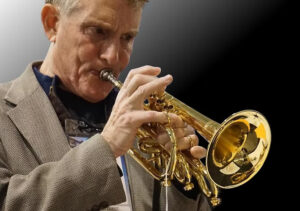
In this interview, Elliott Caine discusses FURIOSITEE!, his musical influences, hard bop traditions, Latin jazz explorations, and the creative vision shaping his journey as a trumpeter and composer.
1. Your latest album, FURIOSITEE!, draws heavily from the classic hard bop tradition while incorporating Latin jazz rhythms and contemporary influences. What inspired the concept behind this record, and what does the title FURIOSITEE! represent to you?
Most of the music that I listen to (and enjoy) is from the ’60’s and early ’70’s, so it’s not at all a nostalgic thing with me. The music, for the most part, still really speaks to me for its soulfulness and creativity. “Furiositee!”, with its unique spelling, is a reflection and my feelings about confronting the insanity and injustice of the current national and international social and political situation.
2. Your musical influences include legendary trumpeters such as Lee Morgan and Freddie Hubbard, along with the classic Blue Note sound of the 1960s. How have these artists shaped your approach to trumpet playing and composition, and how do you balance tradition with your own musical identity?
The musical concepts of Lee and Freddie and Miles were soul stirring for me; something that I really felt. Early on, I memorized some their solos; eventually some of their concepts became integrated into my own musical identity.
3. The album features seven original compositions alongside a cha-cha-cha interpretation of the jazz standard “East of the Sun.” What inspired you to reinterpret this particular piece, and how did you approach giving it a fresh rhythmic character?
I wanted to put one standard on the record. At the recording studio, it just hit me that “East of the Sun”, done as cha-cha-cha, could be pretty cool. It was just a last-minute inspiration. It’s a pretty minimal arrangement, but I felt it came off pretty good.
4. You’re joined by an accomplished group of musicians, including Scott Gilman, Michael Boito, Bill Markus, and Don Littleton, with Victor Baez contributing percussion on three tracks. How did the chemistry between these musicians influence the recording process, and how much freedom did you allow for improvisation and spontaneous musical interaction?
Over the last 30+ years, I have done many performances with my side musicians, as a leader as well as being a sideman. I knew what they were and are capable of, so I chose them for the recording. They are all very familiar with “straight ahead” as well Afrocuban/Latin styles. We all had complete freedom to say what we wanted to, taking into consideration the time limitations of a compact disc.
5. Tracks such as “Permanent Revolution,” “Bossa for Kenny,” and “No Jive Boogaloo” highlight different aspects of your musical personality, from energetic hard bop to Latin-inspired grooves. Could you tell us about the stories or musical ideas behind these compositions and how they came together?
“Permanent Revolution” takes its title from a thesis by the Russian revolutionary, Leon Trotsky. The tune has a bit of a vibe of ongoing and impending fate, maybe a bit introspective. “Bossa for Kenny” is a song that I wrote memorializing my late friend and drummer, Kenny Elliott. I think Kenny would have dug the tune. “No Jive Boogaloo” kind of has a vibe of Nat Adderley’s “Jive Samba”, hence the name.
6. Throughout your career, you’ve explored jazz, Latin music, rhythm and blues, and other musical styles while remaining deeply connected to the trumpet-led jazz tradition. Looking back at your journey, how does FURIOSITEE! reflect your evolution as an artist, and what are your plans for the Elliott Caine Quintet moving forward?
I feel that, at least for several of the tunes, I’m advancing my harmonic concept. I want to keep exploring new harmonic/musical concepts, and always compose and perform music that genuinely reflects my feelings about life.