
Drea Dominique
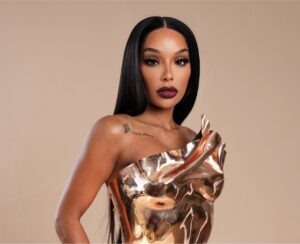
Drea Dominique opens up about reclaiming her identity, building an independent R&B career, and exploring love, vulnerability, and modern romance through her latest single, “Roll.”
1. Your journey has taken you from Bad Girls Club Season 9 to becoming an independent R&B artist and CEO of your own label. How has your experience in the public eye shaped the person and musician you are today?
Growing up in public teaches you fast. People met a version of me that was cut together for television — the loudest moments, the most defensive moments — and decided that was the whole person. Living with that taught me two things: how much of yourself you can lose when other people hold the pen, and how powerful it is to take it back. As a musician, that experience is exactly why I write the way I do. I don’t hide behind the songs. The woman people meet in my music is the full person — the lover, the thinker, the one who feels everything. And it shaped the businesswoman too: I founded my own label, Blessed Beyond Entertainment, because I never wanted my career in somebody else’s hands again. The public eye made me guarded for a while. Now it just makes me intentional.
2. Your new single, “Roll,” is part of your Romantic Tragedies era, which explores love, situationships, and the complexities of modern romance. What inspired this chapter of your music, and where did the idea for “Roll” come from?
Romantic Tragedies is me telling the truth about my love life in order — the rush, the confusion, the situationships that almost became something, the goodbyes. I think a lot of women are living these half-defined relationships right now, where everything feels real and nothing is promised, and I wanted to make the music for that exact space. “Roll” came from a real moment: that point where you stop fighting a feeling that’s clearly there and just let it move. Surrender used to scare me because I thought it meant losing control. Writing “Roll,” I realized there’s a difference between losing yourself in somebody and letting yourself feel something as a woman who knows her worth. That’s the song — letting go without being lost.
3. Your music has found listeners in countries like Japan and Brazil, with major cities such as Tokyo and São Paulo among your top audiences. Why do you think your sound connects with people across such different cultures, and has this international response surprised you?
It surprised me and it didn’t. The numbers surprised me — seeing Tokyo and São Paulo at the top of my listener cities is still wild to me. But the connection doesn’t surprise me, because heartbreak and situationships don’t need translation. The feelings are universal even when the language isn’t. R&B travels that way — the emotion sits in the melody and the delivery before it ever gets to the words. I also think there’s something honest about the music that people recognize as real, wherever they’re from. I’m independent, no major machine behind me, so every one of those listeners found the music because it moved them. That means everything to me.
4. You have built your music career independently while maintaining control over your brand and creative direction. What have been the biggest challenges and rewards of taking this DIY approach to the music industry?
The biggest challenge is that independence means everything is on you — the budget, the decisions, the ten no’s before one yes — and then you still have to walk into the studio and create like none of it is heavy. There’s no department handling it. You are the department. And there’s the label I walked in with: being taken seriously as an artist when some people only see the TV chapter takes real, sustained work. The rewards are the other side of that coin. I own what I build. I choose the songs, the image, the timing, the deals I say no to. When something works, it works because we built it — my team and me — not because a machine decided to push a button. Ownership isn’t light, but I wouldn’t trade it.
5. Your sound has been described as sultry, honest R&B with an unapologetic edge. When you write about love and relationships, how do you balance personal experiences, vulnerability, and artistic storytelling?
I start from the truth and then I protect the people in it — including the version of me who lived it. Everything I write comes from something real: a feeling, a conversation, a pattern I had to admit about myself. But a song isn’t a diary page. I take the emotional truth and shape it — change the details, build the scene — so it tells the story cleanly and anybody who’s lived it can see themselves in it. The balance for me is: never fake the feeling, always craft the telling. And the unapologetic edge is just me refusing to write myself as the villain or the fool in my own story. I can admit I stayed too long, I can admit I wanted what wasn’t good for me — and still hold my head up in the same song.
6. With “Roll” gaining momentum and Romantic Tragedies opening a new chapter in your career, what can listeners expect from you next, and what is your biggest goal as an independent artist right now?
More music, and bigger rooms for it to live in. “Roll” is still growing — it’s in rotation internationally and reaching television now — and I’m already building what comes next: new music at the top of 2027, more live performance, and more of the story on screen too. My biggest goal as an independent artist is to prove the model: that a woman who was given a label at twenty-two can build a lasting music career on her own terms, owning her work, without asking permission to evolve. I want the catalog to outlive the headlines. Everything I’m doing right now — the music, the label, the foundation we’re building — is aimed at a career, not a moment.