
Judi Silvano
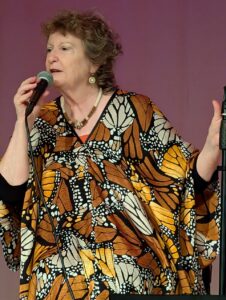
In this interview, Judi Silvano, the creative force behind Garden Winds, explores improvisation, artistic freedom, nature, and the unique musical chemistry behind First Flight.
1. First Flight introduces Garden Winds, an unconventional trio combining your voice and percussion with Haruna Fukazawa’s flute and Claire de Brunner’s bassoon. What inspired you to bring these particular instruments and musicians together, and how did the group’s unique musical identity begin to take shape?
The three of us have a history of playing together. Because we’ve been playing together since the Pandemic and I loved hearing both of them in larger ensembles we were part of.
The idea of this trio was to create a sense of space and delicacy of sound that I was interested in living within. As a vocalist, I have always felt akin to other “wind instruments” that depend on the ability to shape phrasing and dynamics through use of the breath.
Once we started playing as a Trio, we started developing a unique vocabulary together as improvisers. And we each have the willingness to be fluid in our role in creating a soundscape together.
2. All ten compositions on First Flight are credited to you, yet the album places a strong emphasis on spontaneous improvisation and collective interaction. How do you balance written composition with the freedom to explore unexpected musical directions during a performance?
All of the compositions on First Flight were improvised collaboratively with complete freedom and it is presented in the exact order that the recorded material was created. So, in this case there was no written music to balance, because there was no reading at all. It was all Playing.
Each track is a direct response and continuance of what music came before it. In a flow of ideas and feelings. Since the other musicians did not have copyrights, I took the Publishing credits.
As individual musicians we each play in settings that are written, but these were “notes nobody wrote”. Listening and creating is the deepest things about Jazz! It takes a lot of trust create spontaneous orchestrations.
3. Pieces such as Flower Talk, with its improvised language, and This Morning, which evokes the feeling of a forest awakening, suggest a close relationship between music, nature, and imagination. How do natural environments and visual imagery influence your creative process, particularly when working with a group as experimental as Garden Winds?
I am gratified we could convey the deep feeling I have always had in and connection with the movement & SOUNDS of nature. Half of the session was in fact recorded outside in my garden, and on the deck.
I see power in the life of plants and trees growing and changing, fruiting, then losing vitality and going into a restful phase… After all, this is the cycle of life that we are part of. And it’s all fascinating to me.
We have the extraordinary ability to use our imaginations to express our connection to other people and other beings. And to create a Soundscape or a Visual Painting of our ideas and connections to express this solidarity.
4. Your artistic background extends far beyond jazz, encompassing modern dance, classical music, visual art, and interdisciplinary performance. How have your experiences as a dancer and visual artist shaped the way you approach vocal improvisation, rhythm, and musical storytelling?
I have been influenced by the Masters. Of Music, of Art, of Dance.
Growing up in Philadelphia in the 60’s and 70’s was great! There were so many art museums, meandering rivers, gardens, a ballet company where I studied and the Academy of Music on whose stage I graduated from high school and then later sang as part of the Temple University Choir with the Philadelphia Orchestra conducted by Eugene Ormandy. And there was South Street…a melting pot of cultures and artistic activities.
I came to NYC in 1976 during a very dynamic time with constant multidisciplinary exchanges happening. I was involved in some amazing ensemble settings as a dancer and met some great young jazz musicians in my early 20’s and listened to big bands at the Village Vanguard. I began to get a concept of how to use my soprano voice in a jazz setting.
I developed relationships with people who accepted me in ensembles and I sang with horns and rhythm sections. I learned from all of them and was inspired to keep learning! Some of those relationships have lasted through the years. The spirit of improvisation is a big part of my life in all ways. Music, Art, Dance, Poetry, Lyrics, Flowers, It’s all about Life.
My approach is that I want to create a visual song! And if I can feel the stories deeply, it’s HOW I tell the story that I hope people will respond to. I want to bring that song into a painting. And a bird’s flightpath into a musical phrase. It’s all there! And I am watching.
5. Haruna Fukazawa and Claire de Brunner both bring extensive classical training alongside their experience in adventurous improvisational music. What surprised you most about the musical chemistry between the three of you, and how did their individual approaches influence the sound and direction of First Flight?
Haruna and Claire both have deep jazz roots in addition to our shared experiences in Classical Music and they are both great listeners. Haruna studied with Frank Wess and played with Karl Berger’s Creative Music Studio and Claire studied with Lee Konitz and Connie Crothers.
I played sessions with Kenny Werner, Joe Lovano, Billy Drewes, Tim Hagans, Scott Lee, Tom Rainey and learned how to use a microphone after singing for years without one! I also led my own bands and wrote a lot of new songs that I got to premiere in Greenwich Village clubs. And I listened to all kinds of music from the Knitting Factory to Birdland to The Metropolitan Opera.
What surprised me the most about playing in this Trio with Haruna Fukazawa and Claire de Brunner, was how Easy it was to play together with them! They each bring a unique flavor to the dance!
6. Throughout your career, you’ve collaborated with remarkable musicians such as Joe Lovano, Kenny Werner, and Mal Waldron, while continuously exploring new forms of artistic expression. After so many years of musical discovery, what does artistic freedom mean to you today, and where would you like to take Garden Winds next?
Ah freedom… it means the excitement of creating music with each other in a pure flowing way and that people will take the journey with us from moment to moment!
Today I see a beautiful open door that we just created with our first excursion into some unknown place, through our mutual trust.
Since the release of First Flight, we have been playing a lot of gigs, each one with new explorations in different kinds of spaces. I would like to take Garden Winds on an exciting journey within the presentation of the trio’s magical communications, to share our musical joy with more folks!