
Christian Finger
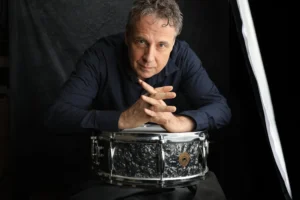
Christian Finger’s Zeit Zirkel explores grief, resilience, and the passage of time through emotionally rich compositions, expressive improvisation, and a remarkable jazz quintet, blending European influences with New York’s creative energy.
1. Your new album Zeit Zirkel explores the resilience of the human spirit in the face of death, grief, and loss. What personal experiences or reflections inspired this deeply emotional concept, and how did you translate those feelings into music?
I have experienced several profound losses since childhood, the most recent being my mother’s passing three years ago (“Gentle Garden” is dedicated to her). When I compose, I try to connect with a part of myself that might be called the soul, an inner realm that changes over time, as well as with a field of all kinds of feelings.
2. The album features 13 original compositions that move between darkness, hope, and inner peace. How did you approach the creative process to ensure that these contrasting emotions formed a coherent musical journey?
These compositions are the result of years of composing, revisiting, rewriting, and recording some of them for other projects. When the time came to make Zeit Zirkel and the concept became clear to me, I was able to choose from this collection of pieces. Because of the process I described above, the compositions have different styles, atmospheres and grooves, but they are all connected by the same thread. I also thought a lot about who would play certain parts and which musician would take a solo where.
3. You assembled an exceptional quintet featuring Ralph Alessi, Ben Monder, Vadim Neselovskyi, and Adam Armstrong. How did each musician’s individual personality influence the arrangements, improvisations, and overall direction of Zeit Zirkel?
I’m pleased to hear that you think so highly of the quintet. It was very special to assemble this band, and I’m very grateful for the guys’ amazing contributions. When choosing them, I knew they would understand the music quickly and enhance it so much with their fantastic imagination and musicianship.
The arrangements were pretty much set in stone, but I left the improvisational parts wide open for them to fly and just play. It’s amazing what happened, as you can hear on the album.
4. Tracks such as “Fifteen PM,” “Five Secrets I,” and “Gentle Garden” reveal very different musical atmospheres, from explosive energy to intimate reflection. How do you balance composition and spontaneous improvisation while allowing each piece to develop its own identity?
Thanks for noticing. Those tracks do create very different atmospheres. They reflect different approaches to composition, as I’m influenced by a wide array of styles. For example, “Fifteen PM” grew out of experimenting with overlapping time signatures to create a powerful energy. “Five Secrets I” came from working with classical motifs and then giving them to Ralph, Ben, Vadim, and Adam to develop further, while “Gentle Garden” is a very intimate portrait of my mum. All these tracks are held together by a search for wisdom and inner peace.I try to give each piece a strong identity through the composition while leaving enough space for the musicians to make it their own.
5. Having grown up in Germany and spent more than two decades immersed in New York’s creative music scene, how have these different cultural and musical environments shaped your identity as both a drummer and a composer?
I’m grateful to have been immersed in these two very different cultures, and this comes through in my drumming and writing. My European sensibility—with influences from ECM, classical music, and contemporary music—combined with my knowledge of the many facets of the American jazz tradition makes the music rich, diverse, and colorful.
And then the music tells you which way to go: whether to mix things up or stay in one lane.
6. The album closes with two brief drum-centered pieces, “Time Flows For You” and “Time Flows For Us.” What significance do these compositions hold within the album’s broader exploration of time, and what do you ultimately hope listeners will take away from Zeit Zirkel?
I wanted to play alone to create a contrast with the album’s very composition-driven pieces. I wanted to reflect spontaneously on what had just happened—the recording of 11 tracks in only four and a half hours—and simply rejoice and flow.
When I listened back to the solos, I heard them as a goodbye to the listener, played on my instrument. On previous albums, I would solo more over the form of a piece or a vamp. This time, it’s just me, reflecting on the inner realm, the passage of time, and how it shapes our journey through life. Besides that, I was strongly influenced by Tony Williams and wanted to capture his flow.
I hope listeners find something of themselves in the album, that it resonates with them emotionally, and that they enjoy listening to it.