
Liz Cracchiolo
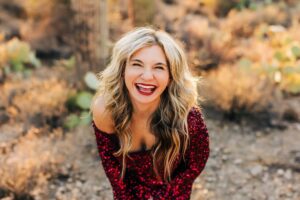
Jazz vocalist Liz Cracchiolo discusses her debut album I’m a Woman, blending jazz standards with unexpected pop and rock classics, celebrating spontaneity, artistic freedom, and the journey toward finding her authentic musical voice.
1. Your debut jazz album, I’m a Woman, marks an exciting new chapter in your musical journey. After building an impressive career in musical theatre and cabaret, what inspired you to dedicate yourself to jazz, and how have your experiences on stage shaped your identity as a jazz vocalist?
I had always had a deep love and respect for jazz, and wanted to explore it as a musician. About 15 years ago a jazz producer and drummer I knew from my childhood came to see me in a show, and I asked him if I could play a gig with him sometime. Then I was HOOKED. I loved the freedom—the idea that a song could feel different every time, depending on the musicians, the audience, and what you were feeling that night. My theatre and cabaret background comes with me, especially in how I approach a lyric. Who am I talking to? What am I trying to say? I love a beautiful melody, but I want you to feel that I’m telling you something.
2. I’m a Woman brings together an eclectic selection of songs, ranging from jazz standards to unexpected pop and rock classics such as “Sweet Child O’ Mine,” “Mr. Brightside,” and “Tainted Love.” What guided your song selection, and how did you approach transforming these familiar compositions into something uniquely your own?
The song selection for this record happened very organically. I’d lived with many of these songs for years, and each held a special place in my heart. The standards were favorites I regularly performed and loved to sing, while the pop songs were ones I’d already experimented with reimagining. I loved where those explorations had taken me, and this record felt like the natural place to bring them all together. My producers and I had developed some of those pop reimaginings for shows we’d created together in New York City over the years. We work really well together, and there’s a lot of trust and room to play. To shape the final arrangements, we spent hours on Zoom, playing through songs, trying different ideas, and seeing what excited us. It was such a fun, collaborative process, and I think you can hear that joy in the record.
3. Your interpretation of “Just a Girl” features playful vocal improvisations and an engaging musical dialogue with guitarist Hajime Yoshida. How important is spontaneity in your performances, and what does this particular arrangement reveal about your approach to musical expression?
Spontaneity is a huge part of what drew me to jazz. I love having an arrangement as a starting point, but leaving room to listen and respond to the musicians around me. My theatre background taught me to tell a story, and jazz lets me discover new ways to tell it in the moment. That exchange with Hajime is such a fun example of the give-and-take I love. There’s a playfulness to it that feels very much like me. I care deeply about the music, but I also want room for humor, personality, and surprise. “Just a Girl” gives me a chance to explore all of that.
4. The album features an impressive group of musicians, including Benny Benack III, Russell Hall, Erica von Kleist, and Savannah Harris. How did these collaborations influence the album’s creative direction, and were there any particularly memorable moments during the recording process?
Getting to make my debut album with musicians like Benny, Russell, Erica, and Savannah was extraordinary. They each have such a distinct musical personality, and that gives you so much to respond to as a singer. You can arrive with an idea of how a song should feel, but the people in the room help it become something fuller than you could have imagined on your own. And they were all so excited to help make my vision come to life. One of my favorite memories from recording was when Russell Hall and I recorded “Fever”. It was at the end of the day, and we were in separate booths and couldn’t see each other. Russell is such a brave and unique player, and what he was giving me in my headphones was MAGIC. And I just responded to it. It was amazing it one take. We did another take just for fun, but that is a perfect example of how listening is such an integral part of the creation. I could never sing “Fever” exactly that way again, because in that moment I was responding to Russell’s energy and musicality—every performance will be different, but that recording captures a connection between us that felt magical. That’s something I’ll always treasure about this record: it captures the relationships and musical exchanges, as well as the songs.
5. From the blues-inspired intensity of “Fever” to the bold energy of “I’m a Woman,” your performances explore different expressions of confidence, personality, and independence. What does the album’s title mean to you personally, and is there a broader message you hope listeners will take away from this collection of songs?
For years, I loved performing, but I didn’t feel ready to make a record. I was still figuring out who I was musically and what I wanted to say. Miles Davis said, “It takes a long time to sound like yourself,” and that really resonates with me. I finally felt like I’d found myself as an artist, and I was ready to capture that.
The beautiful thing is that we didn’t choose the songs to tell that story. It was only after we’d selected them that I saw the meaning in opening with “Just a Girl” and closing with “I’m a Woman.” That progression reflected my own journey in a way I hadn’t consciously planned. I’m still connected to the girl with those dreams, but now I have the experience and confidence to express them in my own voice.
If listeners take anything away from that, I hope it’s that there’s value in taking your own time. I’m glad I made this record when I felt ready to make something that sounded like me. And there’s real power in trusting your voice, embracing who you are, and deciding that what you have to say deserves to be heard.
6. Having performed at the Tucson Jazz Festival, worked with the Tucson Pops Orchestra, and appeared in numerous theatrical productions, you’ve already experienced many different sides of the performing arts. With your debut jazz album now released, what artistic challenges would you like to explore next, and what can audiences expect from Liz Cracchiolo in the future?
Making this record has made me want to explore even more. I’m planning to record my next album in June 2027, and I’m excited to keep finding new possibilities in songs I love and pushing myself musically. I also want to bring this music to more audiences and build relationships with musicians and venues in new cities.
Theatre and cabaret will always be part of how I tell a story, and I love bringing that sensibility into jazz. I want to keep growing in the freedom and spontaneity that drew me to this music in the first place. Audiences can expect more unexpected song choices, a lot of heart and humor, and an artist who’s getting more comfortable taking chances and trusting her own voice.