
Gianfranco Pescetti
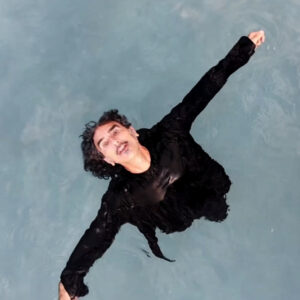
In this interview, Gianfranco Pescetti discusses “Heidi,” a deeply personal tribute to friendship, loss, and gratitude, exploring his artistic journey and the memories behind his forthcoming album, this side of the door.
1. “Heidi” is a deeply personal song about gratitude, loss, and someone who believed in you before you fully believed in yourself. What was going through your mind when you first began writing the song in her memory?
It actually took me five years after learning of Heidi’s passing to finally sit down and write the song.
Since she’d moved to New York and I’d stayed behind in San Francisco, so much had happened in both our lives. I often imagined us getting together again, catching up on everything, and finally having the chance to tell her how grateful I was. She was that one friend who unconditionally made me feel that I had something valid to offer creatively. I’d always wanted to be able to put into words just how much that meant to me. But I never got to see her again.
So when I finally decided to write “Heidi,” I wanted to write something to her, but also for her. My initial intention was to create something that could become part of her memory, something that would allow it not only to live on, but perhaps even to grow.
Every time I hear the song, I think of her, and there’s comfort in that.
2. You met Heidi Vincent while playing in Borgia in San Francisco in the early 1990s. How did your friendship and her encouragement influence your development as a songwriter and musician?
When I first met Heidi, I was going through a difficult transition. I’d been a professional ballet dancer for years, but I was losing my passion for it and wanted to pursue music full-time. It wasn’t an easy decision, especially since I’d been dancing practically my entire life.
Heidi and I were playing together in Borgia, and I was bringing some of my songs to the band. She really liked them and kept encouraging me to write more. Our friendship extended well beyond music. We shared a love of art, architecture, and design, and I admired her enormously. She was such an extraordinary artist herself, so her opinion meant a lot to me.
More than anything, she helped me trust my instincts and believe in my songwriting at a time when I was trying to find my way into a completely different life.
3. You recorded the bass part for “Heidi” using the 1977 Fender Precision Bass that Heidi gave you. What was it like to have that particular instrument in your hands while recording a song dedicated to her?
I’ve been playing that bass for so many years, in different bands and on my two previous solo albums, that it’s become a part of me. I know its sound, its feel, how it feels on my body. But when I started working on “Heidi,” there was something quite special about realizing that the instrument she’d given me all those years ago was now being used to record a song I’d written for her.
4. Your musical journey has included professional ballet, songwriting, bass playing, production, and electronic music. How have these different experiences shaped the way you create music today?
Time and living are the best teachers. Once you’ve lived enough life and can put a little distance between yourself and the lessons you’ve learned, let them marinate a bit, you start to realize just how deeply connected all forms of art really are. They inform each other, and in many ways they’re built on the same principles: rhythm, movement, balance, tension, space. Whether you’re interpreting or choreographing a dance, trying to express something through a song, or hunting for some spooky electronic textures, you’re dealing with many of the same ideas, just expressing them through different mediums.
I think what I’m ultimately trying to do is create worlds for myself that I can inhabit, where anything is possible. That’s always been the attraction of making art for me. I don’t consciously draw on one discipline when I’m working in another.
And in the end, music feels like the most powerful to me.
5. “Heidi” is the lead single from your forthcoming album this side of the door. What can listeners expect from the album, and how does it represent where you are creatively at this point in your career?
When I set out to make this album, I knew “Heidi” was going to be the first song I wrote. It was a very conscious decision. I wanted it to set the emotional tone for the whole record, and in many ways it became the catalyst for everything that followed. The other thirteen songs gradually came together around themes of memory, love, loss, transformation, and the passage of time.
I also knew from the beginning that I wanted to make a record that leaned heavily into my singer-songwriter side. Musically, this side of the door is probably the least electronic album to date. I still love electronic textures, and they’re very much part of the sound, but this time they’re subservient to the more traditional instrumentation. That’s simply how I was hearing things. I was fortunate to work with some wonderful musicians whose contributions took the record to a level I couldn’t have reached on my own.
As for where I am creatively, I’ve reached a point where I feel less concerned about external approval and more interested in making exactly the music I want to make.
6. If Heidi could hear “Heidi” today, what would you hope she would take away from the song?
That’s a difficult question. I’d hope she’d enjoy the music. And perhaps she’d be happy to know that, all these years later, she’s still very much a part of my creative life.