
Giveton Gelin
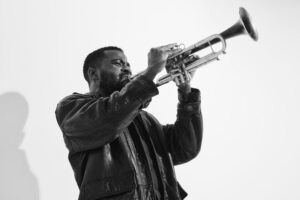
In this interview, Giveton Gelin explores the cultural roots, personal stories, and jazz influences behind Island Dreamer: III of III, celebrating Caribbean heritage, musical growth, and education.
1. Island Dreamer: III of III is a deeply personal project that connects your Bahamian upbringing, Haitian heritage, and musical journey. What inspired you to bring these different aspects of your identity together, and what does the title Island Dreamer ultimately represent to you?
I think my life has been leading up to this moment. Time and time again, I reflect on my early experiences and understand why they needed to be a part of my journey.
Leaning into my identity is the focus of Island Dreamer. This work presents who I am in a very candid way. Throughout my journey, I have spent countless hours in church playing piano for groups of people who are not necessarily impressed by harmonic sophistication, but rather by a strong melodic and rhythmic focus. My piano playing became the vehicle for many of the compositions that listeners experience on this album.
I ventured from the melodies and rhythms of the church into the heritage of Bahamian Junkanoo, eventually discovering jazz in America. It’s a chronological story that paints a clear cultural picture of three distinct backgrounds: the Bahamas, Haiti, and America.
2. The album opens with Hurricane Dorian (A Moment of Silence), reflecting on one of the most devastating events in Bahamian history. How did you approach translating such a powerful collective experience into music, and what emotions did you hope listeners would take away from this composition?
I wrote “Hurricane Dorian” while studying at Juilliard during that period. By the time I returned home, my friends had shared personal accounts of how their loved ones had been directly affected, whether through losing their homes, experiencing sudden and drastic changes in their living conditions, or losing their lives. The most vulnerable populations were among those living in the shantytowns of Abaco, The Bahamas. we mourn and honor them with this track.
3. Throughout your career, you’ve received guidance from jazz legends such as Roy Hargrove and Wynton Marsalis. Both are honored on this album through recordings of their voices. What are the most important lessons these mentors taught you, and how have those lessons influenced your development as a musician and composer?
One of the first things I understood when meeting these trumpet giants at a young age was that their concerns were different from mine. They had already mastered the technical aspects of music to the point where their focus had shifted toward musicality and a sound conceptual approach to the music. At that young age, I wanted to know why they played a certain melodic line over a particular chord, for example.
As I grew under this kind of guidance, I began to understand the importance of adopting the mindset of great players. It’s a nonverbal language, something you observe rather than hear explained. You see it in the way they walk onto the stage, the seriousness they bring to the music, their humility, and their constant desire to learn was the best thing for me to witness in person. This mindset in my opinion will always support personal growth in all facets including music. Wynton, in particular, advised me early on, when I was 14, to study Louis Armstrong’s Hot 5s and Hot 7s recordings and incorporate the vocal stylings of the singers I grew up listening to in church. Roy Hargrove was excited to tell me about Fats Navarro and his solo on “The Tadd Walk,” emphasizing how integral bebop is to the jazz lexicon. Roy was also a master of the room. He could influence the entire musical environment by playing just one note—or nothing at all. Valuing musicality was the greatest lesson I could have learned from Roy. To me, musicality is about the emotion and context we bring to music, something he understood on a very deep level.
4. One of the album’s most intimate moments is I Solemnly Swear to Live, featuring Jon Batiste on piano. What personal experiences inspired this composition, and how did collaborating with Jon help bring its emotional message to life?
Jon Batiste was the perfect person I could’ve asked to interpret this piece for me, because his piano playing is likened to a vocalist. He is able to communicate depth on an instrument that is limited in its ability to express range like a vocalist can. This is the power of Jon’s gift—the ability to play one note and have it be felt. Piano players might refer to this as a “nice touch,” but the emotion behind what he was playing was so potent, yet he utilized restraint to capture the seriousness of the song.
5. Your music blends traditional jazz with Caribbean rhythms, gospel influences, and contemporary sounds. On Island Dreamer: III of III, you also reinterpret songs such as Rihanna’s Take a Bow and T.O.K.’s Footprints. How do you approach transforming music from different genres into your own jazz language while preserving its original spirit?
We all know Rihanna’s hit “Take a Bow,” the goal was not to detract from the original but to add more tension. It’s the difference between enhancing a work and completely reimagining it. In this case, I wanted it to feel nostalgic but different enough to stand out. In connection with T.O.K.’s “Footprints,” I wanted to create an anthem-like feel in the melody. It’s such a beautiful song, and I simply wanted to add my own touch to it. Sometimes, you don’t need to add much to create the desired effect. I prefer making better musical decisions over adding complexity for complexity’s sake. I always want to go with the option that seems to take us in a clear musical direction.
6. Beyond your recording career, you’ve established the Island Dreamer Academy to support young musicians in the Bahamas. Looking toward the future, what kind of legacy do you hope to build through your music and educational initiatives, and what message would you like to share with young Caribbean artists pursuing their dreams?
Island Dreamer Academy is what I was offered when I was 14. A sponsor took my brother, my mentor, and me to New York to attend the Manhattan School of Music Summer Camp. Island Dreamer Academy helps students travel to New York, with all expenses paid, to experience the highest levels of music. I am deeply grateful to be able to pass on that same life-changing opportunity to the next generation of The Bahamas. To make it all happen through this album was a dream come true. I hope to build a legacy of other Island Dreamers who dare to dream without fear of rejection or limiting thought patterns. It is very common in the islands for us to believe that international success can only happen through connections and an abundance of resources. The truth is, knowledge, belief, and proactiveness are all you need to achieve anything in this life.