
Katya Redpath
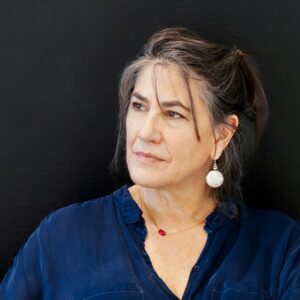
Katya Redpath reflects on her late-blooming songwriting journey, diverse musical influences, recording debut Time Changes Everything, creative collaborations in Austin, and the life experiences shaping her evolving artistry.
1. Time Changes Everything is your recording debut, but the songs come from decades of experiences, travels and musical influences. What finally made you feel that the time was right to turn those experiences into an album?
Well, thank you for the question, but that assumes my late-blooming career was all planned out ahead of time, which of course it wasn’t at all! It’s true, I began writing songs late in life, and I suppose organically my experiences and various musical influences all showed up in these creations. But up until that point, I was just living, and I had no idea I’d have enough material to make an album when I first walked into 6-String Ranch. I just started with one song, and that was “Wave.”
2. Your musical background stretches from classical music and Russian émigré songs to blues, bluegrass, Americana and global traditions. How did such a diverse musical upbringing shape the way you write and arrange songs today?
That is such an interesting question. I think exposure to different kinds of music meant I never felt constricted to stay within any one song structure or sound. I could absorb everything really well, but my problem was figuring out where I fit in and what my own style was.
This may seem strange, but I really think that all those broad influences were actually more responsible for delaying my musical career. I played and adored and explored music all of my life, but never believed I could enter the ranks of my heroes, the actual songwriters. I learned hundreds of songs, and if I put two notes together, I could instantly pick out a familiar tune, like a “Name That Tune” game, which would just kill my early attempts at songwriting. I was really hard on myself. Ultimately, I had to shift something quite deep to get kinder to my infant songs. I had to learn to be open within the creative process and trust myself. It was much harder than it sounds. But now it’s easy! (Yoo-hoo, can you hear that, past Self?)
3. Songs like “Wake Up,” “Put It in a Song,” and “The Phoenix” explore truth, resilience, music and renewal from very different perspectives. What connects these songs for you, and what were you hoping listeners would take away from them?
I really have to think, because each song came to me so differently, and each has such different influences. “Wake Up” channels Carole King and John Lennon with its percussive piano; “Put It in a Song” has definite soul vibes, and “The Phoenix” took liberties like some British and acid rock, drifting in and out of classical music with even a melodic line adapted from Stravinsky’s “The Firebird.”
In all of these, I feel I am speaking directly to someone, trying to be real, even though one of the songs is about a mythical bird! But mythology may be the most grounded response to the turmoil we are living through. I do like to connect to people, to bring hope, and a little lightness and humor.
Somebody once told me I was earthy, fun-loving and philosophically loaded. I guess that sums it up pretty well, but I hope I’m compassionate, too.
4. “Hot Mess” brings a very different energy to the album, with humor, rebelliousness and a strong sense of personality. What inspired the song, and do you feel humor is an important part of how you express yourself as a songwriter?
Haha, well, it’s funny you mention humor, because in that song, the joke was on me! All of my songs sort of write themselves, and often I don’t really find out what they are truly about until later. This one masqueraded for a while as a song about my daughters, and maybe some of their friends, and the reckless activities I knew they’d never fully admit to. But of course, duh, it was totally about me and my own wild escapades. That song unearthed some of my past for me and forced me to look in the mirror, and it was funny.
I daresay we’ve all had those calls to the wild, and those close calls we’d probably prefer our mothers never knew about!
So, in the end, I think “Hot Mess” is dedicated to all curious, passionate, adventurous women: We’ve been there! Thank your lucky stars, it’s going to be OK!
5. You play most of the instruments on Time Changes Everything and co-produced the record with Matt Smith in Austin. How did working in Austin’s musical community and collaborating with Matt influence the sound and direction of the album?
First of all, I have to say that Austin is the most welcoming and supportive place for making music. Playing in regular jams, in several bands, and with kind friends and teachers has exercised my skills and helped my confidence so much.
I owe so much to my producer, Matt Smith. With his forty years of experience, he always remained generous and open to my suggestions, allowing for a true collaboration, as well as for real fun and experimentation. We’ve had so many laughs along the way. It’s been fantastic. But at the same time, he really knows how to put in the screws and get the best performance out of me, even when it’s painful.
We didn’t go about building a particular sound; the sound just arose from the body of work. I didn’t have a clear idea what my style or direction was going to be, and so we just treated each song as an individual and ended up with what we got. I love this quote from John Hartford: “Style is based on limitation.” That is so true. Although I play in a lot of genres, I guess it’s that weird patchwork combo that defines my limitation, and so my style.
6. Your life has taken you through music, history, law, international relations, farming and different cultures, and you’re already working on new songs and other creative projects. Looking ahead, what musical or artistic territory are you most excited to explore next?
I do have some exotic ideas for projects in the future, but I don’t want to change too much of what I’m doing now, which is mostly writing and recording, with a bit of performing as well. I keep writing new songs all the time, a practice which keeps my mind and body and soul healthy. I also stay busy with family, international issues, and running a farm. But I am excited to nearly have enough good songs for two new albums. I hope to keep on collaborating with wonderful artists and learning new skills.
Thank you so much for your thoughtful interest in my work. It really is like living a dream.