Mary Strand
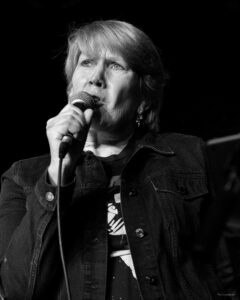
Minneapolis singer-songwriter Mary Strand discusses “Annunciation,” a powerful rock song born from grief, anger, faith, and hope, confronting gun violence while celebrating music’s power to inspire change.
1. “Annunciation” was written on the very morning you learned about the 2025 shooting at Annunciation Catholic Church, a place that was personally familiar to you. What went through your mind as you picked up your guitar that morning, and how did the song begin to take shape?
I’m in a singer/songwriter challenge group, and I had actually planned to write a different song that morning for our weekly prompt. But the Annunciation news was everywhere as I sat down with my guitar, and I knew immediately that there was only one song I could write that day. I went to church at Annunciation when I was a kid growing up in south Minneapolis, so I could picture it vividly. It was heartbreaking. One photo posted online almost immediately, of a mom running barefoot in the street toward Annunciation, hit me particularly hard. I just instantly knew what I had to say and how to say it. It was about Annunciation, but it’s also about all of the senseless gun violence, especially violence against kids. I thought of Sandy Hook, of Columbine, of Parkland High. I was upset, angry, and deeply sad. I just put it all out there.
2. The song transforms grief and anger into a direct call for meaningful action against gun violence, particularly violence affecting children. What message did you most want listeners to take away from “Annunciation”?
I wanted to remind listeners of ALL of the mass shootings involving kids, so I named several of them, especially the ones that personally hit me the hardest. I started with Annunciation, of course, but there are so many, and I wanted to write a song demanding that we make this a better world: especially for our children. I went hard against politicians in the song, but also voters: we have the power, collectively, to elect people who will do what’s right, but especially for our children. It’s ALL about the children. They’re our future and our hope for a better world.
3. The lyrics challenge the idea that “thoughts and prayers” alone are enough in the face of repeated tragedies. How did you approach expressing that frustration while still holding onto the sense of hope that runs through the song?
I’m all for prayers (or however people feel called to express their beliefs), but I can’t stand the thought that people mindlessly say “thoughts and prayers” and then go on about their life. But I’ve lived my life hoping and working for a better future, and I care deeply about making this a better world. We can do this. And without that hope, we have nothing. So in my song, I call on people to quit relying on “thoughts and prayers” and start taking action, including by making good choices in the voting booth.
4. “Annunciation” carries the raw energy of punk, garage, and indie rock, with influences ranging from Joan Jett and The Pretenders to The Clash and Minnesota bands such as The Replacements. How did those influences shape the sound and emotional impact of the track?
Those bands and others like them very much shape my sound. I love rock! (I love Joan Jett!) And I particularly love the intensity of punk rock, the freedom of garage rock, and of course the independence of indie rock. If I’m going to make a statement (and increasingly, I do that in my songs), I find it easiest when I’m expressing myself from a starting point of rock & roll. Even the strum I use when first writing a song shapes the sound and feeling of the track. On “Annunciation,” from the outset I played what I think of as my own classic vibe: a driving punk strum all the way.
5. You initially found it difficult to perform and record “Annunciation” without becoming emotional. What was that recording process like for you and Mary Strand & The Garage, and did the song evolve emotionally between writing it and finally recording it?
I’m not usually one to cry, but I cried several times that first morning while writing “Annunciation.” The line, “Oh, Sandy Hook, Sandy Hook” is particularly tough for me: ALL those little kids who died. I truly can’t bear the thought of it. When I first played it for two of my bandmates, Ryan Smith and Mark Wade, before we ever recorded it, more tears were in my eyes. But the beauty (or sometimes not!) of recording is that you play and sing a song over and over until it’s right, and the repetition helped calm me down. And my band, Mary Strand & The Garage, started playing the song this past January, so we’ve now played it live several times. But it’s still always emotional to me, even though you’ll probably no longer see it on my face. It’s also one of a few songs of mine that always has a few audience members talking to me about it privately after a gig, because it touched them, too. That’s what it’s all about.
6. “Annunciation” is the first preview of your upcoming fourth album, while you also have a Christmas rock album planned for later this year. Looking ahead, what can listeners expect from this next chapter of your music, and how do you hope your songwriting can continue to make a positive difference?
The Christmas rock album has five songs of mine, all festive and mildly gritty rockers in my signature style, and five songs that I wrote with five friends in my songwriter group, most of whom write what I’d call Americana. So those five songs are a blend of my rock and their Americana, which is a bit of a twist. We call that album “controlled chaos,” which I think is perfect. It’s Christmas, so it has to be festive, but not all aspects of Christmas are fun for everyone, so I touch on those, too. The upcoming fourth album, which will include “Annunciation,” is very much written from my perspective as someone from Minneapolis, especially after ICE and everything else we went through last winter. It’s defiant and angry, but it also includes my profound faith and hope for and absolute love of Minneapolis. It’s a love letter to Minneapolis. I think it’s in large part a continuation of the defiant but hopeful attitude I brought to my 2025 album, I Don’t Need Your Permission, but as time goes by, I seem to be getting even more fierce. I call out injustice, but I want us to do better. I hope it will indeed inspire listeners, much as Bruce Springsteen’s “Streets of Minneapolis” inspired us here in Minneapolis. The more of us who send this message out into the world, the more hope we all have.