Monsieur Herr
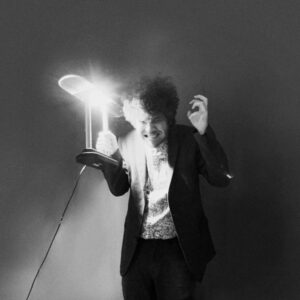
Monsieur Herr discusses The Distortion Years, artistic experimentation, irony, self-doubt, and the freedom to create without worrying about originality or convention.
1. The Distortion Years seems to embrace the idea of distortion—not only in sound, but also in structure, convention and even artistic expectations. What did you want to challenge or disrupt with this album?
Well, “The Distortion Years” is admittedly a very weighty title. Very grandiose, very pretentious. The Monsieur Herr project on the whole is, really. There are only so many things you can do as one person, and inevitably you develop a lot of identifiable characteristics as a through-line, but ideally I would like to say I’m in the business of wanting to surprise or confound people. It’s all incredibly selfish and indulgent. I have a lot of admiration for people like Sparks and David Bowie, who continuously refresh and redefine themselves, and aren’t beholden to one particular style or point in time. It’s the avoidance of artistic stagnation. Personally, I have an issue where once I’ve been doing something for a while, that’s the perfect time to stop and do something else. I’m also just a chronic overworrier.
2. The album has a deliberately rough and abrasive character, while still allowing room for polish where you feel it belongs. How do you decide which elements of your music should remain raw and which should be refined?
The album, more or less, sounds exactly the way I want it to sound. I do very much enjoy polish and more sophisticated-sounding stuff—Steely Dan and Prefab Sprout are some of my favorite bands, for example. But I also just love noise and abrasiveness. I think a lot of records nowadays are just kind of afraid of sounding weird or off-putting. Even “lo-fi” sounds professional. I like to think my strength in this regard is that I’m a really terrible, devil-may-care engineer. That’s not to say I don’t care about the way things sound, or that I don’t want my records to sound as good as they can, because I very certainly do. But these things are all subjective. There will be people who hear this record and not be able to get into it because the artistic choices and the way it’s produced just don’t agree with their own sensibilities. That’s fine. I figure the people who really like it will really, really like it. It doesn’t matter if it’s a single-digit number of people. I’ve gotten this far in and I don’t think I’ve actually answered the question. It just comes down to intuition.
3. Your lyrics move between absurdity, irony, self-consciousness and surprisingly personal reflections. How important is humor and self-deprecation to the way you explore more serious ideas?
There’s a part of me that’s allergic to outright soul-bearing. That, and I don’t have any real interest in the sort of confessional, surface-level stuff that seems to be popular among songwriters nowadays. I like distance, I like abstraction, I like obfuscation. Basically, it amounts to the fact that I’m a pathological ironist and a huge coward. I’m also of the opinion that songs and subject matter don’t necessarily have to come from yourself, or from your own personal life. The fun thing about art is that you can just make up whatever you want, and the only boundaries are the arbitrary ones you construct around yourself. Maybe art is ontologically evil, because it’s all about lying.
4. “Nihilism Blusche” is described as autobiographical, particularly in its exploration of insecurity, cynicism and the thin line between detachment and simply being cruel. How personal was the process of writing that song?
It’s more so drawing from personal experience as a baseline. A lot of the other lyrics in the song were intended to sort of undermine my own perspective a little, in a, “Oh, this guy thinks he’s so smart and has it all figured out, and he thinks he’s in a position to condescend?” sort of way. So I’m playing that aspect of it up a bit by calling myself “the CEO of This Sort of Thing, LLC.” and things like that, since I’m not so sure a lot of people who are teenagers want to be talked down to by schmucks in their 20s. At the same time, it is true that the teenage years are a very transitory period in a lot of people’s lives, and when you do get older, a lot of people ARE going to realize, you know, “Oh, okay. I could be kind of dumb when I was a teenager, and it sort of WAS because I was a teenager.” Nobody wants to be told that at the time, though. But the rest of the lyrics are pretty free-associative, for the most part.
5. The Distortion Years was recorded primarily between February and June 2026, with the title track originating from earlier sessions. How did the album evolve during that period, and did the final version become something different from what you initially imagined?
There’s a world in which the title track of this album ended up on my last one, “Everything’s Great.” That album might be even more out-there than this one. I just didn’t have any good lyrics for it, and I thought, “Well, okay, I’ll just finish it later and put it on the next one.” Lo and behold. There was a point in time, very early on, where I wasn’t sure—well, I was sure I wanted to continue in the sonic vein of “Everything’s Great,” to make a more concise statement in that mode, but I didn’t know the specifics. There were some things I had written and ultimately scrapped that was more in line with the power pop-type stuff I’m sort of predisposed to tossing off, but it wasn’t doing it for me. I’ve made more than enough dodgy power pop. The stuff that replaced it, the more YMO-ish stuff like “Boogie Wonderland” and “My Halcyon Days”—that all came very late in the game.
6. The album repeatedly questions originality, artistic excess and the sheer amount of music being created in the world. After making The Distortion Years, do you feel more convinced that artists should keep contributing to that cultural “surplus,” or has the process changed the way you think about creating music?
I don’t think there’s any stopping the people who are going to do this kind of thing anyway. We’re all doomed. The “music surplus” concept is almost entirely a gag at my own expense. I’m acknowledging that I’m regurgitating into the abyss. I might as well have fun with it, and make work I can be proud of.