
Ghost of Panama
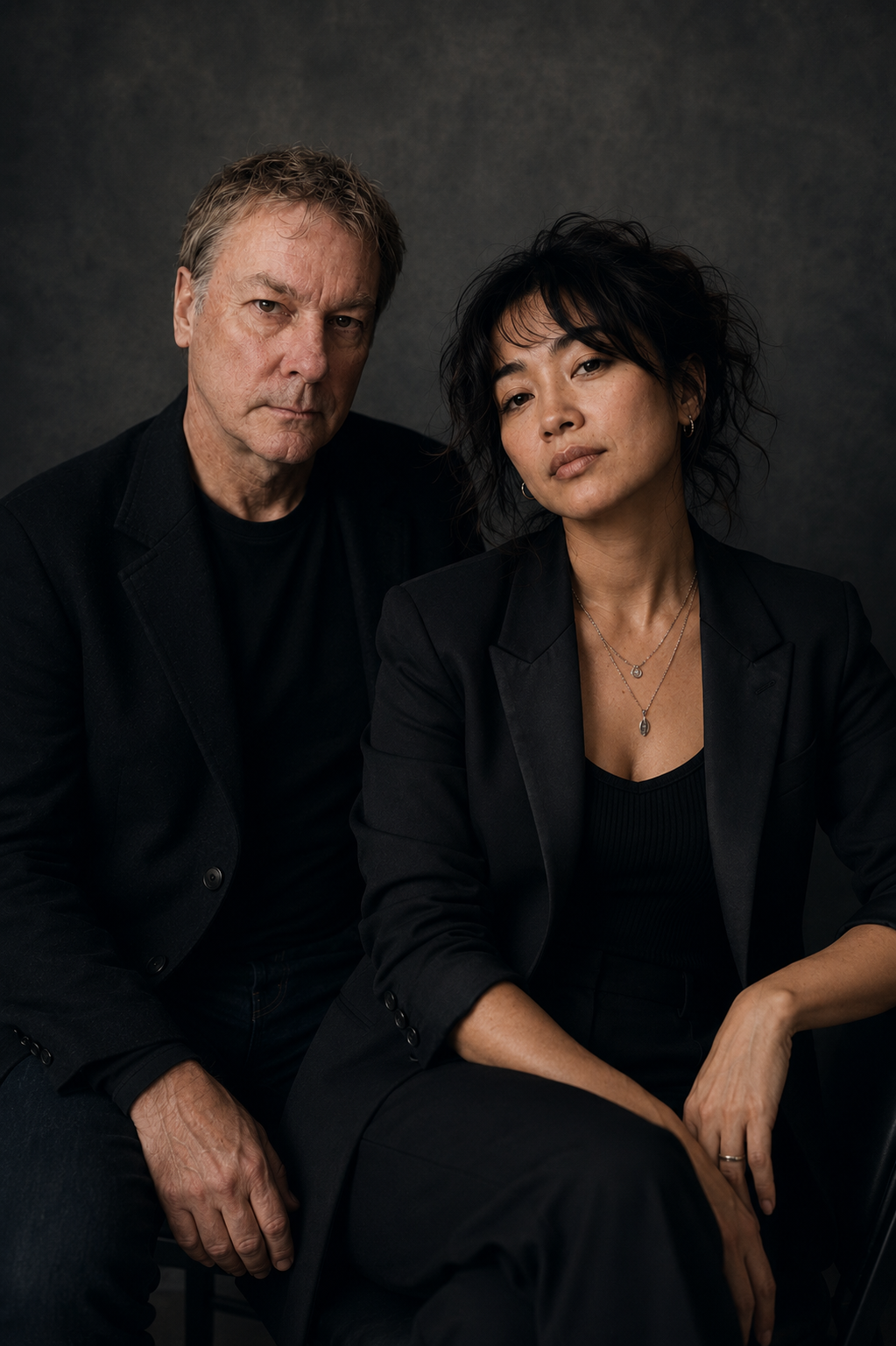
Ghost of Panama discuss reinventing Bob Dylan’s “Subterranean Homesick Blues,” creative independence, experimentation, and their plans for what comes next.
1. “Subterranean Homesick Blues” is a bold reimagining of one of Bob Dylan’s most iconic songs. What first attracted you to this particular track, and what did you want to bring to it that was uniquely Ghost of Panama?
The interesting thing about “Subterranean Homesick Blues from a Bob Dylan perspective was that was from the time when he started to go electric. Cue shouts of “Judas” etc. It’s a sort of turning point.
It was also for us. Previously, we’d only done cover versions as encores when we played live and we had one major criterion for a song to be good for us – essentially that people wouldn’t see it coming. When we decided to actually release some non-original songs post-“Last Food on Earth” we made a deal with ourselves – we’d stick with the “keep it unexpected” approach and also release a cover if, and only if, we could own it. We want people to think of anything we do as a Ghost of Panama song and should people then discover the original and like it (or even prefer it to our version) then that’s great and everyone’s happy. For example, and it’s very relevant today, we would never cover “Jolene” as it’s so iconic and it’s not clear what new we’d bring to it. We’re into experimentation and discovery not tributes.
So, we decided that, while didn’t want to put anything original out over the summer, we’d try and get our heads around covers and licensing and all that stuff without prejudicing any of our original material.
So, why “Subterranean Homesick Blues”? I think it’s a bridge for us. It’s a sort of early rap song. We tried to do something similar with a couple of songs on the “Before Records Began” EP. We tried to push what we could do with rap in a different context. In retrospect, it’s not clear that it really worked as well as we would have liked. In this way, we go back to the roots and try and start with a clean slate.
2. The original carries a strong counter-culture and anti-establishment spirit. How did you approach preserving that rebellious energy while completely transforming the musical identity of the song?
That was easy. We rather consider ourselves as outsiders. We don’t want to play the music industry game. We’ve really just taken a position where we’ll just do what we want, do what is creative, do what is interesting and say what needs saying. This fits well with the original which is essentially saying “just listen to yourself and don’t buy into stuff from elsewhere”. It’s quite a powerful message which I think we were able to deliver in a really modern way without sacrificing any of Dylan’s attitude.
3. Your version sounds remarkably different from Dylan’s original. What were some of the key creative decisions you made in terms of arrangement, instrumentation, vocals, and overall atmosphere?
That was easy. We just threw almost everything out except the bass line which we kept quite close to the original. We certainly didn’t want to do some sort of chugging blues song although we kept a small amount of harmonica.
Then we homed in on the messages of not following leaders and disappointment in life’s outcomes which these days is leading to nasty populism in many parts of the world. Dylan’s original message remains very relevant today.
We’ve always used a lot of voice samples. We found one from the BBC which is quite famous with a BBC weatherman dismissing the prospect of an impending hurricane. It fitted so well with Dylan’s original lyric.
4. You recorded the track in your home studio in West London. How did working in such an intimate and independent environment influence the recording process and the final sound?
It’s sort of our safe space. I think that sense of safety allows us to experiment and take chances. If we were in a commercial studio with the clock running and some engineer sniggering at all our mistakes then we’d feel more inhibited.
The environment is not necessarily ideal. It’s an odd-shaped room at the top of Keith’s house and the acoustics are not all they could be. However, we’ve learned to work around it these days.
5. After the critically acclaimed debut album The Last Food on Earth, you found yourselves deciding between taking a break and continuing your creative momentum. How did the idea of releasing a series of cover versions come about, and what does this project allow you to explore creatively?
After “The Last Food on Earth”, it was clear that Keith was pretty well burned out at the time. The whole album was exhausting for both of us but he was carrying it in his head 24/7 and digging back into a lot of his experiences to write the material.
However, we really wanted to keep things moving. We didn’t want to just say “here’s the album, thanks very much, see you next year”. We really want to be able to show a body of work, to show how good we are and to let people make their own decisions. We can point now to three EPs, one album and a bunch of singles so we’ve been around a bit. There is, though, so much more that we want to do and this was a way of opening up another front.
6. Ghost of Panama have shown a willingness to reinterpret established material in unexpected ways. Looking beyond “Subterranean Homesick Blues,” how important is experimentation and reinvention to the band’s artistic identity, and what can listeners expect from you next?
Well. There’s a whole heap of stuff. Yes, we certainly love to experiment and push boundaries but we also love a good tune and a good time.
I think we’ve used this summer period well to refine our approach and learn. Unpicking other people’s songs can be a bit tricky. That’s where you start, but the real thing is to rip it all apart and then put it together again in a completely different way so that it sounds fresh and new to the listener. We also now understand how to navigate the cover licensing thing. However, we are not and never will be a covers band.
We have (in my opinion) one of the best songwriters in the U.K. I have seen Keith throw away tunes and lyrics that others might have killed for as he hates things that appear conventional and formulaic.
We simply don’t need to do covers just to add songs but we’ll do them happily for fun or to offer another perspective to our own material. From now on, all Ghost of Panama covers will appear only as support to our originals.
Very shortly we intend to release “Hey, Cristiana!” with the old 1970s Helen Reddy song “Angie Baby” as a b-side (does b-side really mean anything these days?) which complements the theme of the lead song really well.
After that we are planning a couple more singles – most likely “Jim Morrison’s Decay” or “The Bride Wore Black” before embarking on the next album. The one thing that I think I can say about that from the discussions that Keith and I have had on that issue is that the next album will not be a step back from “The Last Food on Earth”. We will stick to our guns and it will really build on the standard and approach of the earlier album.