
JT Catalano
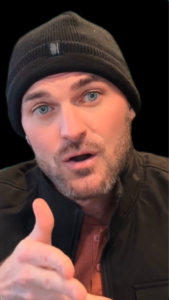
Following the release of the deeply personal single “Felon Angels,” JT Catalano has earned growing recognition, with the song reaching No. 23 on Groover’s United States Singer/Songwriter/Folk Chart. In this interview, he reflects on the true story behind the song, its cinematic sound, and its powerful themes of resilience, justice, and humanity.
1. “Felon Angels” is based on a deeply personal experience that happened more than 20 years ago. What made now the right time to finally turn this story into a song?
For most of those 20 years, I understood the experience mainly as something that had happened to me. I had been attacked by a group of people, mistaken for another man, arrested for gang assault, held on a $100,000 bond and left facing a possible seven-year sentence. My parents eventually put their house up as collateral to bring me home. Then the case hung over all of us for six months before the trial began. When the alleged victim never appeared in court, the charges were dropped.
But time changed what I understood the story to be about.
It stopped being only the story of a wrongful accusation. It became a story about environment, identity, addiction, sentencing, family sacrifice and the unexpected person who protected my future when I was already preparing to protect myself.
Writing the full chapters for my book helped me finally see the entire chain of events instead of only the most traumatic pieces. A casual invitation led to a party. Someone else committed the assault. A woman searching for him decided I looked enough like the man she wanted. My friends eventually came clean. My parents risked their home. And inside county jail, a former champion boxer serving life became the person who made sure one more violent incident did not add another charge to my case.
I had to live long enough to understand that the boxer was not a side character in a story about me. He was the heart of it.
Once I began releasing music as JT Catalano, I knew I could not keep avoiding the experiences that had actually shaped me. “Felon Angels” came when I finally had enough distance to tell the story without making myself only the victim, him only the criminal or the system only a backdrop.
Twenty years later, I could finally hear what the story was trying to become.
2. The song explores themes of wrongful accusation, addiction, punishment, and redemption. What was the biggest emotional challenge in revisiting these events while writing the lyrics?
The hardest part was returning to the period when I could not offer my own family certainty.
I remembered walking alone. I remembered a group rushing me. I remembered being kicked and hit from every direction while I fought the first person who reached me. I knew I had been attacked. But because I had blacked out earlier that night, I did not possess a complete film of every event.
Then, while leaving the police station after the first arrest, I passed a man whose face had been brutally injured. Moments later, officers came running outside with their guns drawn, put me face-down in the gravel and rearrested me for gang assault. In county, with seven years hanging over me, the missing section of my memory started working against me. I began asking myself whether there was something my brain had erased.
My father came to the jail, picked up the phone on the other side of the glass and asked me directly, “Did you do this?” The only honest answer I could give him was that I did not know what happened during the missing time, but I remembered being alone, being rushed and being beaten. He believed that I believed what I was saying—but he also knew that “I don’t remember” would not mean much to a judge.
My parents ultimately put their house behind that $100,000 bond. Revisiting the story meant confronting what they were willing to risk for a son who could not hand them perfect certainty.
The case then remained alive for six months. Even after I was physically home, my future was still sitting in a courtroom waiting to be decided. When the alleged victim failed to appear at trial, the charges were dropped—but six months of your family’s home and your own future hanging in the balance do not disappear just because the paperwork finally does.
The emotional challenge was not admitting that I feared a fight. I did not. It was revisiting the powerlessness of knowing that the legal system, a missing piece of memory and somebody else’s accusation could decide whether I ever had a normal life again.
3. One of the most powerful elements of the story is the boxer who protected you in jail—the “felon angel.” What impact did that man have on your life, and what do you hope listeners take away from his story?
He may have protected the entire course of my life.
He was an older African American man who had once been a champion boxer—real titles and real wins. When boxing disappeared from his life, the healthy outlet disappeared with it. Addiction entered that empty space. Crack led to homelessness, arrests and strikes until he was serving life on a third-strike drug charge.
There was another inmate on the block waiting to be transferred on eight life sentences. He had been staring at me every day and looking for a reason to turn that tension into violence. The boxer saw exactly what was developing. He explained that if the man pulled me into one of the barred cells and the door shut, I would have to fight for my survival. Then he told me:
“Just keep your eyes where they are. I see enough for both of us.”
That line explains the relationship better than anything I could invent. He was not treating me like I was helpless. He was letting me know that while I controlled my eyes and my actions, he would watch the wider room.
When the other inmate eventually blamed me for throwing away a chess piece, I knew exactly what he was doing. The missing piece was only an excuse. I kept chewing, kept my eyes down and watched his chest and hands in my peripheral vision while preparing for fists, metal or whatever came next.
I was not afraid to fight him, and I was not afraid to die fighting him. I was horrified by what surviving that fight might do to my case. If I fought him and won, the paperwork would not necessarily say self-defense. It could simply say that an inmate assaulted another inmate. I was already facing seven years. Another charge could mean never getting out.
Then the boxer spoke from behind me:
“I did it. I threw it out. What you wanna do about it?”
He knew he had the reputation, the physical ability and nothing left for the system to threaten him with. The other inmate backed down and said I must have a “felon angel.” That was where the title was born.
Later, the boxer told me that I reminded him of women who had once helped him for no reason and given him a fresh start. He was paying forward a kindness that had survived somewhere inside him through addiction, homelessness and a life sentence.
The system had taken almost everything from him. What remained was his character, his reputation and his hands. He used all three to protect a stranger’s future.
I hope listeners understand that he did not become human because he helped me. He was already human. I was simply placed close enough to witness it.
4. Musically, “Felon Angels” blends alt-country, Americana, hip-hop, cinematic melodies, and heavy bass. How did you develop a sound that could carry such a complex and emotional narrative?
I built the music around the different jobs the story needed the sound to perform.
The hip-hop verses carry the evidence. They needed enough rhythmic density to hold the arrest, the drug laws, the strikes, the incarceration, the addiction and the moral contradictions without turning the song into a slow explanation. The internal rhymes and tightly packed language mirror the way charges, labels and consequences begin stacking on top of a person.
The heavy bass carries the physical pressure. This story happens in confined spaces—police cells, county bunks, barred rooms, bolted-down tables and a block where violence can change your legal future in seconds. I wanted the low end to feel like weight in the room rather than simply a modern production choice.
The alt-country and Americana elements provide the lived-in storytelling. They create the feeling of a real person recounting a real event, where guilt, innocence and redemption do not divide into clean categories. That roots-oriented language gave the story age, consequence and moral gravity.
The cinematic melodies and sung hooks perform another role. The verses tell you what happened. The hooks tell you what it meant.
That contrast was necessary because the story contains two realities at once. There is the claustrophobia of the jail and the legal system, but there is also an act of grace large enough to open the entire story emotionally. The record needed to move between pressure and release in the same way the chapter does.
I did not combine genres to demonstrate versatility. I used each one as part of the narrative architecture:
Hip-hop carries the facts.
Bass carries the threat.
Americana carries the memory.
The melodic hooks carry the soul.
The song had to feel like a short true-crime film told through music—tense enough to honor the danger, but human enough to honor the man.
5. The song challenges the way society often labels people as either heroes or criminals. How important was it for you to highlight the humanity that can exist within people who have been judged or discarded by the system?
That is the central contradiction inside the title.
I had been labeled the aggressor because fifteen people told one version of what happened while I stood there alone, injured and unable to give police a complete timeline. The man who actually committed the assault was walking around in borrowed clothes after discarding his bloody ones. My friends were viewed by my parents as the responsible kids, but they were also the people who had unknowingly helped him dispose of evidence. To their credit, once they learned I was being held for it, they went directly to my parents and told the truth.
Inside the jail, the boxer had been labeled a felon and an addict. Those labels were not imaginary, but they were incomplete. They did not explain that he had once been a champion, that boxing had been his outlet, that addiction had consumed him after that outlet vanished or that he would use the little power he still had to protect someone else.
I was a white suburban kid from Bethel who had spent years wearing identities like bad boy, legend, victim and wild card. I was innocent of that gang-assault charge, but I was not innocent of repeatedly placing myself in reckless environments and assuming my intentions would protect me from consequences.
The chapter forced me to recognize that environment does not care how you describe yourself. I wrote that intent and environment had been playing chicken for years, and this was the first time I believed environment might win.
So I did not want to create a simple story where I was the hero, the dangerous inmate was the villain and the boxer was a saint. The truth is more uncomfortable.
People can be guilty of one thing and innocent of another.
They can damage themselves and still protect somebody else.
They can be legally condemned and morally courageous in the same lifetime.
They can be privileged and still powerless in a particular moment.
They can be given a second chance and still need to decide what to do with it.
Highlighting that complexity was not an extra theme added to the song. It was the reason to write it.
6. Looking back on the events that inspired “Felon Angels,” what message would you like listeners to carry with them after hearing the song, especially those who may be struggling with their own mistakes, circumstances, or second chances?
I would want them to understand that a second chance is rarely created by one person alone.
My friends eventually came clean.
My parents put their house behind my bond.
The boxer stepped between me and another charge.
The alleged victim failed to appear when the case finally reached trial six months later.
The charges were dropped.
My second chance was built from a series of decisions made by other people—some correcting earlier mistakes, some taking enormous personal risks and one choosing to protect me when he had almost nothing left to gain or lose.
The boxer never received the kind of second chance I did. He was still serving life. But he proved that even when the system has declared a person finished, that person may still have the ability to change somebody else’s future.
That is one of the deepest parts of the story for me. He could not free himself, but he helped preserve my freedom.
The chapter also taught me that being innocent of one charge does not make every decision leading to that moment wise. I had spent years entering the wrong environments and assuming I could keep walking away. That experience showed me that eventually environment can overpower intention.
So the message is not simply, “Your past does not define you.” That is too easy.
The message is:
Your past is real.
Your choices have consequences.
Your environment matters.
Your labels may contain some truth without containing all of it.
And the next thing you choose to do still counts.
For a brief moment in the jail, OutKast came on television and men who had done terrible things—or had terrible things done to them—started nodding their heads together. Music cracked the room open and allowed everyone to remember that they were still human. Then the guards shut it off, and the room went back to silence and jail food.
But that brief opening mattered. Shortly afterward, the boxer saw me, recognized what was happening and decided I was worth standing up for. I left the next morning after my parents secured the bond, told him he might have changed my life and hoped I would never see him again—because seeing him again would mean I had lost the case and been sent to Fishkill.
Twenty years later, I wrote “Felon Angels.”
I want listeners to leave with the possibility that even inside a damaged person, a damaged system or a damaged chapter of life, there may still be one decision capable of bending the script.