
Tallulah Rendall
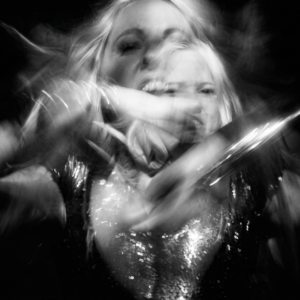
With Only Human, Tallulah Rendall delivers her most intimate work yet. In this interview, she discusses Shame, emotional healing, female empowerment, and the creative journey behind her deeply personal new album.
1. Your new single “Shame” explores one of the most difficult emotions people experience. What inspired you to write this song, and how personal was the process of bringing it to life?
“Shame” was written to support female empowerment, sovereignty and the journey of reclaiming your voice. Born from my own experience of allowing myself to be diminished and undermined, the song is intended as a reminder to know your worth and refuse to let others make you smaller.
When I sing it at shows now, I feel a sense of defiance, but also of reclamation, a commitment to take greater care of myself, to truly listen to my body and heart when I sense that something is not right, and to stand by what I feel. I had an experience in which I trusted someone and greatly misjudged them, putting myself in harm’s way.
My commitment now is never to ignore my intuition and, in doing so, to stand fully in my power. My hope is that others who hear this song will feel inspired to do the same.
2. Only Human is described as your most vulnerable and honest album to date. What was the biggest challenge in opening up so deeply through these songs?
Knowing that other people would hear them!
When I set aside time to write, the songs tumbled out as though they had been desperately waiting for the opportunity to be heard by me. It felt like a rite of passage. I was house-sitting for a friend with whom I had been running a Qi Gong and songwriting retreat in Devon. After the retreat, I spent ten days writing and I felt so settled in my body that I spontaneously decided to move to Devon, find musicians and create the album there. It all flowed seamlessly. I found a home the following week, and the musicians soon afterwards.
I was very particular about the sonic landscape I wanted to create, so I spent many months working with Rowland O’ Connor to refine the song structures and explore the world I wanted them to inhabit. That felt more important to me than it had on any previous album. Perhaps because with all other albums there had been more of a band sound defining the record from that start.
I wanted to create an epic record that was also sonically spaciousness that would allow the lyrics to soar, balanced by a power in the synths, cello, guitar, piano and drums that would draw the listener in.
Inspired by Jon Hopkins’ album *Ritual*, I wanted to create a drum organism, a universe that felt completely unique. So, Sam Walker and I spent months recording all kinds of weird and wonderful sounds, building a living drum organism that blended with voice patterns I had created that we could merge sonically with other instruments to propel the songs forwards.
3. The album touches on themes such as mental health, resilience, belonging, and emotional healing. How have your experiences as a qigong teacher and sound therapist influenced your songwriting?
Both my Qi Gong & Sound Therapy training completely transformed the way I create music.
I first began practicing Qi Gong 15 years ago, but it was with my previous album, *Love Carries Me Home*, that I really began to notice a shift in my lyrical style. Now, with *Only Human*, I can truly feel the difference. There is a level of clarity in both the sonic and lyrical worlds of these songs that wasn’t present before.
This is a little difficult to explain unless you practise Qi Gong, but my energy feels much more organised. I used to experience severe panic attacks and anxiety, and I really struggled to remain in my body. I would dissociate frequently, so when I listen to my older songs, I don’t hear the same emotional depth or clarity in the storytelling that these new songs possess. These practices have also supported an emotional maturity that has enabled me to write this album. I would be a very different person, perhaps not even alive, had I not found this path.
Sound therapy has also deepened the way I listen and my understanding of how sound, vibration, silence and the voice can affect us emotionally and physically. It has encouraged me to create music that does more than tell a story; I want it to offer listeners a space in which they can feel, process and reconnect with themselves.
This is why the album will be accompanied, as all my previous albums have been, by a hardback book containing its stories, images and lyrics. It will also include a QR code leading to an online portal I have built, where people can stream the music and access practices designed to support their mental and emotional wellbeing. These include Qi Gong videos, breathwork meditations and loving-kindness practices, as well as a podcast about music and mental health with the legendary Marc Marot, former Managing Director of Island Records, who has worked with extraordinary artists including PJ Harvey and Nine Inch Nails.
4. You’ve spoken about transforming pain into self-compassion. What message do you hope listeners take away from “Shame” and its powerful lyrics about self-worth and setting boundaries?
I hope it inspires listeners to reflect on whether they are holding clear boundaries for themselves and, if not, to take the opportunity to change that. Shame can be an incredibly isolating emotion, triggering the belief that we are somehow personally at fault or not enough.
At the same time, I believe it is important to take accountability for our actions and to learn from our experiences. This is where self-compassion comes in, not as a way of avoiding responsibility, but as part of the learning, growth and commitment to honour ourselves as we move forwards. It means becoming clear about what we will and will not accept.
I hope the song helps people reclaim their voice, trust their feelings and remember that they deserve to be treated with love, dignity and respect.
5. Your music blends alternative pop, cinematic textures, electronic elements, and deeply expressive vocals. How did you approach crafting the sonic landscape of Only Human to support its emotional journey?
The songs began simply, with my voice and either a piano or guitar, so the emotional vulnerability of each one was always at the core.
From there, Rowland and I refined the song structures and made sure each one was in the best key for my voice, while continually discussing the sonic landscape I wanted the songs to inhabit, the textures and flavors I felt would best support them.
Generally, I don’t listen to other artists while I am recording because I want to remain true to my own vision rather than inadvertently replicate something else. However, I had heard Jon Hopkins’ album *Ritual*, and I was so drawn into the world he had created that it heavily influenced our conversations. As a result, I felt strongly that I wanted to keep the album sonically sparse.
I wanted its sonic world to hold both vulnerability and strength, combining intimate vocals and organic instruments, particularly cello, piano and vocals, with electronic textures, atmospheric synths and moments of cinematic expansion. Some songs needed space and restraint, while others called for tension, distortion or a powerful and epic sculpting.
Throughout the process, the voice remained the thread connecting everything, guiding the listener through the album’s journey from pain, anxiety and disconnection towards self-compassion, empowerment and belonging.
It is also really important to acknowledge the incredible musicians I collaborated with.
Ben Roberts on Cello,
Sam Walker on drums,
David Curtis on Double Bass,
Rowland o’ Connor engineering & co-production and bits of piano, bass & guitar and Tommy Williams who did an epic journey mixing the record.
It was these team of big hearted and musical geniuses and their collaborative nature that enabled me to make this beautiful record, that I am extremely proud of and that says a lot as I have historically really struggled with listening to my albums! So thank you fella’s you are awesome!!!
6. After seven albums, international touring, and millions of streams, what continues to inspire you creatively, and what are you most excited for listeners to discover when Only Human is released?
I hope listeners discover that they are not alone in the feelings they experience. I hope these songs lead to conversations and encourage people to reach out to one another when times are hard. I also hope the online portal, with its music, Qi Gong videos, meditations, mantras and other resources, supports and inspires people to take greater care of themselves, one another and the planet.
As for what continues to inspire me creatively – well ….life! The lessons, experiences, connections, challenges and moments of beauty: all of it. There is an infinite amount to be inspired by, and I believe we are limitless in our potential to connect with those experiences and express them creatively in a way that is nourishing for all.