Ana April
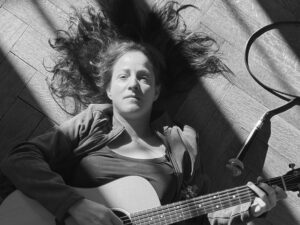
Blending thoughtful songwriting with subtle experimentation, Ana April continues to carve her own path through indie alt-pop. In this interview, she discusses the inspiration, creativity, and personal evolution behind her latest single, “Revolution.”
1. Your new single “Revolution” combines an accessible indie/alt-pop sound with a deeper message about personal transformation. What inspired you to explore this theme, and what does “revolution” mean to you on a personal level?
I’m fascinated by beginnings – by the thought, the impulse, that can set a person in motion. And by the question of why some of these impulses grow into something significant, while others quietly fade away.
For me, the song is less about grand political revolutions and more about the inner revolutions we experience every day: the moments when we challenge ourselves, shift our perspective, or choose a different path.
Another idea woven into the lyrics is the way creative people become captivated by something that refuses to let go of them – an image, a sound, a thought, an obsession. We surrender to it, and perhaps for a brief moment, we mentally leave behind the world as we think we know it.
2. The song features subtle rhythmic shifts and an experimental arrangement that set it apart from conventional pop. How did you approach the songwriting and production process to create such a distinctive atmosphere?
I wrote the song on the guitar without setting myself any rules or following a particular concept. I simply allowed whatever emerged at that moment to find its way into the music.
At the time, I was playing in a string ensemble and practising a piece in 7/8 time – and I’m fairly sure that influenced the songwriting in one way or another. I also play a little viola, so different musical worlds often overlap naturally in my work.
For the production, I wanted an element of playfulness and slight unpredictability that would resonate with the lyrics. In some ways, the song connects to one of my earlier productions, “Unarmed and Naked”. “Revolution” belongs to this ongoing thread of experimenting, exploring, and allowing unexpected ideas to emerge.
3. As both a musician and a scenographer, you work with sound and visual storytelling. How do these two creative worlds influence one another when you’re developing new music?
Yes, exactly – dramaturgy, storytelling, and conceptual thinking are key elements of my daily work as a scenographer.
One of the fascinating aspects of scenography is bringing together many small fragments – signs, symbols, objects – to create a whole. Individual elements often remain almost invisible until we begin to “read” them. Otherwise, they work on a more atmospheric level, shaping emotions and creating a particular mood.
Over time, I’ve probably developed a certain professional deformation – sometimes I become a little tired of constantly analysing everything through the lens of dramaturgy. :o) That is why I treasure those moments in composing when I enter a state of flow and the analytical part of my mind quietly steps aside.
4. Your influences range from Janis Joplin and The Beatles to Kate Bush, Supertramp, and Pink Floyd. Which artists had the strongest impact on “Revolution,” and how do you balance inspiration with your own artistic identity?
I’m not entirely sure where the influences behind “Revolution” come from. As I mentioned before, the music I happen to be immersed in at a given moment always finds its way into my work – and that can just as easily come from classical music as from pop or folk traditions.
My songwriting has also been shaped by artists such as Suzanne Vega, whose work often combines storytelling with metaphor in a very subtle way.
But when I write a song, I try not to think too much about influences at all. I simply try to be myself. And when that succeeds, I think that is one of the most beautiful aspects of the whole musical process.
5. Your family history is closely connected to music culture, from the San Francisco hippie era to connections with musicians such as Carlos Santana and Jay Lane. How has that unique background shaped your relationship with music and creativity?
The family history probably influenced me most through my parents’ record collection, which filled our home while I was growing up. Music was always present – from rock and folk to classical music. My parents themselves were not musicians in the professional sense, although my father was involved in the music scene when he was younger, before I was born.
The fact that my parents spent time in San Francisco during the hippie era certainly shaped their outlook on life. They have always been very open-minded people, curious and willing to think beyond conventional boundaries. They were fortunate enough to experience many different worlds and cultures, and they passed this openness on to us as children.
And, by the way, my mother was Jay Lane’s babysitter. :o) I know him more through family visits and shared stories – we never actually made music together.
6. “Revolution” marks your sixth single release and reflects a continuing artistic evolution. Looking ahead, what direction do you see Ana April taking next, and can listeners expect a larger project in the near future?
I’m currently producing several new songs and would also like to write more. It feels like an opportunity to sharpen my artistic profile and continue exploring where this musical journey wants to lead.
At the same time, I’m rearranging my songs for live performances. I would like to perform them with a small ensemble and create a sound that is more reduced, raw, and intimate.
And next spring, I’m heading to Canada, where I’ll be spending a few months. I’m curious to see how that experience – the landscapes, the people, and the change of perspective – will find its way into my music.