Trickshooter Social Club
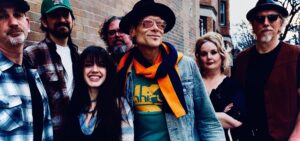
Trickshooter Social Club has built a reputation for blending Americana, roots rock, and alt-country with raw energy and heartfelt songwriting. In this interview, the band reflects on its influences, creative evolution, and memorable experiences.
1. Trickshooter Social Club blends roots rock, Americana, blues, and alt-country into a sound that feels both classic and contemporary. How did the band’s musical identity develop, and what influences have been most important in shaping it?
We had very similar influences, Social Distortion, early Wilco, Neil Young, Tom Petty. Etc right from the jump. We also each had our own influences that we brought to the table: everything from Johnny Cash to Daniel Lanois to John Lee Hooker to Metallica-which we embraced. It was this soup that fueled our writing. We also knew we didn’t want to be four dudes staring at their shoes. We wanted to connect with each other and the audience and bring raw energy to every record and every
performance. And as we’ve added Trickshooters to the mix, it’s grown exponentially.
2. Larry and Steve began writing together during late-night studio sessions that eventually sparked the creation of Trickshooter Social Club. What was it about that creative partnership that made the project click from the very beginning?
We’ve been pretty blessed to have such a unique, and fulfilling partnership. There’s a distinct lack of ego between us and a huge amount of trust. We’re not precious with material we each come up with.
If something works, it will naturally become a thing we both want to work on. And we’re always open to changing things, deconstructing and rebuilding until finally it sounds something that’s distinctly Trickshooter and not something Steve or Larry’s. Even if we’re constantly redefining what Trickshooter sounds like. It’s a weird thing to explain. But it’s an unbelievable gift to be a part of.
3. Your album American Experiment received praise for its contagious energy and evocative songwriting. Looking back on that release, what do you feel it says about the band and where you were creatively at the time?
It was our juice cleanse phase, so maybe that. All kidding aside, we had two albums under our wheels, and we were really writing songs that felt like something honest and authentic. We were exploring how to use more voices and different guitar sounds, different instruments and really expanding what the idea of Trickshooter could be. And that came across in American Experiment and those live shows.
4. Having shared stages with notable artists and performed iconic venues across the United States, are there any particular shows or tour experiences that stand out as defining moments in the band’s journey?
We’ve worked hard to get into some big, iconic places like House of Blues, Whiskey a Go-Go and Viper Room (LA), the Metro and Lincoln Hall (Chicago) and we’ve loved it. Standing where a lot of our influences have played and soaking in the storied surroundings. That said, some of our favorite shows have been in smaller, sweatier clubs. Like Rockwood Music Hall (NY) (RIP), Fiddler’s Elbo (UK) and Montrose Saloon (Chicago). Something about being packed in with people there to discover something new – it just satisfies our punk hearts.
5. Fans always seem to enjoy the story about playing the House of Blues right after Ted Nugent—and his live buffalo. What exactly happened that night, and where does that experience rank among the strangest moments in Trickshooter Social Club history?
Pretty strange. I mean, I think we all wanted a buffalo after that, a dream that’s gone widely unrealized. And we’ve yet to wear a loin cloth while shooting flaming arrows mid-solo. Mostly, it was a push. To always remember the audience. Make moments memorable. The crowd may or may not remember the version of Wango Tango that night. But they remember the buffalo. As did the people who had to clean the stage, we imagine.