
R3b3l I
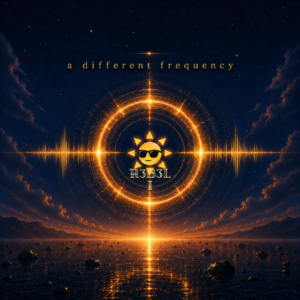
London-based producer R3b3l I explores growth, identity, and purpose on A Different Frequency, a deeply personal instrumental album. Through lo-fi, jazz, and soul influences, he invites listeners to discover their own stories within twelve evocative musical chapters.
1. A Different Frequency is described as a story told without words. What inspired you to create an instrumental album built around themes of growth, identity, and purpose?
The inspiration came from my own journey. There were periods in my life where I was chasing things I thought I wanted, only to realise they were taking me further away from what truly mattered to me creatively and personally. Music became a way of exploring those experiences without needing to explain them directly. I wanted to create something that reflected growth, self-discovery and purpose, but in a way that allowed listeners to find their own meaning within it. Instrumental music creates space for interpretation. Rather than telling people exactly what the story is, I wanted to invite them to bring their own experiences and emotions into it. In many ways, the album became a reflection of learning to trust my own path and tune into what genuinely resonated with me.
2. Each of the twelve tracks represents a chapter in a larger journey. How did you approach structuring the album to ensure that every piece contributed to the overall narrative?
The narrative became clearer as I stepped back and looked at the collection as a whole. Many of the tracks were written at different points in time, but when I listened to them together, I realised they were all exploring different aspects of the same journey. The sequencing became incredibly important. I wanted the album to move naturally through different emotional states, beginning with possibility and aspiration, moving through confidence, reflection and self-awareness, and ultimately arriving at gratitude and perspective. Every track has its own identity, but each one also serves a purpose within the larger story. Together they create an emotional arc that feels complete while still leaving room for the listener’s interpretation.
3. Your music blends lo-fi, jazz, soul, and contemporary instrumental influences. How do these genres help you express emotions and stories that might be difficult to communicate through lyrics?
Each influence brings something different to the emotional palette of the album. Lo-fi creates atmosphere and intimacy. Jazz brings freedom, playful movement and some unpredictability. Soul contributes warmth and emotional honesty.
Together they allow me to communicate feelings that don’t always have clear language attached to them. Sometimes emotions exist somewhere between certainty and uncertainty, between joy and reflection. Instrumental music gives those emotions room to breathe without forcing them into words. I think there are moments where a chord progression, a texture or a simple melody can communicate something far deeper than a sentence ever could.
4. Tracks like Elevate and Level Up carry an uplifting energy, while others such as Heartbeat feel more reflective. How do you balance contrasting emotions across the album while maintaining a cohesive sound?
I think life itself is made up of contrasting emotions. For me personally, growth isn’t a straight line. There are moments of confidence and celebration, but also moments of reflection and uncertainty. The key was making sure that every emotion felt authentic to the journey. Even when the mood changes dramatically, the underlying themes remain consistent. The tracks may explore different emotional landscapes, but they’re all connected by the same search for meaning, growth and self-understanding.
From a musical perspective, cohesion comes through the overall atmosphere, the production choices and the intention behind the compositions. Different emotions, but the same emotional universe.
5. One of the most intriguing aspects of the album is that listeners are encouraged to create their own interpretations. Have there been any reactions or personal stories from listeners that particularly resonated with you?
The album is still very new, so what excites me most at this stage is the possibility of hearing those interpretations. One of the reasons I chose to tell the story without words is because I wanted listeners to have the freedom to bring their own experiences to it. What I find fascinating about instrumental music is that two people can hear the same piece and walk away with completely different emotions or memories. Neither interpretation is right or wrong. They’re simply reflections of where that person is in their own journey. I’m looking forward to hearing those stories over time because, in a way, the album isn’t truly complete until listeners contribute their own meaning to it.
6. The album closes with Ancestors, a track that suggests a connection to heritage and roots. What message or feeling did you hope listeners would take away from the final chapter of A Different Frequency?
Ancestors is about perspective. Throughout the album there’s a journey of becoming, of discovering who you are and what matters to you. The final track widens that lens and reminds us that none of us exist in isolation.
Whether it’s family, culture, wisdom, experience or the people who helped shape us, we’re all connected to something larger than ourselves. Ancestors is a reflection on that connection and an expression of gratitude for the influences that guide us, often without us even realising it.
The feeling I hope listeners leave with is one of connection. Not necessarily certainty, because life is always unfolding, but a sense that they are part of a much bigger story. If the album begins with possibility, Ancestors ends with perspective.
A Different Frequency is an invitation for listeners to step away from external noise and reconnect with their own inner voice.