
Lancaster Rayne
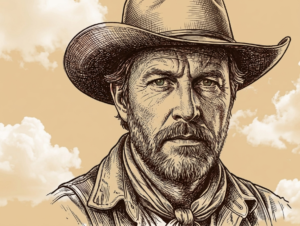
In this interview, Lancaster Rayne discusses the inspiration behind “Little Country Boy,” the importance of human-made music, his Texas roots, and crafting a powerful country sound built on authentic storytelling.
1. “Little Country Boy” marks a shift toward a more anthemic, mainstream sound—what inspired this change in direction?
Honestly, I don’t look at it as a conscious pivot toward the mainstream. It was simply a matter of letting the song become what it needed to be. Growing up in Texas and recently making the move out to Albuquerque, I found myself looking back at my childhood with a much wider lens. That broad, nostalgic reminiscence naturally brought some big, heavy emotions with it, and those feelings demanded a matching canvas.
Instead of a simple Modern Bakersfield approach, I felt Little Country Boy required a grander atmosphere to couch that bittersweet aura. The lyrics lay out the story, but the larger-than-life arrangement, the twin-guitar grit, and the sheer scale of the production are what communicate the weight of that memory. As a songwriter/producer, it’s all about creating an uncompromised, connection with the listener—sometimes you need a big, powerful wall of sound to fully transfer that emotional depth.
2. Why was it important for you to keep the track fully human-performed in today’s digitally driven country scene?
Look, I’m not blind to the numbers; people are streaming AI music, and plenty of listeners don’t mind a synthetic product as long as the songs are good. But there’s a big diff between generating content and creating art. Every AI model on the market exists only because it was trained on the creativity of actual human beings. That’s why machine-generated music always sounds like an imitation of the big names—it can mimic a style brilliantly, but it’s completely incapable of inventing a brand-new lane.
Music definitely has a mathematical architecture, and yes, computers process math way better than I do. But music isn’t supposed to be an equations problem. I’m completely aligned with how a guy like Shooter Jennings approaches production. He talked about how much more valuable “finger-fouls” and wild, unpolished takes feel now in an age of total sonic conformity. When I’m tracking in my home studio, if I screw up a little sometimes I leave it in just to make sure people don’t think it’s AI. Those little human artifacts are the fingerprints on the glass; they prove a person was actually in the room.
If generative tracks continue to dominate the commercial streaming landscape, the system is eventually going to hit a wall where the models are forced to learn from other models—turning into a self-consuming, infinite feedback loop of a copy of a copy. I look at it the same way as when photography emerged. There was a widespread panic that traditional painting would be rendered completely obsolete because anyone could suddenly capture a flawless image with the press of a button. But human nature doesn’t work that way. A century later, a hand-painted Renoir hasn’t lost an ounce of its prestige or value. Real, home-grown craftsmanship will always find the people who are actively searching for a genuine human connection.
3. Is “Little Country Boy” drawn from your personal story, or were you aiming for a more universal narrative?
In a way, both. The lyrics are from my childhood growing up in Texas but I knew there’d be other people out there who could relate as well. And, in that way, it becomes more universal if you can really reach an audience and they pick up on what you’re putting down. I also think if you can tell a good enough story, people can climb into that pickup truck and take a ride with you.
4. How did you balance building a large, stadium-ready sound while staying true to traditional country-western roots?
I guess it comes down to the essence of what you’re producing and whether the song is a crank it to eleven or a chill out background level. Little Country Boy could be a softer song. Someone could perform it live, solo with just their acoustic and I think it still works. But, I had the opportunity to create something broad and majestic with it and really bring my vision for it to life. So, I did.
Country music these days has so many different facets, country pop, alt-country, Americana-roots, Bluegrass, even country rap and on and on. I think the mass appeal, storytelling element is really what defines the country genre. I don’t see other musical forms depending so much on the storytelling element as does the broader Country family of music. That means: the emotional connection or communication is really what’s at the core. As a songwriter, I kind of subliminally, I think, ask myself “Who am I talking to?”. Who will hear this song and say, “Yeah, been there.”? If I can connect to someone then it doesn’t really matter, to me, whether its deep-core roots or arena country pop. If the listener is feeling it then that’s what matters.
5. How have your experiences in Texas and Albuquerque shaped your musical identity and sound?
I grew up in Texas riding around with my parents playing country music on the car radio. I don’t remember a time when I wasn’t hearing country music. When I began songwriting I found that I sort of had the country music melody and structure vocabulary already in my head. It was an echo that I could draw on pretty easily. And Texas is a country song. I mean, living there was like living in a three-chord theme park. Country music was all around you and then you looked out the window and there’s the world they’re singing about. You look at the famous rockers out of Texas and they all have that twang too. Henley, Steve Miller, ZZ Top, Stevie Ray: you can’t escape the Texas in their music and songwriting.
6. Does this single signal a long-term evolution toward a broader mainstream style, or is it just one step in your artistic journey?
I will continue my Modern Bakersfield style as a North star but if a song hits me and feels like it’s best suited for a bigger stage feel then I’ll run with that. I have a couple more songs in the pipeline that are definitely going to feel like they could be stadium burners. At the end of the day, it’s about being able to communicate with the audience. If I write a sad love song that’s obviously going to feel different than a honky-tonk, bar room, sing-a-long. You get the fire burning in you on a song and it takes you down a road where sometimes it’s best just to go along for the ride and see where you end up. If you produce songs with some catalog versatility that’s always a good think in my mind as well.