
The White Whisper
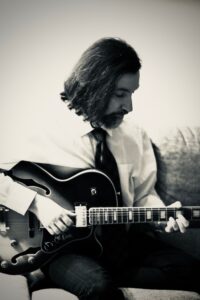
Italian composer and producer The White Whisper invites us into the atmospheric world of African Lullaby and Lunar Dances, discussing emotional dance music, African influences, artistic freedom, and the future of soulful musical exploration.
1. “African Lullaby” combines cinematic textures, melancholic atmospheres, and a driving drum’n’bass rhythm. How did the idea for this track emerge, and what emotions were you hoping to evoke in listeners?
The idea for African Lullaby came quite spontaneously. I was intrigued by the polyrhythmic grooves and by some other elements of traditional African music from West Africa when I was studying Ethnomusicology in my 20s during my college years, and I always wanted to integrate some aspects of that beautiful, soulful, rhythmically complex approach to music into my musical production. I thought that a song with these types of characteristics, mixed with cinematic ambient pads, would fit well in an album dedicated to “emotional dance”, and so, basically, when all the other songs of the album were already ready, one night I got the idea of a gentle, melancholic, lullaby-like melody played on African marimbas and mallets, and from there the whole song developed quite quickly and naturally. My interest in African music has also been reawakened by the excellent Afro-beats productions that have become quite popular in the last few years (artists like Tyla, Libianca, Ayra Starr, Tems). I have the feeling that we will get a lot of very interesting new music from Africa in the next years.
2. You describe the song as being influenced by both Steve Reich’s hypnotic minimalism and Giorgio Moroder’s electronic innovations. How did these seemingly different inspirations come together during the creative process?
Steve Reich is the father of musical minimalism (short, minimal melodies intercrossing with each other and repeated many times), and Giorgio Moroder popularized this concept by bringing it to disco music in the 70s through the use of arpeggiators and sequencers. The way I layered the minimal melodies of marimbas and mallets in the song is influenced by the approach of these two innovators.
3. The album Lunar Dances explores the concept of bringing emotional depth and even darker feelings onto the dance floor. Why do you think dance music is such a powerful medium for expressing complex emotions?
Well, dancing is the most natural thing human beings do to express their emotions since the beginning of time. Dances were used during sacred ceremonies by shamans, during celebrations and festivities, or to express sexual desires and attract partners during social gatherings. It might sound a bit cheap to say that, but dance really comes from the rhythm of our heart and our breathing. So, it’s a powerful natural human thing. And I think that modern dance music could become more conscious of this potential and have more room for many more emotions and feelings than what we usually find in it nowadays.
4. The White Whisper moves freely between genres such as ambient, goth, drum’n’bass, art pop, and ethno-house. How do you maintain a coherent artistic identity while constantly exploring new musical landscapes?
I believe that music is music and can wear many different scents and clothes. Nobody wears the same clothes all the time, do they? So, why should a musician always play only one type of music? It would be a lack of imagination and fun…
The artist’s identity remains consistent anyway in the way a musician “wears” and combines different musical clothes. Some musicians might choose more provocative outfits (in different styles), others more romantic ones, but the fabrics and colors of each of them can vary.
5. Artists like Dead Can Dance, Massive Attack, Brian Eno, and Ryuichi Sakamoto have all influenced your work. What lessons have you taken from these artists that continue to shape The White Whisper’s musical philosophy today?
They were all free thinkers, curious, adventurous people who used music to explore new emotional territories. I don’t think they ever thought that commercial success was a priority. So, they were very brave and inspiring in that sense.
Nowadays, it is almost impossible to make money with music anyway, so sacrificing our musical creative explorations in favor of commercial success doesn’t make any sense.
I think that in the future more and more musicians will be inspired by this free, almost spiritual approach to composition, because it will also distinguish us from the predictable, monochromatic, boring productions made by AI.
6. In an industry often driven by commercial trends, you emphasize creative freedom, imagination, and meaningful artistic expression. What motivates you to keep pursuing this path, and what can listeners expect from the future of The White Whisper?
As I said, I don’t think it makes any sense for a musician to prioritize commercial success nowadays. Nobody really makes money with Spotify (except the Spotify owners), so prioritizing the pleasure of natural artistic exploration should be the obvious choice for any musician, in my opinion. Human music will become more and more a conscious therapeutic practice in the future, in the sense that it will be used as a form of conscious emotional therapy, perhaps also in a sort of spiritual way, while so-called commercial music will probably be made only by AI.
So, the future of The White Whisper will once again be the therapeutic exploration of human needs and emotions through music and sound. You will find us playing at events of Sound Journeys, Sound Healing, and Ecstatic Dance. Those are the places where AI can’t do much; only people with a soul can make or listen to music that has the soul as a starting point and as a destination. Maybe see you in some of these event?