Mark Rolfe
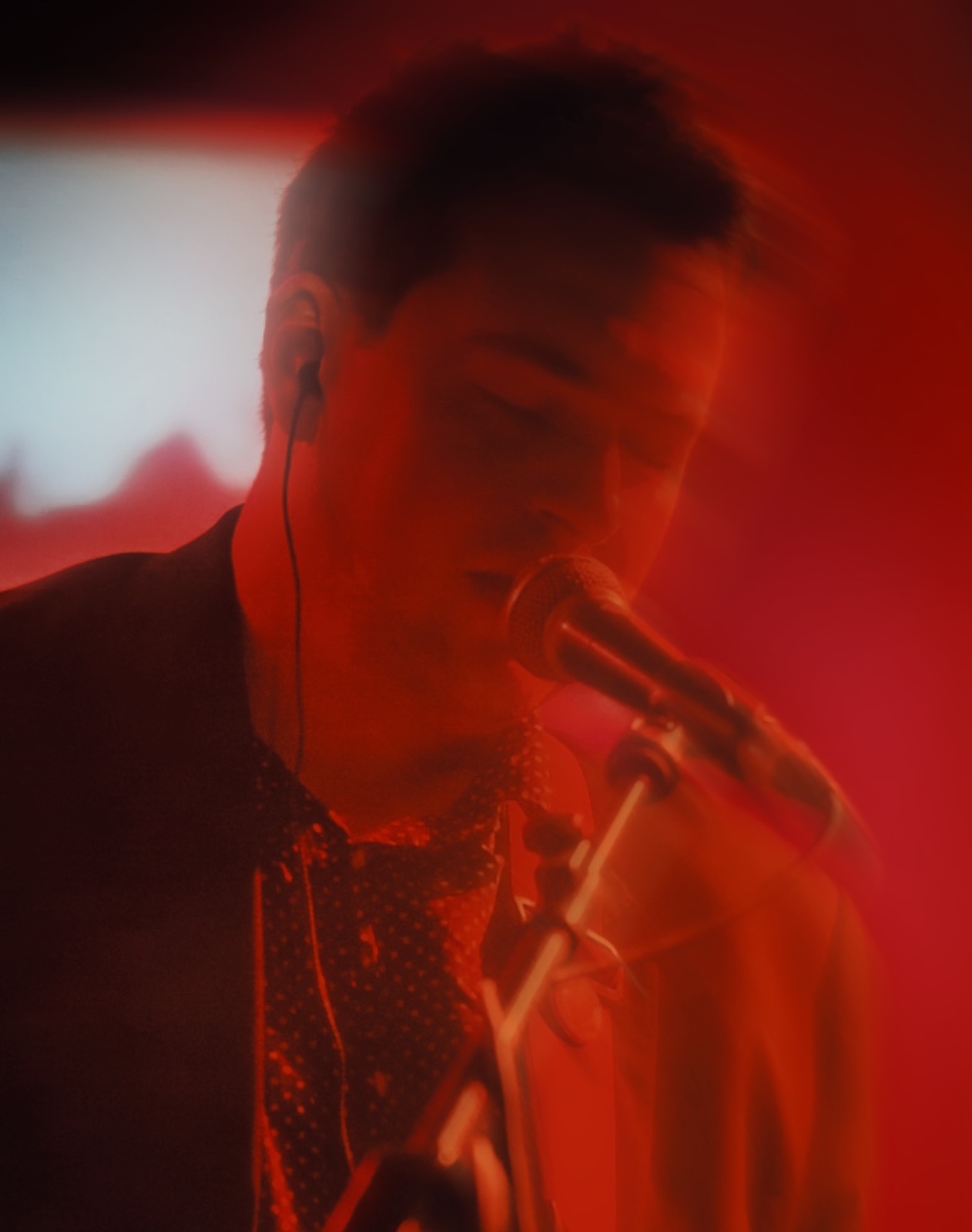
This interview with Mark Rolfe explores how the Isle of Wight shaped a deeply atmospheric album, blending field recordings, cinematic textures, and personal memory into an immersive sonic journey.
1. The Isle of Wight feels deeply rooted in place and atmosphere—how did your personal connection to the island shape the emotional and sonic direction of this album?
Absolutely, I’ve been visiting there on holiday since I was one years old. I’ve watched it grow alongside me, we’ve grown together. On my most recent trip to the island (a small coastal island located six miles from the UK mainland) I found myself reflecting on how deeply it has shaped me. My relationship with the island is rooted not only in the beauty of childhood memories, but also in the now. I think that’s why the album carries such a strong blend of tradition and technology; it mirrors the time and I’ve reflected that in both the traditional composition methods and more electronic devices of producing music.
2. Your work blends field recordings with composed elements in a very seamless way. Can you walk us through your creative process when transforming natural sounds into immersive musical landscapes?
The field recordings came about quite by chance. Once I returned home, I knew immediately that I wanted to begin work on an album. I have a home studio and am fully equipped as a producer, engineer and mixer, so I was able to carry that creative momentum straight from field recording into the studio. In most cases, the field recordings form the foundation of each track, either as the initial spark for an idea or as an underlying layer of ambience within the composition. However I was able to use them by sending he same reverbs, delays and synth auxiliaries as the music.
3. The album draws comparisons to artists like Brian Eno and Arvo Pärt, as well as the cinematic storytelling of David Lynch. How have these influences shaped your artistic vision, and where do you feel your sound diverges from them?
All of those artists are true architects of texture, building their productions through layers and atmosphere. For me, texture is always the starting point when producing, it’s the everything
I have a deep love for Arvo Pärt, particularly his ability to move between extremes: from the stark minimalism and purity of Spiegel im Spiegel to the more expansive, symphonic Cantus in Memoriam Benjamin Britten. The term “genius” is often overused in the arts, but in his case, he’s nailed it.
I’ve also always been drawn to cinematic music, and I tend to visualise scenes as I write, there’s usually an image or narrative forming in my mind. David Lynch is somewhat under-recognised as a musician and composer, although much of his work was scored by the late, great Angelo Badalamenti, Lynch was very much a musical creator in his own right.
4. There’s a strong sense of narrative and “world-building” across the record. Did you approach The Isle of Wight as a conceptual journey, and if so, what kind of experience do you hope listeners take away from it?
Yes, I really connect with that. Each piece feels like its own journey—a story told without words. Every track reflects a particular part of the island, a specific moment in time, and sometimes even a certain time of day. When I was writing, it was always completely clear to me whether something belonged to the day or the night. I hope listeners can experience it as a kind of soundtrack to an imaginary film set around a beautiful island.
5. As a multi-instrumentalist and producer working from your own studio, how does having full creative control impact the way you build such detailed and textured compositions?
I’m not a great musician, I’ve simply always been fascinated by sound and texture, which has led me to try composing across as many instruments as possible and I like to understand those instruments by playing them. I can make a living as a guitarist and most things with strings and frets, I’m reasonably proficient on keys and percussion. I can also get by on clarinet, and I’m an ambitious cellist who is still very much learning. And on the seventh day… he created autotune, so all is not lost.
For some of the more exceptional performances, I collaborated with a number of incredible musicians who contributed their parts in post-production. I’m really grateful to Sharon, Maddie, Iain and Nick for their playing.
6. Given the album’s cinematic quality, how do you envision The Isle of Wight fitting into film, television, or other visual media, and are there specific types of projects you’d love to collaborate on in the future?
Yes, I would love to score a film about the island. I’m drawn to telling musical stories, even when there’s no accompanying image. I’m currently scoring a film, and it’s a fascinating headspace to be in
markrolfemusic Official: TikTok, Instagram, Facebook | Linktree