
Lucian Lacewing
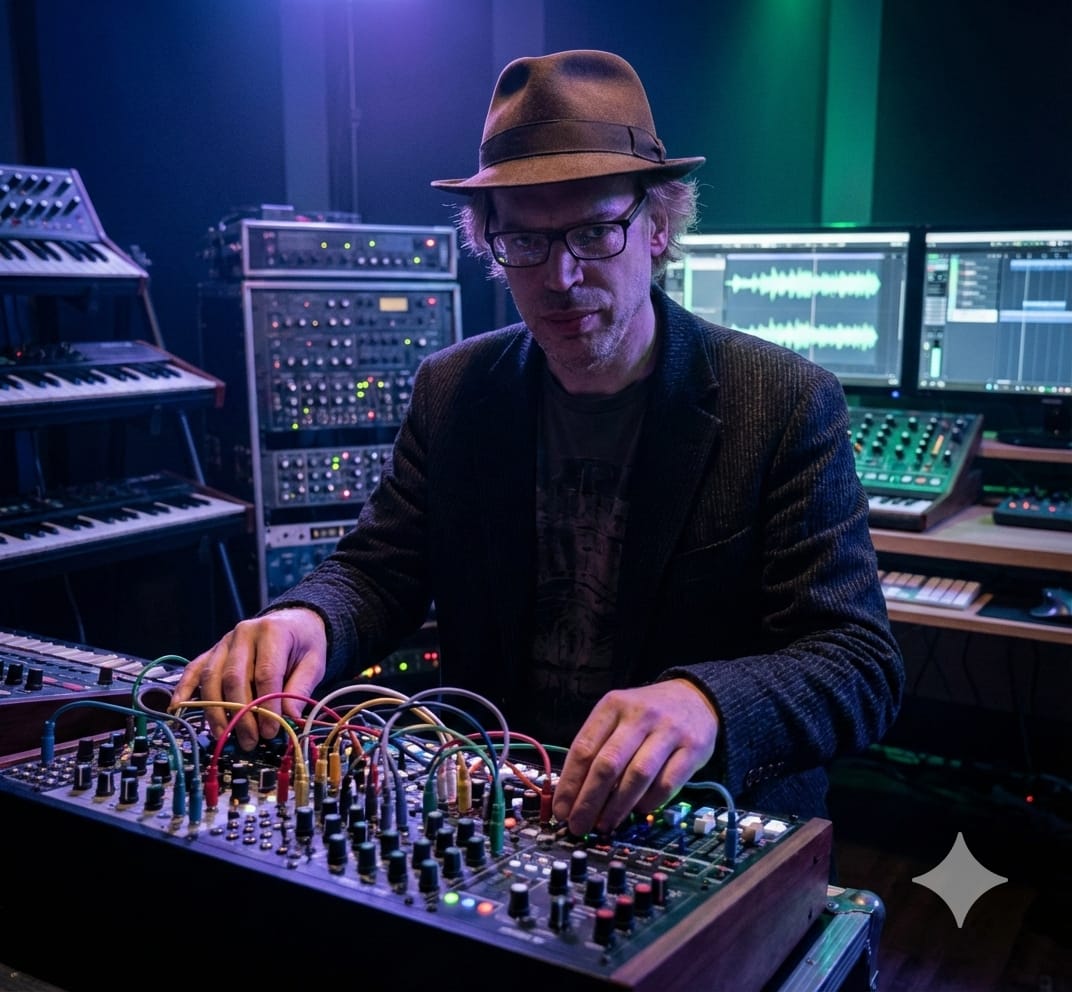
An exploration of sound without boundaries, this interview with Lucian Lacewing delves into the experimental world behind Land Of Enchantment, blending voices, textures, and cinematic influences into a genre-defying sonic experience.
1. “Land Of Enchantment” feels deeply atmospheric and experimental—what was your initial vision when you started building this sonic world?
To me being experimental means not really having a vision to begin. It isn’t truly an experiment if you know what the outcome is going to be. I just like to play around with ideas and samples until something begins to happen. Then follow it wherever it needs to go.
2. You worked with vocal snippets from eight different collaborators—how did you approach transforming those separate voices into one cohesive, almost otherworldly texture?
The otherworldly texture comes from feeding all the voices, and the trumpets on the track too, through various drone like effects. So hopefully it is unclear where the voices end and the trumpets begin. I do this quite a lot on my forthcoming album. Blend voices, natural instruments and synths I mean. I love the idea that anyone listening may wonder what exactly it is they are hearing.
3. The track draws subtle inspiration from Indian classical music—how did artists like Rajan and Sajan Mishra influence your creative direction here?
I love the drone like and dream like qualities of Indian Classical music. The idea was to take these qualities and insert them into a different musical context. I am really into the idea of pinching snippets and sonic approaches from all over the place. Somebody who makes electronica say, and only listens to electronica, is unlikely to be as good as someone who also loves jazz, dream pop, Krautrock and dub.
4. There’s a strong cinematic quality to the song—did visual imagery or films (like The Man Who Fell To Earth) shape how you composed the track?
Well the title Land Of Enchantment does indeed come from the film The Man Who Fell To Earth. It is written on the number plate of the luxury car that Bowie’s character Newton is chauffeured around in. I do think it is important to keep oneself culturally stimulated. I do love filmmakers such as Kubrick and Herzog. I have no doubt their work influences and improves my music but I am unsure in what ways. Perhaps it is better not to know the precise correlation.
5. You’ve described yourself as more of a “programmer” than a traditional musician—how does that mindset affect your creative process and experimentation?
I am passionate about playing around with sound rather than playing any particular instrument. If I was a talented pianist, for example, I might feel inclined to always use a piano. Perhaps not really being able to play anything gives me more options. It can be interesting to try to come up with a melody on an instrument you can barely play. Excessive technical ability can be tiresome (as in the case of all prog rock in my not so humble view). I doubt punk or early hip hop would have been as exciting had they been invented by accomplished musicians.
6. With your upcoming album When We Were Hydrogen promising a wide range of sounds, how does “Land Of Enchantment” represent or contrast with the rest of the project?
Land Of Enchantment has an epic quality which is why I wanted it to put it out first. The eight singers I was fortunate enough to work with feature on a lot of the album. And there is a sense of psychedelia and experimentation that runs through all of it. The first half of my album is mostly meditative soundscapes, floaty and fragmented, with a touch of melancholia. The second half is quirky and off kilter pop, more energetic. With the poppy quality tempered by a touch of mania and strangeness.
Possibly my favourite album of all time is Low by Bowie. I love the way it transforms completely halfway through so wanted to try the same approach. Only with the slower half first.