Marcus Christ
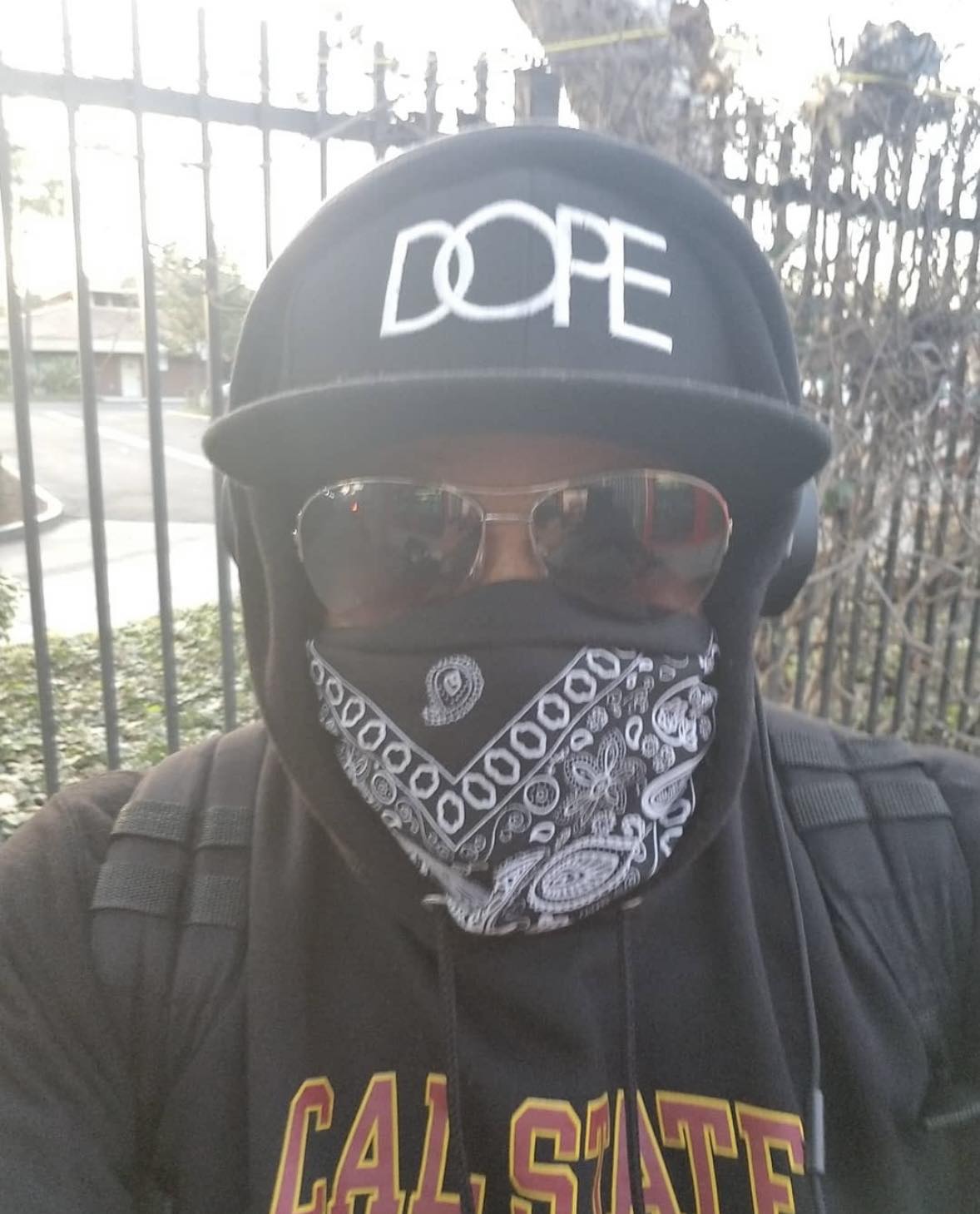
In this interview, Marcus Christ opens up about his bold new single “Fuck What You Say,” exploring respect, ambition, creative growth, and the relentless drive shaping his evolving artistry.
1. Your new single “Fuck What You Say” highlights a strong philosophy about seeking respect over love—can you dive deeper into that mindset and how it reflects your personal journey as an artist?
Sure! Starting off in my career I wanted to people to resonate with my message. Now these decades later I don’t care if they like my style, lyrics, production, or quality. I just want them to respect the message (If they can understand it). Some listeners of that song in particular, don’t understand the message. They hear love me like a stranger and lose comprehension of what I’m saying. All I’m saying in a nutshell is I’m tired of being Mr. Nice Guy. I’m turning up the volume a bit. Love is love. If you love humans, and the world we live in you, then should be able to love a stranger, gangsta, or baby Jesus in a manger too.
2. There are clear nods to Jay-Z in your lyrics—what does his influence mean to you, and how do you balance inspiration with carving out your own identity?
I think Jay-Z has proven himself in the music industry as a person with many different hats. I respect that. That is something I can look up to or even strive to compete with. Aim high, miss high. If I imitate Jay I may fall short but I’ll still be A-tier. If I shoot for trying to out rap or perform Pookie on the corner I may end up next to him singing my should’ve, could’ve, and would’ve’s. As much as I admire and respect Jay-Z if he or anyone else ever came for me lyrically, I would have to put up a good fight. Jay definitely inspired some verses, but the song and album was inspired by personal situation. All I was doing in the song “Fuck What You Say” was saying that if Jay-Z is a legend my turn is coming up soon.
3. The track came out of an intense marathon session where you recorded 13 songs in just 6 hours—how did that high-pressure environment shape the energy and authenticity of this particular song?
Well it was my first time working with Georgii at The Room Studios on Melrose. I had a lot of material and I was worried we wouldn’t be focused enough to record a majority of it. I set a strict schedule of 2 songs an hour and even with the short breaks and distractions we were able to meet that standard. I had to take off my rapper hat and put on my record company business owner hat. Then go back to being a rapper to churn out some hits. Georgii was really something special because he could mix as I recorded. So our 6 hour window felt like 3 or 4 hours because we were grinding. All my lyrics were written so it was just the matter of pulling off a believable delivery. We kept most of the tracks and the ones I didn’t like were re-recorded at Paramount Recording Studios in Hollywood the next day. I think this song was the 3rd or 4th song we recorded so I still had a lot of physical energy, but after the 6-hour session it seemed that Georgii and I were both ready to get outta there. I think the quick pace in the studio lends to my crafting my skills with the pen.
4. You’ve mentioned working with producer Morte Beatz and engineer Gerogii—how did these collaborations elevate your sound compared to your earlier, more DIY recordings?
Georgii was able to mix the songs better than I could with my music program at home which used to be called Sony “Acid”. Also the studio provided A-tier equipment so you can hear an immediate difference. Morte Beatz has a unique and almost classical sound. When you have a powerful beat and mid to upper-level engineer it makes all the difference. I can’t blame my poor sales or quality of the songs on my cellphone mic or house made beats anymore. So not only did my sound improve, but I had to take more responsibility for my failures and successes.
5. Recording at The Room Studio in Hollywood marks a step forward in production quality—how important was this moment in your evolution from recording on a cellphone to a professional studio setting?
Well most studios I go to are in garages or someone ls house. Going to an actual studio with my own space was comforting, but it was also a job. While it was a significant financial investment I feel it worth it to my fans and myself to see what a fully developed concept looks like done right. My older albums on my YouTube playlist like The Repsonce, The Get Back, and No Doubt were all recorded using Pro Tools but in a neighborhood or garage band setting. Even the Whittier California album was recorded in a garage, and when you go from garage to garage the quality can and most of the time does change based on the equipment and mix. Being in two professional studios gave me a chance to make the songs more uniformed after mastering. I personally feel that this new album “The American Pharaoh” will be my best work. Not only will it be the best because I went to a professional studio, but because I’ve tightened my pen skills and I’ve learned from all or most of my mistakes.
6. You’ve shared a unique vision for future performances, including the idea of hologram shows—how do you see innovation and creativity shaping the way audiences experience your music moving forward?
Yea, the hologram show would be the best move I could make. I hate seeing groups from the 1950’s or 1960’s getting up barely able to walk, but be expected to give people a show. A hologram show could be very immersive and allow older acts and even new acts to give their music a new dimension. In a live performance, you have to exert yourself physically, but with a hologram show you can be in the audience and enjoy the show with everyone else. So it’s a win/win. The audience gets to see a show and their favorite act, and the artists can meet fans and enjoy the show while getting paid. I already have thought of the title of my next album, which will be called “King of Kings” sometime in the future so creatively I would base my sound, lyrics, and concepts on that title. Which is similar to how I begin all my projects. As much as I like innovation like AI or auto tunes I still refuse to use it in my music, because I use my music to express how I feel. AI only knows how I feel if I tell it how I feel. I prefer to write to the audience directly instead of using AI as some type of middleman or herald. I don’t have a problem competing or being compared to AI, but you gotta let me know it’s AI and not a person. I think my audiences prefer my style of writing, and if I did use AI it would be pretty obvious, so I do support and believe in innovation, but there has to be some etiquette or rules regarding art.