
Julia Sound
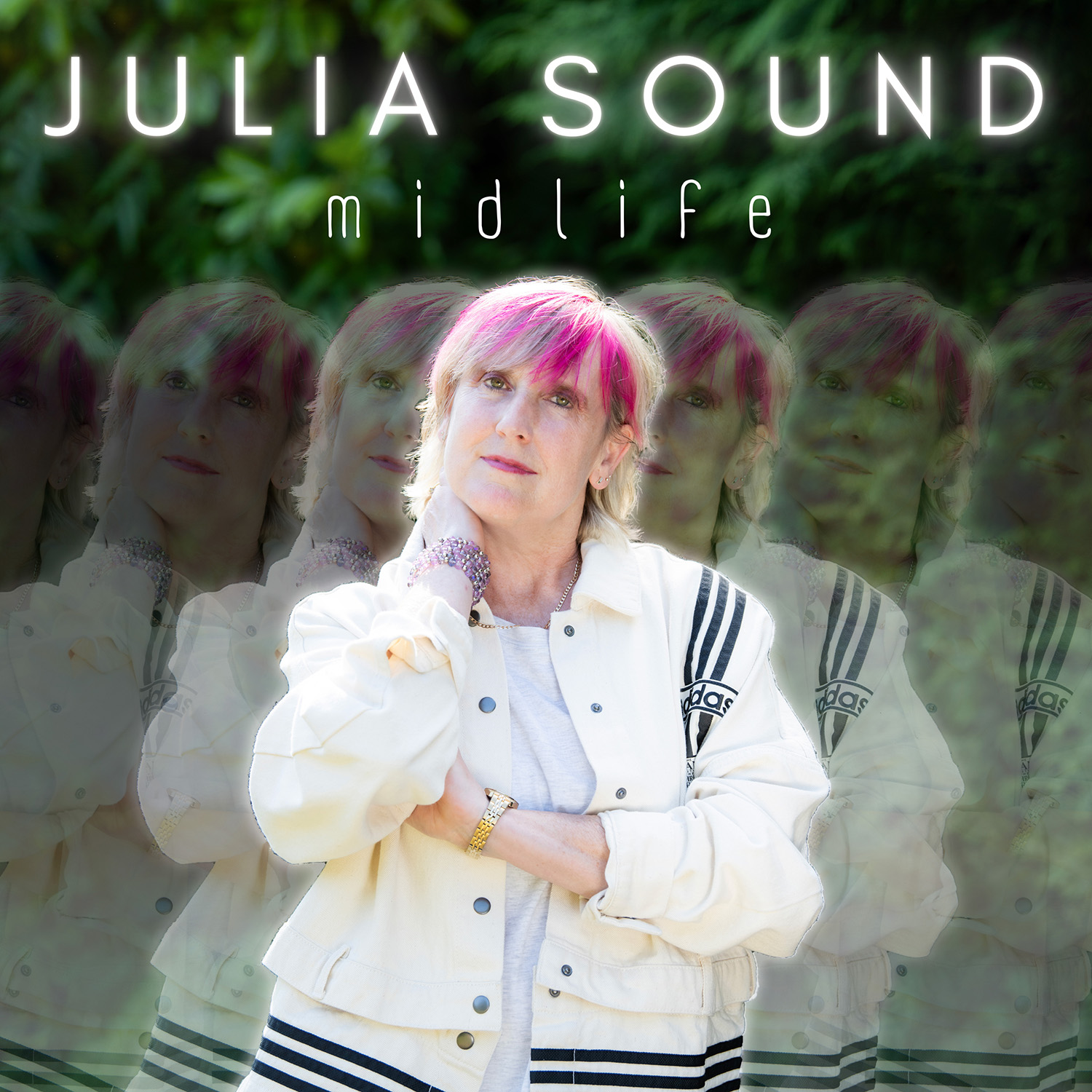
On midlife, Julia Sound blends introspection, collaboration, and atmospheric electronics to explore hope, frustration, and creative freedom. In this interview, she reflects on inspiration, collaboration, and staying authentic in a changing music landscape.
1. Your new album midlife explores themes ranging from introspection to frustration with the current state of the world. What emotions or experiences most strongly shaped the songwriting for this record?
Bringing in different featured vocalists to co-write from their perspective is an interesting process. I think approaching a record this way surfaces common themes of things on people’s minds – the zeitgeist undoubtedly has an influence. Some of the most common themes are a sense of trying to provide shelter and comfort in the face of troubling times, as well as a sense of hope that things can get better. And that’s laced with a healthy dose of venting, because we can’t just sit and idly hope – we need to also speak up in any way we can, and a little rage now and then is what’s needed in times like these.
2. The album blends mellow synth pads, chill beats, and atmospheric sound design. How did you approach crafting the sonic mood of midlife compared to your previous releases?
I approached all my albums similarly – sitting with a blank slate, exploring sounds, playing with ideas, getting in a flow state. I think what’s different about this album is I allowed myself more time to really sit with the songs – let them inform me what the best next steps would be. I worked on this over the course of about 18 months, but just chipping away rather than any major push. There were no time pressures to finish and release which was liberating..
3. Several tracks feature collaborators like Dolly De Guerre, Yo Megasonic, Keely Halward, and Kinnie Starr. How did these collaborations influence the character and energy of the songs?
I think all the collaborators played a huge part in each of the songs. Part of the process is me writing the track and in my head imaging what it needs from a vocalist to bring it to the next level. When I reach out to a vocalist and share the early versions, I have this strange mix of an idea of exactly what I want to hear, combined with no expectations – leaving the process very open to interpretation. I am always blown away at how my collaborators go above and beyond and bring a track to the next level. I play off that energy when I’m finishing sculpting the songs.
4. Songs like “One Love,” “Shelter,” and “Finally I’m Free” bring a slightly higher tempo and a nostalgic feel. What inspired this shift in pace and style for this album?
I have played a few live shows, and have a lot of material to draw from with my previous three albums. Much of that though has been slower and mid tempo and I wanted some new material that amped up the energy for certain shows. That’s the main reason! The 90’s rave and trip hop era was an influential time in my life – being a GenX Brit – so I think that nostalgic nod to the 90’s just comes naturally.
5. You’ve worked extensively across music, film, television, and video games. How do these different creative worlds influence the way you compose and produce your own music?
Film, TV and particularly Games are these very complex pieces of entertainment, which take a lot of people – huge teams – working together to figure out all the pieces of the puzzle. I absolutely love that, but by their very nature of being larger and more complex, as well as usually bound by NDAs, you can work for years on a project before it seeing the light of day. What I love about creating music is that the stakes are lower and I have control over what’s worked on, and when! I adore Game Audio Direction for many reasons, but there are phases when that job can often mean focusing less on the intricate creative process and more on the directorial and managerial tasks – all still creative but less “in the weeds”. Creating music as Julia Sound gives me a creative “in the weeds” outlet, low stakes, and also means I can release content more frequently and on my own terms.
6. In a time when AI and content-driven culture are rapidly changing the music industry, what does staying authentic as an artist mean to you as you continue creating beyond midlife?
At the root of it, there’s something in the creative process – the craft of starting with a blank slate and solving the challenges of how to build a song – that I love. Typing prompts into an app just doesn’t exercise the brain and the creative yearnings in any way. It’s boring. It doesn’t appeal to me at all. Sure, you might get quick results, but I’d rather the music I’m working on come from me, and that includes all my limitations.. Because I don’t care about chasing followers, likes, spins etc that also relieves the pressure. Creating music for the process itself – the art, the therapy, the collaboration – is something that for me, only humans can do. The music industry has always been obsessed with youth – “if you’re past 25, you’re too old” kind of mentality. What’s liberating about reaching midlife is that you realize none of that actually matters. One of my regular collaborators, Dolly, said to me recently “you’re just getting started!” which resonated. I hope to be an old old lady playing with synths, patches and bleeps and bloops, to the very end 🙂