
Kate Kristine
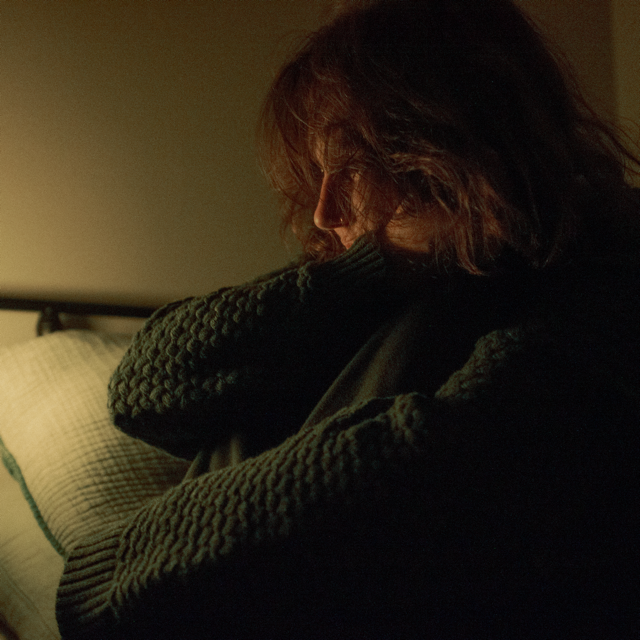
Kate Kristine reflects on “stranger i can’t tell,” unpacking grief for someone still alive, lyrical paradoxes, sonic growth, TikTok resonance, and a creative turning point shaping her evolving indie-folk-pop identity.
1. “stranger i can’t tell” centers on grieving someone who’s still alive — a feeling many people struggle to articulate. When did you realize this song needed to exist, and how difficult was it to put that kind of unresolved grief into words?
When “stranger i can’t tell” was written, I was navigating my first serious breakup after being with someone for nearly two years. I was processing emotions I had never experienced before, and music became the only space where I felt able to confront and understand my grief. There is something uniquely painful about grieving someone who is still alive, because the loss is not defined by absence, but by sudden inaccessibility. A person who once knew every version of you becomes unreachable almost overnight. Writing this song allowed me to feel close to someone I had lost while searching for a sense of closure that I never received when the relationship ended. The process required complete emotional honesty. I felt stripped bare while writing it, but that vulnerability was essential in capturing the complexity of that grief.
2. The line “you’re a stranger I can’t tell, but oh, I know you well” captures a powerful emotional paradox. Did that lyric arrive early in the writing process, or did the song slowly build toward it?
Although it has been over a year since I wrote the song, I remember that this lyric emerged earlyin the process. A few nights after the breakup, I went driving and found myself passing places that held some of our most intimate memories. I think I was subconsciously searching for closure by revisiting spaces that once felt meaningful, hoping that proximity to memory might bring clarity or reconciliation. Instead, I was confronted with the reality that he was no longer accessible to me in any real way. That realization became central to the song. Breakups often create a strange emotional paradox where someone who once knew every part of you becomes someone you no longer truly know. The line “you’re a stranger I can’t tell, but oh, I know you well” captures that contradiction. It reflects the tension between familiarity and distance, between intimacy and estrangement. That lyric became the emotional anchor of the song, and everything else grew around that idea of reaching for closure while simultaneously grieving a relationship that had fundamentally changed.
3. This track moves beyond traditional breakup narratives and focuses on imagined closure and emotional aftermath. Was there a conscious decision to avoid resolution, or did the song naturally settle into that ambiguity?
I always approach the production process with an open mind, knowing that lyrics and structure often evolve as the song takes shape. In this case, I think there was a part of me that was consciously aware of ending the song without clear emotional resolution, because unresolved grief is exactly what the song is about. There was a lot of intention behind ending on the line “but babe, you saw me naked,” because of the ambiguity and emotional weight it carries. My wonderful producer, Gianni Branciforte, immediately connected with that ending and suggested repeating the line twice more in the outro. I became really attached to that idea, because by the end of the song, the narrator has gone through the same emotional cycle again and again. They search for closure to the point where they are completely stripped bare, having exposed every vulnerability in the process. The song reflects how someone can internalize a breakup and almost dismantle themselves emotionally in an attempt to understand it. I wanted to highlight that sometimes relationships end without answers, and not every story resolves neatly. I also loved that the final line acts as a direct segue into my previous release, “friday afternoon,” which centers on vulnerability and intimacy in a much more literal way. While some of these choices were intentional, the song also truly found itself during the production process, and I could not be more grateful to Gianni for helping bring that emotional story to life.
4. Sonically, “stranger i can’t tell” feels warmer and more expansive than some of your earlier work, while still remaining intimate. How did you approach balancing indie-folk vulnerability with indie-pop accessibility on this release?
Indie folk and indie pop have always been two of my biggest influences, and much of my songwriting is shaped by elements from both genres. With “stranger i can’t tell,” Gianni and I did not work from a specific production reference. Instead, we focused on creating something that felt emotionally honest and sonically fresh. For a long time, I struggled with feeling like I needed to define myself within a single genre, which created a lot of uncertainty around my musical identity. Allowing different influences to coexist has felt far more natural. I would describe the song as a lo-fi folk track that sits somewhere between artists like Lizzy McAlpine and the 1975.
Blending genres in this way was incredibly freeing and creatively fulfilling. Many of the sounds and textures present in this song reflect a direction I plan to explore further in my future work.
5. The song gained significant traction on TikTok ahead of its official release. How did it feel to see listeners connect so strongly with such a quiet, emotionally specific piece before it was fully out in the world?
Seeing the song gain traction on TikTok was honestly one of the most surreal experiences I have ever had. While writing and creating it, I never expected it to reach the number of people that it did. What makes the situation even more surprising is how casually the song came together.
Gianni and I laid out the stems in about half an hour on a random Tuesday night around three in the morning, without any expectations of where it might go. At that point, I had just released my previous single, “friday afternoon,” and decided to share “stranger i can’t tell” because it felt like a continuation of the same emotional story. I think what affected me most was realizing how many people were experiencing the same kind of grief. Knowing that others were connecting to the song actually brought me closer to closure than I had ever been able to reach on my own. I had people personally reach out to thank me for releasing the song and for the honesty in my writing, and that meant more to me than I can fully articulate. At the same time, it was heartbreaking to see how many people are grieving someone who is still alive, someone they just want access to again in order to understand or heal. There is something deeply sad about that, but also strangely comforting. It reminds you that these experiences are not isolated, and that grief like this is profoundly universal.
6. This single marks your first official release with Release Global and hints at a subtle evolution in your sound. Does “stranger i can’t tell” represent a turning point for you creatively, and what can listeners expect from what comes next?
This single is my first official release with Release Global, and I could not be more excited about it. As an independent artist, signing a distribution deal at the level that I did feels like real confirmation that the hard work I’ve put in up to this point has paid off. Honestly, this next chapter has only made me feel more creative and motivated. This upcoming EP is unlike anything I’ve created in the past. I’ve never worked on music in this way, and I’ve never felt this connected to something I’ve made, which has shifted how I see myself as an artist. That shift is especially clear in “stranger i can’t tell,” which really marks a change in both my writing and the overall feel of my sound. A lot of my upcoming music reflects how I view the world now and the way Iprocess the experiences I move through. Growing up, my parents always taught me that it’s important to look both ways before you cross the road, and that idea has stayed with me. In my writing, that lesson shows up as a need to understand both sides of a story before moving on or reaching the other side of something. Because of that, the songs I’m working on now feel more reflective and intentional. I’m almost finished with my next single, and it really captures what I hear my music sounding like right now. I can feel all of my influences growing into this song in a way that finally feels honest and grounded. Gianni has been a huge part of that growth. I like to say he saved my music, because he’s been incredibly welcoming, creative, and supportive, and he’s only fueled my motivation. As I’ve grown more confident, I’ve also become much more hands-on in the production process, and you’ll hear both of our creative minds coming together in what’s next. This next song is about knowing your self-worth in hindsight and not allowing people to walk all over you again. After writing songs like “stranger i can’t tell,” which focus on tearing yourself down to find closure in someone else, this feels like a natural and important next step.