Martyrs
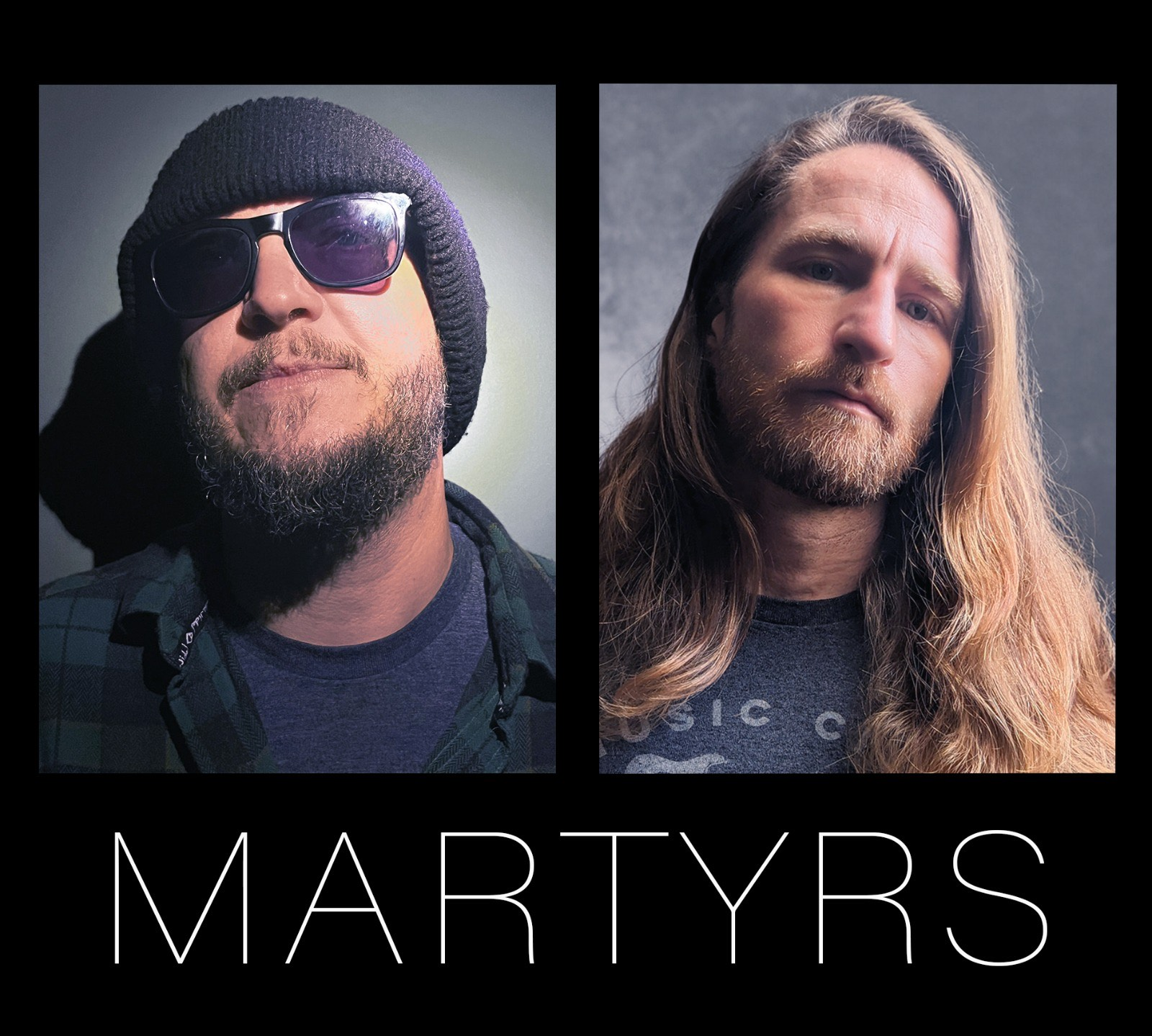
Martyrs return with Halloween Dream, a haunting fusion of nostalgia, folklore, and DIY artistry. Michael Hall dives into the EP’s eerie inspirations, evolving sound, and the duo’s ambitious ten-release journey.
1. Your new EP, Halloween Dream, feels steeped in atmosphere — equal parts nostalgia, melancholy, and magic. What draws you to the autumnal and supernatural imagery that runs through these songs, and how does that connect to your broader creative identity as Martyrs?
I think growing up in Wales, which is steeped in folklore and mysticism,was the seed of the obsession. Also, writers like Algernon Blackwood and MR James, then more modern authors like Susan Hill and Stephen King instilled a desire to make strange art, that has something more beneath the surface, something unexpected. There’s definitely a darker side to what we do, and that’s informed by the kinds of books and films we grew up with, the kinds of art I still enjoy now. Giallo movies, folk horror, gothic literature…I think there’s comfort to be found in the strange and eerie, and there’s a great deal of humanity to be found in a lot of horror writing – you look at how Stephen King or a filmmaker like John Carpenter can depict community and relationships in the face of terror and it’s quite beautiful. It’s not like we brand ourselves as a folk-horror band or anything, but elements of that are often found in what we do. Nostalgia seeps into everything I think, and we all have a different relationship with it. I think it features quite prominently for Jon and I simply because we grew up together and we share the same reference points both culturally and with regards our home town, Merthyr Tydfil. I think the melancholy element is just part of being Welsh to be honest.
2. You’ve recorded, mixed, produced, and even filmed everything yourselves — an impressive commitment to the DIY ethic. How does total creative control shape the final sound and feel of your music, and do you ever miss the outside perspective that comes with working in a studio or with a producer?
It means we’ve no-one else to blame, which is unfortunate. I think the complete DIY approach is essential to the band. We wouldn’t be doing any of this without it. Neither of us had any interest in starting a band in the traditional sense, dealing with egos, losing endless money on shows no-one goes to, trying to make music to please other people etc. etc. So if you have no interest in doing things the traditional way, you have to do everything yourselves. I’ve always admired DIY scenes, and I’ve been lucky to be a part of them a few times in my life, making zines, putting on shows. I’m a strong believer in that ethic. We may not sound much like Minor Threat or but I certainly love them and have definitely learned from them and similar artists who take responsibility for their work and how it’s both conceived and released. The way we’re working though, if it has a downside, it’s that we’re doing all the work but we’re not really a part of a broader community, aside from conceptually or in terms of other artists we meet online who work in a similar way. We’re very much on an island. Artistically, we try to entertain one another, surprise one another, and that’s the only approval we need to move forward. I trust Jon’s instincts, I think he trusts mine, so we’re golden. Obviously there are benefits to working in a studio and working with an outside producer, but I think Jon’s production is phenomenal and we’re pretty stubborn about doing everything ourselves. It’s just not in our collective DNA to do it any other way. The way it ultimately shapes what we do is that we end up making very specific music that could only come from us, it’s got our personalities all over it, for better or worse.
3. You’ve mentioned that Delta Rain and October Kind mark a shift toward acoustic textures and more impressionistic writing. What sparked that evolution, and how do you balance this new warmth with the electronic and experimental edge you’re known for?
Jon bought a new acoustic guitar. It was all downhill from there. We always want to try new things. We give ourselves room to try whatever we want – metal songs, ambient stuff, sound collage, disco…and doing something more traditional, more organic, that’s also experimental to us. Hearing the music Jon was putting together, I wasn’t moved to write the kinds of characters or narratives that usually populate our songs. I was inspired to say something personal, albeit in quite an oblique way. It became about conjuring atmosphere as a way to express emotions that are very hard to pin down in a literal sense. I think Jon is able to balance the organic and electronic very well, he’s able to keep an eye on both angles and that’s given us the opportunity to widen our sound.
4. Your reimagining of The Man Don’t Give A Fuck is both reverent and radical. As lifelong fans of Super Furry Animals, how did you approach deconstructing such a cult classic without losing its original spirit — and what made this song feel relevant to reinterpret right now?
I think it’s the right time for protest songs for so many reasons. The rise of fascism, the entropy of late stage capitalism, the kind of power the wealthy wield over the population…these are big topics, overwhelming. But because TMDGAF is a sort of multi-purpose protest song, it gathers all that in one place. You’re angry at everything, frustrated, so you want to lash out, and this was a good way to do it artistically. We’ve both loved Super Furry Animals since we were kids so it was a perfect choice for our first cover. Gruff Rhys from the band gave us a shout-out when we released it, which was really kind. Jon created the music with an ear on both the original and a Run The Jewels track ‘Close Your Eyes (And Count to Fuck)’, and I only revisited the original once before recording, so it came out sounding pretty fresh.
5. You’ve said that Martyrs’ music is “specifically not lifestyle or background music” — that you’re asking listeners for their attention. In a time when music discovery is dominated by algorithms and short attention spans, what does success look like to you?
Our perception of success is particularly personal to us. If we enjoy the work, if the work is expressing what we want it to, and if it’s challenging us and we’re improving at our art, then it’s successful. In terms of external success, we try not to be overly invested in it. Our audience is very small and will very probably continue to be very small. Niche is the polite way to put it. We’re comfortable with that. We do try to give the songs the life they deserve, though, to give them a chance to be heard and when we do try to promote the music it’s just the music we’re promoting, not ourselves, or our “story” or a brand, and that seems to be unusual now. Everything we do is in service of the song, because it’s the only thing that matters.
6. The Halloween Dream EP is the fifth in your planned series of ten releases. What have you learned about yourselves and your creative partnership over this ambitious run, and how do you envision the remaining releases expanding or concluding the Martyrs story?
I’ve learned that the most ridiculous idea you have is often the best one to go with. I’ve learned that doing things the hard way is very often the most rewarding; that mine and Jon’s creative partnership is growing in unexpected ways all the time. Our working relationship has become more malleable over time. Jon making the music and me doing the vocals is our baseline, and it always will be, but we’re letting ourselves stray from that path more and more. We just recorded a track for the next EP where I wrote and performed the music and Jon took lead vocal duties. On this EP there’s a track called Midnight Mass which I made thinking it was just a demo, but then Jon stepped in with a beautiful guitar solo and took over for the mixing and production. Jon’s instrumentals and remixes have been featuring more on the EPs and they stand up so well as pieces of music. I’m not sure about any sense of conclusion being reached when we get to the end of this run. We’ don’t take much time to reflect, we just get on with the next thing because we love the process so much. Write, record, release, repeat. We have release numbers 6 and 7 planned and plotted out for Christmas and the New Year but after that, no idea what the last 3 will sound like. Funny thing is, we know exactly what we’re doing after the ten releases are completed, and we’re very excited about that. I could tell you it’s a spoken word social realist folk horror orchestral double album but you probably wouldn’t believe me, and why would you? Ridiculous idea…