
Reinhout
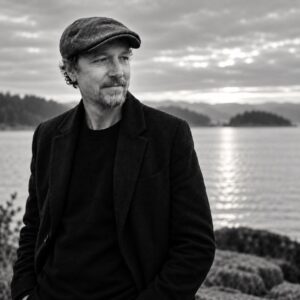
Reinhout explores the emotional landscapes of change, memory and hope on What Remains, blending atmospheric electronica, neo-classical piano and organic textures into a deeply personal musical journey.
1. Your album What Remains explores the delicate balance between distance and connection, nostalgia and hope. What personal experiences or moments inspired you to build the album around these themes?
What Remains is a very personal album. It reflects a period in my life where I started thinking more deeply about change, relationships, memories and the passing of time.
I think we all reach moments in life when we begin to question where we are, where we’re going and what really matters. Sometimes things change around us, and sometimes we change ourselves. There’s a certain beauty in that, but also melancholy.
Music has the ability to express emotions that are difficult to put into words. With this album, I wanted to explore those feelings without necessarily giving them a clear explanation.
Although there’s sadness and nostalgia in the music, I don’t see the album as a sad record. For me, it’s equally about hope, acceptance and new beginnings.
The title What Remains reflects that idea. Life changes, people come and go, moments disappear, but something always remains within us.
2. The album follows a carefully arranged journey, from “Where We Begin” to the closing title track. How important was the track sequence in telling the album’s overall story, and what did you want listeners to experience as they move through it?
The track sequence was very important to me. I wanted the album to feel like a journey rather than simply a collection of individual tracks.
“Where We Begin” felt like the natural opening. It’s almost an invitation to enter a particular emotional space. From there, the story slowly unfolds, gradually moving between more introspective, ambient moments and compositions driven by rhythm and energy.
Like life itself, all these feelings add up to a complete story.
Ending with “What Remains” was then also a natural choice. I wanted the final track to be the most hopeful track. The track with the most playful melody, as if I wanted to tell the listener that in the end we all will be fine.
Ideally, I’d love people to listen to the album from beginning to end, perhaps while walking, travelling or simply sitting alone with their thoughts. Listening to the tracks separately, in my opinion, doesn’t give the listener the same feeling or reward.
3. Your music brings together neo-classical piano elements, atmospheric soundscapes and electronic beats. How did artists such as Christian Löffler, Parra for Cuva, Bonobo and Ólafur Arnalds influence your musical direction, and how have you developed your own identity within instrumental electronica?
All these artists have influenced me in different ways.
What I admire about Christian Löffler is his ability to create something deeply emotional with relatively few elements. His music has a beautiful sense of space and restraint.
Parra for Cuva and Bonobo have inspired me through their organic approach to electronic music, where rhythms, textures and melodies come together very naturally.
And then there’s Ólafur Arnalds, whose music reminds me how powerful a simple piano melody can be. In an interview he once said he is a very average piano player. That you don’t need to be very skillful on an instrument to facilitate deep emotions.
I’ve always loved both electronic music and more classical, cinematic compositions. With Reinhout, I wanted to bring those two worlds closer together.
For me, the most important element is emotion. I don’t necessarily start a composition thinking about genres or whether something should be ambient, electronica or neo-classical. I usually begin with a melody or a few chords that evoke a particular feeling.
Over time, I’ve learned to leave more space in my music. Not every moment needs to be filled with sound. Sometimes a simple piano note, a subtle texture or a little silence can communicate more than a complex arrangement.
I’m still developing my own sound, and I hope that process never really ends.
4. Tracks like “Fragments” and “Tåke” communicate different emotional landscapes, from nostalgia and hope to uncertainty and melancholy. Could you take us behind the creative process of these two compositions, particularly the collaboration with Nativica on “Fragments”?
For me, “Fragments” is about memories and the little pieces of our lives that stay with us. Sometimes a particular sound, place or melody can suddenly bring back a feeling from years ago.
Adding the piano melody from Nativica added another dimension to the album. The melody she came up with was in my opinion the kind of missing brick in the album. After I added some strings and some percs I was convinced it would fit perfectly with the rest of the tracks.
I’ve always appreciated collaborations where another artist brings something unexpected into the music, something I wouldn’t necessarily have created on my own.
“Tåke”, on the other hand, is in my opinion, a more introspective work.
The title is Norwegian for “fog”, and I think that describes the atmosphere of the track quite well. The track describes in a way a long foggy mountain walk. There is also a point in the track where the fog dissolves. Also, this goes back again to the balance between nostalgia and hope. Just like the whole album.
Both tracks deal with uncertainty in different ways, but I don’t necessarily see uncertainty as something negative. Sometimes not knowing exactly what’s ahead can be beautiful too.
5. You mentioned that, unlike your previous productions, you began this album with melodies and chord progressions rather than drums. You also embraced analogue equipment, field recordings and unexpected creative moments. What made you change your approach, and how did this influence the album’s final sound?
For many years, I’ve been producing electronic music, particularly within chillout, downtempo and house music. In those genres, it was quite natural for me to start with a rhythm or a groove and build the composition around it.
But with What Remains, I wanted to approach music differently.
What remains is much more personal. It all starts from feelings.
With experimenting with chords and simple melodies, I tried to translate these feelings into music.
The emotional foundation was always there before I introduced any electronic elements.
I also wanted the album to feel more organic and a bit “imperfect”. Working with analogue synthesizers, recording sounds and experimenting with textures helped me move away from making everything too polished or predictable.
Sometimes the most interesting moments happen by accident. A sound behaves differently than expected, a melody develops in an unexpected direction or something imperfect suddenly becomes the most beautiful part of a composition.
I think this approach made the album more intimate, more atmospheric and ultimately more honest.
6. With What Remains now released, you’re already working on new material and preparing a live set for 2027. How do you envision translating these intimate studio compositions into a live experience, and what direction would you like to explore next as Reinhout?
Performing this music live is something I’m really looking forward to, but it’s also a completely new challenge for me.
In the studio, you have endless possibilities. You can spend hours shaping a particular sound or adjusting the smallest details. On stage, the music needs to breathe and exist in the moment.
My idea is to create a live performance that combines piano, synthesizers, electronic rhythms and atmospheric textures. I don’t want to simply reproduce the album exactly as it sounds on Spotify.
I’d like the compositions to evolve during the performance, with room for improvisation and unexpected moments.
I imagine the live set as a continuous emotional journey, starting with more intimate ambient pieces, gradually introducing rhythm and energy, and eventually returning to something quieter and reflective.
I’m currently developing the setup and experimenting with different ways of performing the music. My ambition is to bring Reinhout to smaller, intimate venues in 2027, where the audience can really connect with the atmosphere.
As for new material, I want to continue exploring the relationship between acoustic instruments and electronic sound.
I’m particularly interested in creating music that feels cinematic and emotional but still has movement and rhythm.
I don’t want to limit Reinhout to one particular genre. What matters most to me is that the music continues to feel personal.
Ultimately, I hope to create music that people can connect with in their own way, even if their interpretation is completely different from mine.