
Marie-Paule Franke
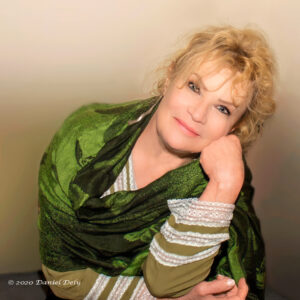
In this interview, Marie-Paule Franke discusses Clouds (Special Edition), her diverse musical influences, creative collaborations, poetic inspirations, and her ongoing journey of artistic exploration and expression.
1. Clouds was originally recorded in 2019 and has now been revisited for this Special Edition. What inspired you to return to the album, and how do you feel about these songs today?
Clouds was recorded in 2019, during my first recording experience in the United States. It was also my first time working in a New York studio with musicians I hadn’t met before. I was quite overwhelmed by the experience at first. The musicians were remarkable, and there was a wonderful atmosphere in the studio.
When I listened to the album again some years later, I heard it with fresh ears and a little more distance. I realised that certain aspects could be brought out more clearly. I had the feeling that my voice was sometimes too far in the background, and that some of the vocal details did not quite reflect what I had originally intended. I therefore revisited some of the vocal parts on two tracks.
I also made a careful selection of the material. Two tracks from the original album were left out because I felt that the remaining nine compositions formed a stronger whole. The new running order was equally important to me. I gave considerable thought to the sequence, because I see an album as a kind of storytelling: the order of the songs shapes the listener’s experience and creates its own flow.
The intention was never to change the soul of the music, but to bring its strongest qualities forward. The original mixes have been retained, with the exception of “Bleu La Réunion”, which was remixed by Robert Honablue. He also mastered the entire album, giving the music greater clarity, depth and presence. On “Bleu La Réunion”, he took a particularly natural approach, using less compression and allowing certain subtle details and imperfections to remain.
The original Clouds was released during the Covid period, when I never had the opportunity to present it live as I had hoped. The concerts planned in New York had to be cancelled. Revisiting the album now has therefore also given me the opportunity to give this music a presentation it never really had at the time. I still feel very connected to these songs, and I am happy that they can now be heard in this new light, while preserving their original spirit.
2. Your musical background includes classical, pop, rock and funk before jazz. How have these different influences shaped your songwriting, improvisation and vocal interpretation?
My musical upbringing was rooted in classical music. My mother played the piano and my father was a cellist, so classical music was always part of our family life. My mother was also a devoted listener of the Queen Elisabeth Competition. She recorded many of the broadcasts, and we listened to classical music on the radio at home.
As I grew older, my musical world became much broader. I started playing music with my brothers in a family band, performing in local cafés and small venues. I also became involved in different groups, exploring styles ranging from funk and pop-jazz to Latin music. Each experience opened another door for me.
I have always been curious and open to different musical worlds. I listened to many kinds of music and many different performers. Sometimes an idea, a particular rhythm or a musical colour would stay with me and eventually find its way into my own compositions, in my own way. I also used to keep notebooks in which I wrote down thoughts and lyrics. Sometimes I would spontaneously sing words over music that was being improvised at that very moment.
For me, music is not really about genres or categories. What matters is whether it touches your soul — whether it moves you, makes you feel something deeply, or stays with you. In flamenco, there is a beautiful word for that: duende. I think that feeling can exist in any kind of music.
Improvisation has become an increasingly important part of my musical life. I enjoy the freedom of not knowing exactly where the music will go, and I love discovering things in the moment. I have also explored the voice in a more experimental way, sometimes using it as an instrument rather than following conventional singing techniques, for example when performing live with ensembles accompanying silent films. These experiences have made me increasingly interested in the expressive possibilities of the human voice.
I think all these different musical experiences have helped me develop my own language as a songwriter and vocalist. I don’t consciously try to combine genres; I simply allow the things that have moved me over the years to become part of who I am musically.
3. You worked with a remarkable group of musicians on Clouds, with John Benitez handling the arrangements. How did this collaboration develop, and what did the musicians bring to your music?
I came to the collaboration with my own musical ideas and a clear sense of the direction I wanted for the compositions. Previously (in a phone conversation) John Benitez asked me what I had in mind, and I knew I wanted to have horns in the arrangements, with space for different wind instruments to add colour and melodic lines to the music. I was also interested in exploring an Afro-Cuban feel in some of the compositions.
I had written the melodies and chord progressions for my compositions myself, as well as specific melodic and harmonic ideas for certain introductions. John then developed these ideas into arrangements, bringing his own musical perspective and experience to the music. His understanding of Latin jazz, particularly Afro-Cuban rhythms, comes through beautifully in “Bleu La Réunion”, which is in 6/8. I really love the way he developed its rhythmic structure.
The musicians each brought their own experience and musical personality. John’s son, for example, has an extraordinary sense of rhythm and timing, and a remarkable ability to handle complex rhythmic patterns. The horn players are also wonderful musicians, versatile on different wind instruments, and I was very happy to receive their encouraging comments about my music.
There was a lovely atmosphere among us. We were genuinely interested in one another’s backgrounds and musical experiences.
It was fascinating to hear stories about the different artists and musical worlds some of them had been part of, including John Benitez’s experience performing with Chick Corea, Norbert Stachel’s experiences performing with Prince and Fred de Cristofaro’s time playing with Aretha Franklin’s orchestra. Those personal exchanges made the whole recording experience particularly special for me.
The sessions took place within a relatively short period, so we mainly worked with the arrangements and ideas prepared beforehand. Nevertheless, it was a very enriching experience, both musically and personally.
4. Your album moves between very different moods and musical atmospheres. Could you tell us more about some of these contrasts, particularly in “Bleu La Réunion” and “Time Passes On”?
“Bleu La Réunion” has a rather playful and colourful character. There is a certain lightness and irony in it, and I enjoyed exploring that through both the vocal interpretation and the musical setting. I like the freedom to approach a song from different angles, allowing its personality to emerge through the interaction between the music and the voice.
There is an interesting contrast between the lively, almost joyful New Orleans-style blues feel of the music and the rather sad story behind the lyrics.
In my opinion difficult or sorrowful situations can sometimes be approached with a touch of humour and irony. That doesn’t make the sadness disappear, but it can change the way we experience it. There is something of that spirit in the way music in New Orleans can move from mourning to celebration — acknowledging loss while also celebrating life.
“Time Passes On”, on the other hand, is more reflective and contemplative. It touches on the passing of time and the things we carry with us through life. The imagery of seeds blossoming in spring and a garden continuing to grow reflects how memories, experiences and meaningful moments can remain alive within us, even as time moves forward.
For me, it is also about recognizing the value of what life brings us, taking care of those gifts and not postponing the things that truly matter. Life is constantly changing, but even from unsettled ground, something beautiful can grow.
There is a sense of gratitude and hope in the song, as well as a longing for love and connection. The line “Your love is worth my time” perhaps expresses this most simply: time is precious, and what we truly love deserves our attention and care.
I think these different moods reflect something of what I look for in music: the possibility of expressing very different emotions and experiences, while remaining sincere in each of them.
5. One particularly interesting track is “Love Is Not All,” inspired by a poem by Edna St. Vincent Millay. What attracted you to this poem, and how did you transform its words into a jazz composition?
I have always been drawn to poetry, and over the years I collected the works of Edna St. Vincent Millay. What attracted me to her was not only the beauty and honesty of her writing, but also the woman behind the poetry.
Born in 1892, Millay was a feminist avant la lettre. Her mother, Cora, left her husband in 1900 and raised her three daughters on her own, supporting them through her work as a nurse. Edna developed a remarkably independent spirit and refused to conform to many of the expectations placed on women of her time. She became the first woman to receive the Pulitzer Prize for Poetry in 1923. I greatly admire that independence and courage.
She was known as Vincent from an early age, a name that seemed to suit her adventurous spirit.
Perhaps there is a little personal connection here, too. My mother had been brought up to be quite conservative and modest, so it was rather funny that she used to joke that I would become a striptease dancer one day. I was always singing, making up my own words and entertaining people, even as a very young child.
I was particularly drawn to Love Is Not All, published in 1931. What moved me was its honest recognition that love, however essential and precious, cannot solve every practical hardship of human existence. It acknowledges our vulnerability without diminishing the importance of love. I found that tension deeply moving.
I rediscovered the poem while moving house, and during the Covid pandemic its meaning became especially significant to me. Living through a period of uncertainty, illness and isolation made me reflect on the vulnerability of human life. I also thought about Millay’s generation, when tuberculosis was still a major threat and effective antibiotic treatment was not yet available. The historical circumstances were different, but the questions surrounding life, survival and human connection felt remarkably close.
I felt compelled to give the poem a musical life of its own. Rather than simply setting the words to a melody, I approached it as a composer, looking for a musical language that could carry its emotional depth.
I also made a small adjustment to the original wording, changing “nor meat nor drink” to “no food nor drink”, bringing the expression a little closer to contemporary language while respecting the poem’s meaning.
I wanted to respect the poem and its author. I contacted the Millay Family Trust to obtain permission to use it, and subsequently sent the score to be included in their archive. That was important to me. I wanted to do things properly and honor both the author and her work, rather than simply wait for the poem to enter the public domain.
6. With Clouds (Special Edition) arriving after your 2026 release Through The Cracks the Light Is Born, how do you see your artistic evolution between these projects, and what can listeners expect from you in the future?
I see these two albums as showing different sides of my artistic vision. With Clouds, my ideas about the different styles and atmospheres of the songs are particularly present. With Through The Cracks the Light Is Born, I had more space to develop as a vocal performer, especially through improvisation. I also brought my own ideas and vision for the arrangements, which we then explored and developed together with the musicians, each contributing their own creativity and musical personality.
My musical journey has also been a very independent one. I have never been married and raised my two daughters as a single mother while building my own musical career. I have largely organized and developed my projects myself: writing the music and lyrics, producing the recordings, running my own label, and taking care of releases and promotion. Of course, my daughter and friends have helped me along the way, and I value that support enormously. But much of the work, the decisions and the responsibility have been mine. I have had to find my own way, learn many things along the way and create opportunities for myself.
Looking ahead, there is still so much I want to explore, particularly within my own compositions. I would like to venture further into experimental territory, weaving different musical languages, influences and textures into my work while keeping the emotional connection at its heart.
For the first time, I have also written a socially engaged song, Sword of Damocles, inspired by the wars taking place around us, with Gaza particularly in my thoughts. Its introduction is an a cappella passage that blends an almost Arabic sensibility with elements reminiscent of Western monastic chant. I was interested in bringing these different musical worlds together to create a particular atmosphere before the song unfolds.
I want to keep pushing my own musical boundaries, discovering new sounds and allowing my compositions to grow in unexpected directions.