
Prophete
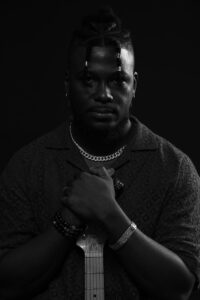
Haitian-born artist Prophete discusses his debut album Daniel II Prophete, exploring identity, heritage, grief, musical influences, creative collaborations, and his journey as an independent artist.
1. Hi Prophete, welcome to The Interviewist! How did your musical journey begin, and what made you decide to become a guitarist, songwriter, and producer?
My musical journey really started growing up in Haiti. Music was always around me. I grew up listening to Haitian bands like Carimi, T-Vice, Djakout, Mizik Mizik, etc, while my dad would play artists like The Platters, Otis Redding, and Nat King Cole on Sundays. At the same time, I was exposed to Michael Jackson, Beyionce, Alicia Keys, Eminem, R&B, hip-hop, and so many different sounds, so my musical taste was pretty diverse from an early age.
But funny enough, I didn’t actually start playing guitar until I moved to the U.S. at 18. Once I picked it up, I became obsessed with it. The guitar became my way of expressing things I didn’t always know how to say with words.
Songwriting and production came naturally after that because I was always curious about how a song went from an idea to a finished record. I didn’t just want to play guitar on someone else’s music—I wanted to understand the entire process. I started writing songs, recording myself, learning production and engineering, and eventually went on to study music formally.
Over time, all of those pieces became connected. Being a guitarist influences how I produce, producing influences how I write, and songwriting gives all of it a purpose. I don’t really see them as three separate things anymore. They’re all different parts of how I tell my story.
2. Your debut album, Daniel II Prophete, is a deeply personal project. What inspired its title, and what does it represent about you as both a person and an artist?
The title Daniel II Prophete represents me fully accepting that Daniel and Prophete are not two separate people. Daniel is Prophete, and Prophete is Daniel. One can’t exist without the other.
Daniel is the regular guy. He wants to play video games, spend time with his family, sleep in, eat some good food, and enjoy a simple, peaceful life. Prophete is the larger-than-life side of me—the entertainer, the overachiever, the guy who loves fashion, being on stage, creating something ambitious, and constantly pushing himself to see how far he can go.
For a long time, I think I treated those sides of myself as if I had to choose between them. This album is me realizing that I don’t. Becoming the artist I’m supposed to be actually means embracing both. The person you see on stage wouldn’t exist without the person who goes home afterward and just wants to be Daniel.
There’s also another layer to the title that makes it incredibly personal. My father and I shared the same name, and he passed away last January. So Daniel II Prophete is also a dedication to him. The “II” represents that connection and the idea of carrying something forward. In a way, this album is about inheritance, identity, and becoming—honoring where I come from while fully stepping into who I am.
3. Your music combines Haitian, Afro-Caribbean, Latin, kompa, twoubadou, R&B, and pop influences. How would you describe your sound, and how important is your Haitian heritage to your music?
I usually describe my sound as Afro-Caribbean with Latin influences, although reading all of those influences together makes me feel like I might need to come up with a whole new genre at some point! [laughs]
I pull inspiration from a lot of places: kompa, twoubadou, R&B, Afropop, Latin music, reggae, pop, and I don’t necessarily think about genre when I’m creating. I’m more interested in what feels right for the song. Sometimes that means a kompa guitar over something that feels like R&B, or a twoubadou rhythm blending with Latin percussion or Afropop.
But Haitian music is the foundation of everything I do. No matter how far I experiment, you’ll almost always find at least one element of Haiti somewhere in my music. It might be in the guitar, the rhythm, the percussion, the language, the melody, or even just the way I approach the groove.
I grew up in Haiti, so those sounds aren’t something I discovered later as an artist; they’re part of my musical DNA. I want the freedom to explore every influence that has shaped me while still making music where, when you really listen, you can always hear where I come from.
4. The album took three years to complete and explores identity, relationships, ambition, and belonging. What was the biggest challenge you faced while making it, and which song is the most personal to you?
The biggest challenge was making the album feel cohesive. For a long time, a lot of my collaborators heard the songs individually and weren’t really sure where I was going with them. Everybody had an opinion about what the album should sound like or what direction I should take, and I understood why because, song by song, some of the choices probably didn’t make sense yet.
But I knew I wanted to make something that told a story—my story—while still leaving enough space for people to see or feel themselves within those experiences. I had to trust that vision even when other people couldn’t see the full picture yet. I think it’s only when you sit down and listen to the album from beginning to end that everything really clicks. The different sounds, emotions, languages, and experiences are all pieces of the same person.
Honestly, every song is deeply personal to me because each one represents either something I experienced during those three years or something I hope to experience in the future. But if I had to choose one, it would probably be “Toufe.”
“Toufe” means “to suffocate” or “to feel like you can’t breathe” in Haitian Creole, and that song deals with grief, exhaustion, and trying to keep moving when life feels incredibly heavy. Losing my dad gave that song an even deeper meaning for me. It comes from a very vulnerable place—the feeling of carrying something so heavy that you don’t know how you’re going to keep going, while still choosing to fight for that next breath.
5. You collaborated with several artists on this album, including BélO, Jessica Antoine, Z The Vibe Doctor, Julian Mendoza, and Kafa. How did these collaborations come about, and what was the experience like working with them?
What I love about the collaborations on this album is that none of them really came out of nowhere. They’re all connected to relationships that have developed naturally over time.
Z The Vibe Doctor and I have been collaborating for about seven years, so having him on the album was almost a given. BélO is probably my favorite example of manifestation meeting relationship-building. He actually discovered me through a cover I made of one of his songs around 2013, and we’ve stayed connected and talked over the years. Eventually, that relationship turned into “Konekte,” which still feels a little surreal when I think about where it started.
Some of the other collaborations came through that same community. I met Julian Mendoza through Z, and Kafa through my longtime collaborator Carolina. Jessica Antoine and I met around 2020 or 2021 when I was playing guitar for Tamika and Jessica was one of the opening artists. We stayed in touch afterward and have spent years supporting and hyping each other up, so eventually making music together felt very natural.
Working with all of them was wonderful. I’m pretty intentional about the people I collaborate with. Talent matters, obviously, but I also want to work with people whose vision, energy, and work ethic align with mine. I gravitate toward people who take what they do seriously and want it just as badly as I do.
Of course, collaboration isn’t always perfect. You’re bringing different personalities, ideas, schedules, and creative instincts into one room, so there can be hiccups. But I’ve found that when there’s mutual respect and good communication, almost anything can be worked through. And when you get the right people together, they can bring something to a song that you never could have created by yourself.
6. Now that Daniel II Prophete is out, what are your plans for promoting the album, and what can listeners expect from you in the future?
Now that Daniel II Prophete is out, I really feel like the work is just beginning. I spent three years making this album, so I definitely don’t want to release it and immediately move on to the next thing. I want to give these songs time to live and find their audience.
A big part of that will be live performances. I want people to experience these songs outside of their headphones because I think there’s another energy they take on when you hear them with a band and see them performed live. I’m also going to be doing a lot—and I mean a LOT—of social media content. [laughs] That’s the era we live in, so I’m embracing it and finding creative ways to keep telling the stories behind these songs.
I’m also doing more interviews, looking for opportunities to perform with other artists, and working toward bigger stages. I’d love to be part of SXSW and ACL next year. At the same time, I want to contribute to the music community here in Austin rather than only asking it to support me. One thing I’m working on is putting together a monthly open mic at DAWA where artists can perform, connect, and hopefully build new relationships.
Ultimately, I want this next chapter to be about growth: more stages, more collaborations, more community, and continuing to introduce people to Daniel II Prophete. I spent too much time creating this world to rush out of it.