
Art Dufresne
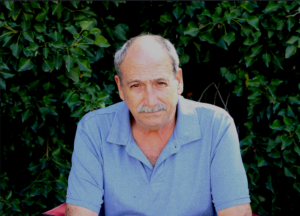
Art Dufresne reflects on over three decades of improvisation, experimental composition, tribal rhythms, and cross-cultural soundscapes, revealing the creative philosophy behind Fourth World Colors and his evolving musical journey today.
1. You have been exploring improvisational, percussion-based music since your first recording, Prototype, in 1991. Looking back over more than three decades of musical experimentation, how has your approach to improvisation and composition evolved?
The initial projects like “Prototype” were based on improvisation while remaining focused on traditional music training built around chords, distinct scales, and traditional playing methods. The overall improvisational approach has evolved to do less with traditional music techniques with more focus on tribal music theory. The music feels more natural to me when I do everything wrong. Physical limitations with my left hand do not allow me to utilize chords as shown in the chord charts. I developed abbreviated chords with very simple finger patterns to continue playing.
2. Your musical philosophy embraces the idea of letting music create itself rather than relying on conventional structures, chord charts, or tablature. How do you approach this creative process, and what role does spontaneity play in shaping your compositions?
Every track produced begins with a plan or design to establish a musical direction or strategy on how I hope the final production will sound. The use of chord charts or written music is never a part of my production process. A premise is conceived, and recording is done using the premise as a guide without rigid expectations on the final result. Capturing spontaneous creativity is the foundation and goal of all my work. For me it is essential to producing music with unique attributes and a fresh uncontrived recording. From past personal experience, the more I would rehearse a riff or melody, the more is lost in the total dynamic of the piece being rehearsed. By avoiding rehearsals and employing more improvisation more of the initial dynamic of the creative process is retained.
3. Your latest album, Fourth World Colors, brings together tribal rhythms, progressive rock, jazz, and avant-garde influences. What inspired this particular musical direction, and what does the album’s title represent to you?
The works of Brian Eno, in particular “Another Green World” and “Music for Airports” have probably been the most influential recordings for the most recent recordings. Jon Hassell and Robert Fripp recordings also provide a great level of influence towards my production work. Fourth World Colors is trying to represent a state of being, not so much a place or location. The album attempts to highlight this with the fusion of western and ethnic instrumentation to symbolize this state of being is not dependent on living at a specific location.
4. One of the album’s distinctive features is its combination of electric guitar soundscapes with ethnic percussion, including congas and tabla. How do you explore the relationship between these different musical traditions while maintaining a cohesive sound?
I am very grateful to have the influences of many artists who have done similar recordings with a combination of modern western instrumentation with ethnic based instrumentation. These influences help to provide a design guide for a balanced recording with new explorations while maintaining accessibility for a broad range of listeners.
5. Throughout your career, you have worked with different musical projects, including Override, Rainforest, and Eastwind, while also developing your identity as a solo artist and recording engineer. How have these experiences influenced your musical vision, and what have they taught you about collaboration and independent production?
The band experiences were a hard fast learning experience working with different personalities and visions while maintaining the overall premise of the music production. The band projects taught me about give and take to maintain a positive direction with the overall outcome of the music. Lessons learned with the band projects help me acquire a more objective view of my solo projects.
6. You have been experimenting with alternative recording and production methods, particularly in recent years. What are you currently exploring sonically, and what would you like listeners to discover or experience when they immerse themselves in your music?
Currently continuing explorations with guitar synthesizer processing with particular interest in orchestrations and monophonic synth sounds emulating birdsong. The most current project is an extension of western and ethnic music exploration with more assertive waking meditation driven tracks. My best hope is that the listeners will be able to explore other worlds within themselves while experiencing an inner peace.