
Oscar Rossignoli
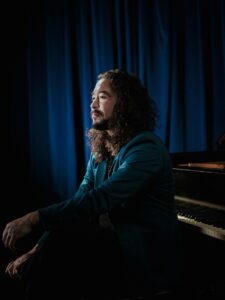
From Honduras to New Orleans, pianist and composer Oscar Rossignoli explores the meeting of classical music, Latin traditions, and modern jazz on his deeply personal new trio album, Mar Adentro.
1. Hello Oscar, and welcome to The Interviewist! You grew up in Honduras, studied classical piano, and eventually established yourself in the vibrant New Orleans jazz scene. How have these different musical environments shaped your identity as a pianist and composer?
Hello there! Great to be here with you all ~ Honduras was my foundation, obviously. It is my home country and where I developed a deep love for music and the freedom of creating in real time through improvisation. I would go to school in the mornings to study classical music, then play at church on Sundays and eventually play gigs on Saturdays with my friends exploring the Afro Cuban and Black American traditions, developing the skills required for improvisation. So to me it’s all one, really. The magic is in diving into a particular style and seeing how it blends into the styles that you already have in your bag. Professionally speaking, being comfortable in all kinds of repertoire allows me to work in various gigs without limiting myself to one particular style.
2. Your new album, Mar Adentro, brings together classical influences, Latin musical traditions, and modern jazz improvisation. What inspired you to create this record, and what does the title, which translates to “The Sea Inside,” mean to you personally?
This is my first album with my trio, so I’ve been wanting to record the pieces that we’ve been developing for a while. This is also a kind of biographical record, and I see my time in New Orleans as my most transformative years, musically and otherwise. Most of my compositions in this album have to do with the dynamics of navigating through the experiences brought by change. Everything changes. In navigating external obstacles, I started to pay attention to what I navigate internally…that’s The Sea Within.
3. You’re joined by bassist Lex Warshawsky and drummer Peter Varnado on this recording. What makes your musical connection with these two musicians special, and how much freedom did you give each other when developing the arrangements and improvisations?
The three of us have worked together in many configurations, so besides the friendship there is the chemistry and lots of trust. Peter and Lex are both incredibly intuitive musicians. Some of the arrangements have developed over time due to the freedom we have on stage, so even though I have a vision of what a piece should sound like, something that happens on a particular gig would make me see or hear something very different from that first idea and reroute the voyage altogether.
4. The album features your original compositions alongside interpretations of works by Ernesto Lecuona, Belisario Romero, and Billy Strayhorn. How did you choose these particular pieces, and what do you look for when transforming an existing composition into something that feels distinctly your own?
I’ve been wanting to do “Gitanerias” (Lecouna) with the trio, as a homage to not only the huge influence the Cuban music has had in the world, but to one of my first teachers, Amalia Marin who is also from Cuba. ‘Puñadito De Arena’ (Romero) is a memory of my childhood. I learned this song while singing in the choir at our elementary school and remember being fascinated by singing in four-part harmonies. The first time I heard the recording of “Star-crossed Lovers” (Strayhorn) I had recently started my studies in the US at LSU, and was floored by the beauty of it, the Duke Ellington band, and Johnny Hodges melting sound of his saxophone -although this one was not planned to be on the record, but we needed a moment of peace in the studio in between takes of the more challenging compositions. When adapting these pieces for the trio, I look for ways we can explore the work without taking away from its essence and what it is that ties them together.
5. Two compositions stand out for their contrasting ideas: “Shifting Contexts,” which reflects your early fascination with drums, and “Serpent,” which explores the struggle against evil and the search for peace. Could you tell us about the stories behind these pieces and how you translate such ideas into instrumental music?
I think I started writing “Shifting Contexts” around 2012 and it took me a few years to feel comfortable playing it, for some reason. I kept changing the course of what the melody or the rhythm would do, added sections, cut others, and just kept changing until I felt it had arrived to what it should be. I took the title from the recording of a talk given by Ram Dass.
6. Mar Adentro arrives on November 27, 2026, with a special clear-vinyl edition for Record Store Day Black Friday and a release concert at Snug Harbor in New Orleans. What does this release represent at this stage of your career, and what can audiences expect from the trio’s live performances?
It’s a very exciting moment in my career because it’s my first trio record as a leader, and being chosen to be a part of Record Store Day is huge -I can’t wait for you all to check it out! As per seeing us live, the beauty of this music is that it is organic, creative, so it’s never the same. Even if you listen to our record, what can happen live is to be determined by the spirit of the moment. Nothing can replace that, so everybody please support LIVE music in your community -go check out people even if you are not familiar with them. Buy the records, the merch, take something home that you truly own.