
Willie Mellina
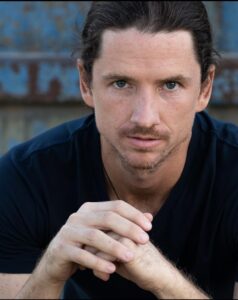
In this interview, actor Willie Mellina discusses his role as Sam in JUST ONE LIFE, the film’s powerful messages of hope and compassion, and how his diverse artistic journey has shaped his approach to storytelling.
1. In JUST ONE LIFE, you play Sam, an astronomy professor whose optimism and sense of wonder profoundly influence Renee’s outlook on life. What initially attracted you to this character, and how did you approach bringing his unique perspective and emotional depth to the screen?
What initially drew me to Sam was that he inspired me. He’s someone I genuinely want to be more like. He’s someone who approaches life with curiosity, conviction, and an openness to connecting with others. Rather than presenting faith and science as opposing forces, Sam’s perspective invites curiosity and reflection. At the same time, there were so many things about him that I could identify with. I’ve spent most of my life working with kids through teaching and coaching, and I have children of my own. My hope is that they’ll have role models like Sam in their lives.
As far as my approach, I just tried to keep it as simple as possible and tell the truth. I made an effort to spend as much time as I could with the people I was working with so we could build real chemistry and feel comfortable enough to fail, take risks, and be vulnerable in front of one another.
2. Sam’s relationship with Renee develops through their contrasting experiences and perspectives. How did you and Samantha Cutaran work together to establish that connection, and what do you think makes their relationship particularly meaningful within the film’s larger message?
Samantha was such a blessing to work with. She’s an absolute pro! The biggest thing we focused on was rehearsing. We had several scenes with quite a bit of dialogue and a lot of different emotional beats, so we really made an effort to carve out time together. A lot of that meant breaking bread, getting to know one another, and building the kind of chemistry and freedom where you feel comfortable messing up in front of each other.
I think what makes Sam and Renee’s relationship so interesting is that they come from very different backgrounds and have different worldviews, but there’s also this genuine respect and curiosity for one another’s beliefs and passions. Listening, patience, empathy, and being willing to understand someone else’s perspective can be transformative. Sam truly supports Renee’s music and her dreams, and she supports his excitement and passion for astronomy and working with kids. They don’t have to see the world exactly the same way to appreciate what makes the other person special. JUST ONE LIFE is a beautiful reminder that meaningful relationships aren’t always built on having everything in common.
3. The film addresses grief, emotional struggles, and the search for purpose while maintaining an uplifting message of hope. How do you think storytelling can help audiences navigate difficult experiences, and what makes JUST ONE LIFE particularly relevant in today’s world?
I really love that this film doesn’t try to be something it’s not. JUST ONE LIFE explores some of life’s most difficult questions without pretending there are always easy answers. It’s raw, and there are moments of discomfort that I think everybody can understand and identify with.
Loss is inevitable. It’s something we’re all going to experience at some point, and I think JUST ONE LIFE does a great job of not trying to hide from that reality. We’re going to lose people we love, and life isn’t always going to be easy. But even in the middle of that struggle, there’s still life. There’s still light. And I think that’s something we all need to be reminded of.
4. Your career includes portraying George Washington in Washington’s Armor, along with appearances in The Chosen and The Forge. How have these projects influenced your perspective on storytelling, especially when exploring themes of faith, resilience, and personal transformation?
If I added up every day I’ve spent on set, both in front of and behind the camera, and compared that to the time I’ve spent working on WASHINGTON’S ARMOR and THE CHOSEN, those two projects would make up a pretty significant chunk of my career. So much of what I’ve learned and experienced in this industry has come from those productions.
Even stepping into George Washington’s shoes cinematically was incredibly challenging, especially dealing with the elements and the weather. So to imagine actually living that life, or the lives of the disciples, is just mind-blowing. I have a tremendous amount of respect for those stories and the impact they can have.
I think, for me, I just don’t want to waste time making movies that don’t matter. Unless, of course, people are going to laugh so hard they cry. I’m all for those, too! But I’m definitely drawn to true stories about real people and the experiences that shape who we are.
With JUST ONE LIFE, I hope people leave this film thinking about the people in their lives and realizing that they have an opportunity to make a difference, right where they are.
5. Beyond your screen work, you have an extensive background in musical theatre, dance, stunt work, and stage performance, including working under the direction of Billy Porter. How has this multidisciplinary training shaped your acting process, and which skills have proven particularly valuable when approaching emotionally demanding roles?
Goodness, that’s a great question!
I can’t imagine someone writing a screenplay about a person who did just one thing from the time they were 16 until they were 40. Unless, of course, they’d watched hundreds of movies, read hundreds of books, and had an incredible imagination!
I think life experience is so important. Between training, education, performing, and preparing for everything from playing a leading man in a musical to a dance production or even an operetta like The Pirates of Penzance, there have been so many different challenges and learning curves along the way. It’s incredibly helpful to be able to draw from all of those experiences when approaching new stories and characters.
I’d say I probably lean on dance the most. The freedom of movement and the confidence that comes from knowing what I’m doing with my body are things I’ve relied on quite a bit throughout my career.
And when it comes to emotionally demanding roles, there’s something really valuable about being able to finish a take or rehearsal, shake it out, and reset my body, mind, and spirit through dance and movement. That’s always been a big part of my process.
6. JUST ONE LIFE ultimately asks audiences, “What will you do with the life you’ve been given?” How has working on this film influenced your own understanding of purpose, compassion, and the importance of showing up for others, even through seemingly small gestures?
Jesus speaks about how even something as simple as giving someone a cup of water in His name will be remembered in heaven.
After people watch JUST ONE LIFE, I hope they walk away inspired to reach out to someone, encourage someone, or simply be more present in the lives of the people around them. You never know how much that might mean.
Working on this film brought back memories of times when I was able to bless somebody, or when somebody blessed me, even in the smallest of ways. And sometimes the impact of those moments, and the overwhelming presence of the Holy Spirit, is something that just can’t be manufactured or imagined.
I think when we make an effort to live with that same mentality, not just for a moment, but over a season or even many seasons of life, we really can begin to shift the hearts and minds of the people around us.
And before you know it, you’ve started a wildfire.
The good kind!