
Stu Mendelson
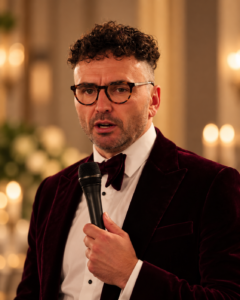
In this interview, Stu Mendelson discusses his upcoming single “We’re Still Here,” transforming military experiences into music, supporting veterans and their families, and uniting communities through creativity, recovery, and charity.
1. We’re Still Here carries a deeply personal message about the struggles veterans and their families continue to face long after military service ends. What inspired you to transform your own experiences into this particular song, and what do you hope listeners will take away from it?
After last year’s experience of rewriting Do They Know It’s Christmas? into Do They Know It’s Muster Time?, I discovered just how much I enjoyed the writing and recording process. I started writing down my own experiences and feelings and turning them into lyrics. I found a creative side to myself that I didn’t really know existed, but more importantly, I found a way of telling my story. I know a lot of veterans have written books about their experiences in the military, but I’ve always struggled to find the words to explain mine. With songwriting, I found it easier. You can use metaphors, imagery and personification to express things that are sometimes incredibly difficult to put into words. Then you add music, and suddenly there’s another whole dimension to expressing those emotions. With We’re Still Here, I wanted to get across something I feel quite strongly about.
Just because conflicts disappear from the front pages of newspapers doesn’t mean their consequences disappear with them. There are still veterans and their families living with the effects of those conflicts, sometimes decades later. I hope people listening to the song remember that. And for those who are struggling themselves, I hope it reminds them they’re not alone.
2. You wrote, composed, arranged, and independently funded the entire project, while also stepping outside your comfort zone to perform the lead vocals. What were the biggest creative and emotional challenges you faced during the recording process?
Apart from the steep learning curve of music production, I’d say the biggest challenge was managing the whole project. I was determined to make sure the Military Wives Choirs singers and the veterans from Stevenage and Sunderland genuinely enjoyed the experience of being in a recording studio and creating something together. But at the same time, I was very conscious that we needed to come away with a finished recording we could actually use. Finding that balance between making it an enjoyable experience for everyone and getting the best possible result was something that really worried me.
You also have to remember, I’m not a professional musician. I’ve been working on this song since January, constantly changing lyrics, changing the key, rearranging the structure and trying to get everything right. It’s been a real labor of love. The Military Wives Choirs singers were the final part we recorded and arguably one of the biggest elements of the entire song. That meant I had to wait until the end of September before I could finally hear everything come together. After nine months of working on something, hearing all those voices, the music and the arrangement finally come to life was an incredible experience. I genuinely think I was in tears within about ten seconds of hearing the finished version. It was the first time I could properly stand back, listen to what we’d created together and realize that all those months of hard work had actually paid off.
3. The single brings together veterans from The Muster Point and Veterans in Crisis Sunderland alongside singers from Military Wives Choirs. How did this remarkable collaboration come together, and what did having members of the Armed Forces community participate directly add to the song?
From the beginning, I wanted this to involve the wider Armed Forces community and bring people together from different parts of the country. There’s often talk about a North–South divide in the UK, but that’s something you don’t really experience in the Armed Forces. When I was serving, I worked alongside people from the north, south, east and west of Britain, as well as places like Fiji and Nepal. Where you came from didn’t matter. We all wore the same uniform, did the same job and looked out for each other.
I’ve had a good relationship with Ger Fowler, the founder of Veterans in Crisis Sunderland, for some time. He’s been supporting veterans a lot longer than I have, and he’s always been someone I can turn to for advice. Getting the veterans in Sunderland involved seemed like a natural choice, particularly as both our organizations have been chosen as mayoral charities in our respective towns and cities. It felt like another opportunity to strengthen that connection between the north and south.
The singers from the Chicksands and Henlow Military Wives Choir are local to us, so approaching them felt equally natural. But I also wanted to recognise the families. I think when we talk about military service, the focus is often on the people who wear the uniform. But military service affects the whole family, and I don’t think that always gets the recognition it deserves. It’s not just about the difficult goodbyes or the worry about what might happen when someone deploys on operations. Family life doesn’t stop because someone has gone away. There are still children to raise, bills to pay, problems to solve and everyday struggles to deal with. Often, the person left at home has to face all of that single-handedly, and that takes an enormous amount of strength and courage. That’s why having Military Wives Choirs involved was so important. To me, we’re one Armed Forces community, whether you’re the person wearing the uniform or the person supporting them at home. Bringing those different voices together was about recognising that we’re all part of the same community, and that’s exactly what I wanted We’re Still Here to represent.
4. Your journey from serving as a Royal Engineer in Afghanistan to co-founding The Muster Point has involved extraordinary challenges and personal transformation. How has music helped you process your experiences, and what role do you believe creative expression can play in helping veterans rebuild their lives?
Music has become a creative outlet for me, but it’s also given me something I didn’t realise I’d been missing for much of my life. Coming from an engineering background, I’ve always been very mathematical and logical in the way I think. Everything has a process, a structure, a right or wrong answer. During my recovery journey, I started discovering a creative side to myself that I’d always suppressed. Through music, I’ve found a way to put myself out there. There are no rules or boundaries about how I choose to express what I’m thinking or feeling. I can take my experiences, my emotions and the way I see the world and turn them into something creative and that’s been incredibly liberating. I don’t write songs because I want to become famous on TikTok or make money. I write because it’s my release. It’s my way of making sense of the world and expressing things that I might otherwise struggle to explain. Of course, with We’re Still Here, we absolutely want the record to be commercially successful. The more people who buy it, the more money we can generate to support Military Wives Choirs, The Muster Point and Veterans in Crisis Sunderland.
But that’s the purpose of this particular project, rather than the reason I started writing music. I think that’s something really important when we talk about veterans and recovery. We often focus on sport, physical challenges or pushing ourselves to achieve something, and those things are brilliant for people who connect with them, but recovery isn’t one size fits all. For some people, it might be sport. For others, it could be art, writing, music or something completely different. For me, it’s been music. Nothing else I’ve experienced gives me that same freedom to simply be me.
5. Last year’s charity Christmas project, Do They Know It’s Muster Time?, received approval from Sir Bob Geldof and encouraged you to pursue songwriting more seriously. How did that experience influence your decision to create an entirely original song for 2026?
I think almost as soon as last year’s song was released, I thought, “Sod it, I can do this myself!” and of course, getting the thumbs up from Sir Bob Geldof was an incredible honor. He’s arguably the king of charity Christmas songs, so having his approval for something we’d created meant a great deal to me. I’d absolutely love him to give We’re Still Here the thumbs up as well. Who knows? We might even persuade him to help us get it to Christmas No.1!
The decision to write my own song also came from a much bigger change in my life. I spent so many years battling PTSD and addiction, telling myself I wanted to get better, but never actually taking the steps to make it happen. In 2023, something changed. I didn’t just make the decision that I wanted to get well, I started taking practical steps towards making it happen. With the help of Tom Harrison House, I found recovery, and my life started to improve. That experience completely changed the way I approach things. Now, when I have an idea or decide I want to achieve something, I do my best to make it happen. I’m also no longer afraid to ask for help when I need it. That’s something I used to see as a sign of weakness, but I’ve learnt that it’s actually one of the greatest strengths you can have. So when I started thinking about writing an original Christmas song, I didn’t really see a reason not to give it a go. There’s a saying I really like: “Shoot for the moon. Even if you miss, you’ll land among the stars.” That’s exactly how I’ve approached We’re Still Here, I wanted to aim big. Not just to try for Christmas No.1, but to show other people that when you put your mind to something, and you’re prepared to work hard and ask for help along the way, you can achieve some incredible things and if we don’t get Christmas No.1? Well, look at what we’ve already achieved. We’ve brought veterans and military families together from different parts of the country, created something we’re all proud of and had an enormous amount of fun along the way, whatever happens in the charts, nobody can take that away from us.
6. With We’re Still Here being released on Armistice Day and aiming for the Christmas No.1 spot, the project has ambitions beyond music itself. What would success mean to you personally, and how do you hope this campaign will benefit Military Wives Choirs, The Muster Point, and Veterans in Crisis Sunderland?
If We’re Still Here reached Christmas No.1, it would be an absolutely incredible achievement, but for me, it would mean so much more than having a song at the top of the chart, It would be a reminder to the country that veterans and the wider Armed Forces community are still here. We’re still surviving, still facing challenges and still supporting one another, long after our conflicts have disappeared from the headlines. I’d also hope it sends a message to veterans and their families that we’re stronger together. When we come together, support each other and put our minds to something, we can achieve some pretty incredible thing and of course, the more successful the record is, the more money we can generate to support Military Wives Choirs, The Muster Point and Veterans in Crisis Sunderland. These organizations make a real difference to people’s lives, and I’d love this campaign to help them continue that work.
Beyond the money, I want people to feel proud of what we’ve achieved together, this hasn’t been a project with big names or a massive budget. It’s been ordinary people from the Armed Forces community coming together to create something special and if we can take that all the way to Christmas No.1, what a message that would send. We are still here, and we are stronger together.