
RADARFIELD
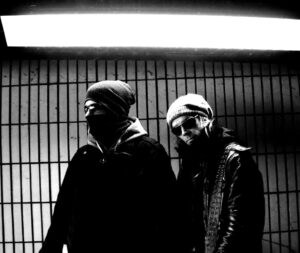
RADARFIELD began in Berlin in 2010 as a Post-Punk and Alternative Rock band before evolving into Darkwave, Synthpop, and electronic music. With influences ranging from Depeche Mode to David Bowie, the project continues exploring atmospheric soundscapes, emotional storytelling, and cinematic visuals while embracing constant transformation.
1. RADARFIELD began in 2010 as a more traditional Post-Punk/Alternative Rock project before gradually evolving into Darkwave, Synthpop and electronic music. What were the key moments that pushed you away from the conventional band format and toward your current sound?
RADARFIELD started in Berlin in late 2010 as a fairly traditional band. At the beginning, the lineup consisted of vocals and guitar, bass, keyboards and drums, and our music was much more rooted in Post-Punk and Alternative Rock.
The first major change came in 2011, when our drummer left and we decided to replace the drums with a drum machine. That was actually an important turning point, because it opened the door to working much more freely with electronic rhythms and sounds.
In the same year, our bassist also left the project. Instead of simply trying to recreate the original band setup with another traditional bass player, we started experimenting more seriously with electronics. That decision gradually changed the way we wrote and produced music.
What happened afterwards was not really a conscious decision to suddenly become a Darkwave or Synthpop project. It was more of a natural evolution. As we experimented with synthesizers, programmed rhythms and electronic textures, the music became darker, more atmospheric and increasingly electronic. Elements of Synthpop, Darkwave, Synthwave, Electronica and eventually Drum & Bass began finding their way into the RADARFIELD sound.
We have never wanted to be locked into one particular genre. For us, the sound is allowed to evolve as long as it remains atmospheric, emotional and recognizably RADARFIELD.
In our more recent songs, we have started combining the synthesizers with electric guitar in a different way, creating a new layer within the RADARFIELD sound. Rather than choosing between electronic and organic elements, we are interested in seeing what happens when the two become part of the same sonic world.
In that sense, RADARFIELD is still evolving. The direction may change, but the idea remains the same: to explore new sounds while keeping the atmosphere, emotion and identity that make RADARFIELD what it is.
2. Your music combines dark electronic textures, atmospheric songwriting and cinematic sound design. How do you approach creating that atmosphere, and what usually comes first for you—the emotion, the melody, the lyrics, or the electronic production?
For us, there is no single formula for writing a RADARFIELD song. Sometimes an idea starts with a particular sound, a melody or a guitar part, but in many cases there is a strong idea or theme at the beginning. One thing we always try to achieve is that a new song should sound different from what we have done before. We don’t want to simply repeat a formula that worked on the previous track.
With our most recent songs, the process has actually become quite clear. It often starts with a strong idea or theme. From there, Tom develops the lyrics, and then the words are adapted to the guitar and the musical phrasing. Once the basic vocal and guitar foundation is there, the drums and synthesizers are added, followed by additional guitar parts. This has been the approach behind our last five songs, although the process can still change depending on the song.
Atmosphere is probably the most important element for us. Before thinking about genres or technical details, we want a song to create a certain feeling. We often start by building a sonic environment around the central idea and then see where it takes us.
The electronic side of RADARFIELD gives us a lot of freedom in that process. Synthesizers can create the space around a song, while the guitar can add something more physical and organic. We like the tension between those two worlds, especially when they don’t sound completely polished or predictable. Sometimes a slightly rough or unusual sound has more character than something that is technically perfect.
Lyrics are also very important to us. We don’t try to explain everything directly. We prefer leaving some space for the listener to interpret the song in their own way. The music, the lyrics, the voice, the guitars and the electronic elements should ultimately come together as one atmosphere.
And perhaps that is the most important part of our creative process: every new song should feel like a step somewhere else. We want to surprise ourselves first — and hopefully surprise the listener as well.
3. Your influences include Depeche Mode, The Cure, New Order, Gary Numan, Joy Division and David Bowie. How have these artists shaped RADARFIELD, and how do you make sure their influence becomes inspiration rather than imitation?
All of these artists, but also Bauhaus, have influenced RADARFIELD in different ways, but probably not in the sense that we consciously try to sound like any of them. What we take from them is more the freedom to create an atmosphere and to develop a recognizable identity.
Depeche Mode showed us how powerful electronic sounds can become when they are combined with strong songwriting and emotion. The Cure and Joy Division influenced us through their atmosphere, their sense of space and their ability to turn darker emotions into memorable songs. New Order are an interesting example of how a band can move from Post-Punk into electronic music without losing its identity, which is something we can definitely relate to. Gary Numan has always been an inspiration for the use of vocals and the more futuristic side of electronic music, while David Bowie represents something slightly different for us: his strange and often unexpected lyrics, his distinctive way of singing, and the courage to change, experiment and reinvent yourself rather than staying inside one successful formula.
But influences are only the starting point. We don’t want to reproduce the sound of another artist. Once we start writing a song, we try to forget about those references and concentrate on what the song itself needs. Sometimes a certain influence may be noticeable in a sound, an atmosphere or a musical idea, but the combination of our own lyrics, vocals, guitars, synthesizers and production creates something different.
We think the best way to avoid imitation is simply to keep evolving. If we deliberately tried to sound like Depeche Mode, The Cure or any other artist, we would probably lose the most important thing: our own identity. We would rather take inspiration from the artists we love and then let that inspiration become part of our own musical language.
4. Your latest song, “Cocoon,” explores isolation, transformation, and the realization that something protecting you can also hold you back. What inspired this concept, and what does “breaking out of the cocoon” mean to you personally or creatively?
The idea behind “Cocoon” actually started with a single image and a single line: “hanging in my garden tree…” From there, the idea of the cocoon gradually developed into a much larger story.
A cocoon is something that looks fragile from the outside, but inside something completely different is happening. It is a place where an old form disappears and something new begins to emerge. That idea fascinated us because transformation can be both beautiful and unsettling.
But there is another layer to the song. We live in a time where youth and beauty are valued almost obsessively. Everyone wants to stay young, attractive and perfect for as long as possible. So we started to imagine a kind of ultimate renewal: what if, instead of simply growing older, you could actually become young again and experience youth all over again? What if you could keep renewing yourself — almost becoming immortal?
Of course, something like that is impossible on Earth. So we moved the whole idea somewhere else. The story takes place in another universe, or perhaps on another planet, where the same human desires still exist: the desire to remain young, to experience beauty and life again, and ultimately to escape the limits of ageing and mortality.
For us, the cocoon is therefore not only about isolation or hiding from the outside world. It is also about transformation and renewal. It becomes a kind of transitional state — a place where the old version of yourself disappears and something new can emerge.
That is also why the idea of “breaking free” is important in the song. It doesn’t necessarily mean escaping from another person or from a specific situation. It can simply mean leaving an old version of yourself behind. Something that worked for you in the past may no longer fit the person you have become.
Creatively, I think this is something we can relate to as RADARFIELD as well. We have been making music for more than fifteen years, and the project has changed considerably during that time. We started with a much more traditional Post-Punk and Alternative Rock approach and gradually moved into electronic music, Darkwave, Synthpop and other directions. We never wanted to stay inside the same musical cocoon.
5. RADARFIELD has developed a strong visual identity through music videos such as “Vampire Diary,” “Death & Beauty,” “Séance” and “Cocoon.” How important is the visual world to your music, and do you see your videos as an extension of the songs themselves?
The visual side of RADARFIELD has always been important to us because we don’t see the music as something that exists completely on its own. A song can create a certain atmosphere in the listener’s imagination, but a video gives us the opportunity to build a visual world around that atmosphere.
For us, the video is therefore not simply a way of promoting a song. Ideally, it becomes another part of the story. Sometimes the music comes first and the visual idea develops afterwards. With other songs, the images and the music almost develop together. We like the possibility of taking the listener somewhere that may not be possible through the music alone.
The production of the videos is often closely connected to Tom’s lyrics and the images and ideas that come from them. The lyrics provide the starting point, and from there we look for visual material that can support or expand the story. The vast amount of imagery and footage available online gives us an enormous creative toolbox. We can combine different images, scenes and atmospheres to create something that fits the world of the song.
With songs like “Vampire Diary,” “Death & Beauty” and “Séance,” the visual world also helps to underline the darker and more mysterious sides of the music. With “Cocoon,” the story moves in a slightly different direction because it is more futuristic and surreal. The concept itself already offers many visual possibilities, and we can imagine different ways of bringing this world to life visually. Whether this will eventually lead to a music video remains open, but the visual ideas behind the story are already an important part of how we imagine its world.
Over the years, the videos have therefore become an important part of the RADARFIELD identity. Music and visuals don’t have to tell exactly the same story, but they should feel as if they belong to the same world.
6. After more than 15 years and a catalogue that spans Post-Punk, Darkwave, Synthwave, Electronica and other styles, where do you feel RADARFIELD is heading next? Is there a particular sound, concept, or creative direction you are excited to explore?
I don’t think we have a fixed destination for RADARFIELD, and perhaps that is exactly what keeps the project interesting for us. After more than fifteen years, we have learned that the music can change in ways we don’t necessarily predict in advance.
What we definitely want to keep is the combination of atmosphere, emotion and electronic sound that has become part of the RADARFIELD identity. At the same time, we don’t want to repeat what we have already done. As we mentioned earlier, every new song should feel like a step somewhere else.
So I wouldn’t say that we have one specific sound or direction planned for the future. The most important thing is that RADARFIELD continues to evolve. After more than fifteen years, we are still curious about what happens when we take the next step — and perhaps that uncertainty is part of the identity of RADARFIELD itself.
And now, in October 2026, we have also signed a contract with Phoenix Records, so we are very excited to see where this new chapter will take us. Phoenix Records also has contacts in China, which may open up new possibilities and perhaps new horizons for RADARFIELD.
There are already several things happening around RADARFIELD, including upcoming interviews and reviews, so it feels like the project is entering another interesting phase. We don’t know exactly where the road will lead, but we are looking forward to finding out.