Amy Jean
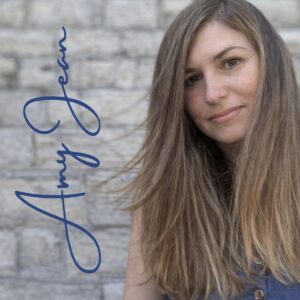
With Living Imperfection, Amy Jean embraces vulnerability, simplicity, and human connection, crafting intimate songs that explore personal experiences, social realities, and the meaningful spaces found between the notes.
1. Living Imperfection brings together acoustic guitar, piano, electric guitar, and violin while keeping the songwriting at its heart. How did you and Nicholas Russell develop the EP’s intimate yet textured sound?
Nicholas Russell is an incredible musician and has such an amazing ear and intuition for music and leaving the right amount of space. I respect him a great deal and it was a so easy to trust him to help bring these songs to a new level. It helped that we have known each other for a while now and have a similar taste in music. It was such an enjoyable process to sit down and experiment with adding different instruments. I would describe a feeling and we would test it out. We would add and then often remove elements if they weren’t in service to the song. Most often, we found that less was more. I’m very grateful for this experience.
2. Many of these songs draw directly from your lived experiences and explore complex emotions. Was there a particular moment when you realized you wanted to be this open and vulnerable in your songwriting?
I don’t think I ever questioned it, honestly. If you are not open and vulnerable then what really is the point? I first write for myself and if it resonates with someone else, that is the best that one can expect. But like all conversations in life, and a song is a conversation, the best ones are when people can share and be vulnerable. The first track on the EP is called “Bottled Feelings” and the main line in the song is “Have a cup of my life, and I’ll have a cup of your life”. It’s all about these conversations and a good intro to the EP – I’m literally inviting you to have a cup of my life; a piece of me in my songs.
3. “Divided in Union Station” addresses homelessness and addiction through the experience of passing through a busy city transit hub. What did you observe or feel that inspired you to turn that everyday experience into a song?
A lot of the songs on this EP are about feeling unseen. I spent 16 years every week day commuting into Toronto through its main transit hub. And, like any central space, it is a microcosm of our world, at large. It is easy, when you are in a hurry to get somewhere, to not want to see people who may be asking for help. We actively try to avoid it. Lately, the divide between people who have and those who do not seems to be getting wider. It’s hard to unsee. So, I wrote about it. First as a poem and it slowly became a song. It doesn’t solve anything, but does provide an acknowledgment.
4. “Ode to Sunrise” uses the imagery of sunrise and sunset to explore gender inequality. What drew you to this metaphor, and what message did you hope listeners would take from the song?
The first line of the song is “Sunrise lives at the end of my street”. Which is true, I wake up very early to go to the gym in the darkness and occasionally get glimpses of the sunrise at the end of the street. Every morning I would think how many people actively watch a sunrise? Usually, it is the sun that is waking us up. It seemed lonely compared to many people watching sunset, just due to the fact that we are awake. So, I gave sunrise and sunset genders and used them to describe gender inequality as it was a lived experience. But obviously, they don’t have genders and really the sunrise can perhaps be personified to symbolize anyone who works in the shadows and doesn’t get the credit they deserve.
5. You describe Living Imperfection as offering “space and simplicity” in a world filled with noise and distractions. What does creating that sense of breathing room mean to you as an artist?
It is vital. Literally as a vocalist, I need room to breathe to make a song sound right. But I do believe there is so much more to music than the notes we play, but the spaces where we don’t play. I actually describe this importance in the last track of the EP called “Between the Notes” – “Can you hear me in the space between the notes?”. It is everything I am not saying but I’m still there.
6. You’ve performed at events including the February Folk Fest, Humber River Arts and Music Festival, and Hillside Festival. How have these live experiences and the songwriting communities in Toronto and Haliburton shaped the artist you are becoming, and what can listeners look forward to next?
They have shaped me completely. It takes a village, as they say. But honestly, if you are only listening to top 40 music and going to concerts at big venues, music in general can feel very inaccessible – like you can’t be part of it. Music is for everyone. By getting out into my communities and making music with them, it helped to provide a space where I could make connections, mistakes, learn, rely and depend on others. But also, it was just fun- I’ve made great friends and gained mentors and sponsors for the future. Next up, I have a few local shows to look forward to collaborating with great musicians. Details can be found on my website iamjeanymusic.com and I’m continuing to write songs. This is only the beginning.