
Adriana Spuria
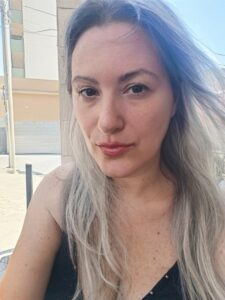
Adriana Spuria opens up about the autobiographical story behind “Fiore al veleno,” blending heartbreak, irony, theatricality, and contrasting musical worlds while revealing her deeply personal artistic vision.
1. “Fiore al veleno” explores seduction, disillusionment, and the painful realization that what seemed like love may have been an illusion. What inspired you to tell this particular story, and how personal is it for you?
The song is autobiographical. It tells about an infatuation I experienced a few years ago with someone who had borderline personality traits and successfully i discovered made use of drugs. Fortunately, the story never actually began, but I had fallen very deeply for this person.
2. One of the song’s most distinctive elements is the way you combine emotional pain with irony and a theatrical approach. Why was it important for you to look at heartbreak with a touch of humor rather than treating it purely as a dramatic experience?
The choice to bring out paradoxical tones, painted with subtle humor, wasn’t really a choice at all — it’s exactly what happened. It was an accumulation of tragic and hilarious strangeness all at once. When pain comes paired with absurdities, the ability to grasp the ironic side of it is a blessing, a gift. In that sense, I feel like a lucky woman.
3. The song exists in both a pop-reggae version and a swing-jazz lounge remix, creating two very different atmospheres around the same story. What did each arrangement allow you to express that the other version could not?
Actually, “Fiore al veleno” was born as a swing guitar-and-vocal piece. At the beginning, I only wanted to go in that direction. I composed and wrote the song myself back in 2014, at a time when electro-swing was booming all over Europe. Then the phenomenon faded away within a couple of years, and the song started sounding a bit too old-school to me. So I made a shift from the ternary feel of swing to the syncopated binary division of reggae, which happens to be one of the most fascinating evolutions in twentieth-century popular music — a change that, in music history, marked the transition from Euro-American and jazz-based rhythms to African-derived polyrhythms filtered through the Caribbean. Then, this summer, I decided to produce both versions because I couldn’t give up on either one. In the end, they paint two aspects that absolutely belong to the context in which my story took place. For the swing version, I found a compromise closer to lounge swing-funk rather than electro-swing.
4. You describe the reggae version as having a nocturnal, almost Felliniesque atmosphere, enriched by Balkan, circus, and Mexican influences. How did these seemingly different musical colors come together during the creative process?
The place, the context in which everything happened, was a pub frequented by very freaky and shady characters, but also by important directors and students from a famous Italian theater school. I developed this crush in a very smoky, dangerous, and creative environment at the same time — very Fellini, but also a bit like Dario Argento after a certain hour. I’d say that the reggae version, with those circus-band horns and Caribbean sounds, ironically describes that context perfectly, while the jazz version is closer to the inner movements I was experiencing at the time — a sort of surreal cabaret that speaks the language of the unconscious.
5. The two official videos also present completely different worlds: one sensual and contemporary, the other black-and-white, retro, theatrical, and inspired by old cinema and cabaret. How involved were you in developing these visual concepts, and what did you want audiences to feel when watching them?
The visual concepts are mine — I made the videos myself. I never expect anything from the audience. I always focus on delivering a message that is sincere, honest, and coherent with who I am.
6. You have been writing, performing, and producing your own music for decades, from your early work to your albums and recent singles. Looking ahead to your upcoming album, what new side of Adriana Spuria would you like listeners to discover?
But honestly, I haven’t really thought about that. I hope people love my music for what it is, with all its different facets, and me as an artist in the same way.