
Troy Landon
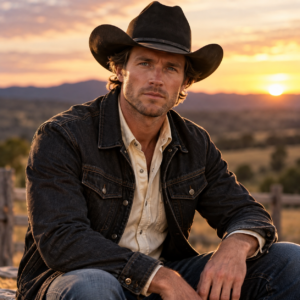
Troy Landon explores hope, compassion, and human connection in “We’ll Leave the Light On,” sharing the story behind the song and his unique AI-assisted creative process.
1. “We’ll Leave the Light On” is built around the simple but powerful idea of letting someone know there is still a place for them to turn. What inspired you to write this song, and when did you realize that this message was at the heart of it?
The idea for the song came to me from looking at everything going on around us and realizing how easy it is for people to feel as if they’re alone or that nobody cares anymore. We hear so much about what’s dividing people, but we don’t always hear about the people who are still helping each other every day.
As I started writing, the idea of leaving a light on for someone just seemed to fit what I was trying to say. It’s such a simple thing, but it can mean that someone is waiting for you, there’s a place you can go, and you’re still welcome there. That’s when I realized that was really what the song was about.
I wasn’t trying to solve somebody’s problems or tell them everything was going to be okay. Sometimes people just need to know somebody still cares enough to leave the light on.
2. You’ve been writing lyrics and working with music for more than 25 years. How has that experience shaped the way you approach songwriting today, particularly when you’re trying to capture an emotion as personal and human as the one behind this song?
After writing for more than 25 years, one thing I’ve learned is that sometimes the simplest line can say more than something you’ve spent hours trying to make perfect.
With “We’ll Leave the Light On,” I didn’t want it to sound like I was preaching. I wanted it to feel like one person talking to another.
I’ve also learned over the years not to force something if it doesn’t feel right. Sometimes I’ll change a line, rewrite an entire section, or even start over if I have to. The words have to sound natural to me and fit the story I’m trying to tell. I think that’s probably one of the biggest things all those years of writing have taught me.
3. You describe yourself as very deliberate about tempo, key, instrumentation, vocal delivery, dynamics, and arrangement when building emotion. How did you use those elements specifically to make the music of “We’ll Leave the Light On” support the story without overpowering its message?
When I started working on the music for “We’ll Leave the Light On,” one of the first things I knew was that I didn’t want the music to overpower the lyrics. The words and the message meant too much to me for that to happen. I wanted the music to enhance and complement what I was saying and help bring out the emotion that was already there.
Before I really start building the music, I do quite a bit of research into things like tempo, mood, energy, and instrumentation. I’ll also spend time listening to different instruments and how they’re used to get a better idea of what could work for the song.
For this one, I kept the tempo more relaxed because I wanted people to have time to hear the words and take them in. I went with a warmer, more traditional country sound using acoustic guitar, piano, and steel guitar because those instruments gave me the emotion I wanted without getting in the way of the lyrics.
The vocal delivery was very important to this song. I wanted the verses to be more restrained and personal, almost like Troy is talking directly to you, and then let his voice become stronger when the chorus comes in. The song gradually builds along with him instead of giving you everything right from the beginning.
Once everything starts coming together, I listen to how all those pieces are working with each other. If something is taking my attention away from the words, I’ll go back and change it. For me, the music should make you feel the words even more, not make you stop listening to them.
4. You mention that the production process can involve a lot of trial and error, with different generations, arrangements, and performances being tested until they match what you hear in your head. What is your creative process for knowing when a version of a song has finally captured the emotion you were looking for?
For me, a lot of it comes down to what I’m feeling when I listen to it. I normally have an idea in my head of what I want the song to sound and feel like, and then I start working from there.
A version can sound really good and still not be right for the song. That’s exactly what happened with “We’ll Leave the Light On.” It took well over 20 generations before I found what I was looking for because I just wasn’t feeling it. Some of those versions weren’t bad at all. They just weren’t giving me the emotional connection I wanted, so I kept working at it.
One thing I really pay attention to is my own reaction. If a vocal comes in or the chorus hits and I suddenly get chills or goosebumps, I know I’m getting close. There have been times when a song has actually stopped me in my tracks because something hit exactly the way I wanted it to. That’s what I’m looking for.
I know I’ve finally got it when I stop listening for what needs to be fixed and just start listening to the song. When I stop analyzing everything and I’m simply feeling what the song is saying, that’s usually when I know it’s there.
5. You’ve chosen to be completely transparent about using generative AI, with the track classified as AI-Assisted in the SIQA Verified Registry. What does that designation mean to you creatively, and where do you draw the line between what AI contributes and the human decisions that define the song?
To me, AI-Assisted is probably the best description of what I’m doing because AI is a tool in the process, but it isn’t making all of the creative decisions for me. I also don’t believe the use of AI should ever be considered the end of any song that’s created. Musicians will often record a song multiple times before they get the performance they’re looking for, and even after that, there’s still a lot of work that goes into turning it into the finished song. I look at what I’m doing in a similar way. Getting a generation I like isn’t the end of my process.
I write the lyrics, decide what story I want to tell, and determine the emotion I want the song to have. I make the decisions about things like tempo, mood, energy, instrumentation, vocal style, and arrangement. The generative AI helps me turn those ideas into music and gives me different ways those ideas can sound.
But just because AI gives me something doesn’t mean I have to use it. I’ll keep working until I get what I’m looking for, and once I have that version, there’s still editing, mixing, cleanup, and mastering afterward.
That’s where I personally draw the line. AI can help create and perform the musical elements, but the creative direction and the decisions about what stays, what changes, and what ultimately becomes the finished song are mine.
Being transparent about all of this is also very important to me. I believe it’s the ethical thing to do because listeners should know how the music they’re hearing was created. I understand that some people have very strong feelings about AI in music and don’t like it at all. Being transparent means I’m willing to accept some of that negativity rather than hide what I’m doing because it might be easier.
But being transparent is also just part of who I am. I’ve always believed that being open, honest, and truthful about what I’m doing makes me a better person. People may or may not agree with my use of AI, and I respect that, but I want them to know from the beginning exactly what I’m doing and how I’m doing it.
6. Ultimately, you hope “We’ll Leave the Light On” reaches someone at a moment when they need to hear that a light is still on for them. What do you hope listeners take away from the song, and what would it mean to you if someone told you that it reached them at exactly the right moment?
I really hope someone hears the song and realizes that maybe the world isn’t as broken as we’re sometimes led to believe. Even when life looks bad and everything seems to be going wrong, there’s still somebody out there with a light on and a hand reaching out to them, especially during their darkest hour.
You don’t always have to know what to say or have an answer for what somebody is going through. Sometimes just being there, reaching out a hand, and letting them know the door is still open can make a bigger difference than we realize.
If somebody came up to me and told me they heard the song at exactly the time they needed to hear it, that would mean a lot to me. That’s one of those things that would probably give me chills just hearing them say it. You always hope people are going to enjoy the songs you write, but knowing that something I wrote actually helped somebody would mean so much more to me.
If this song can reach even one person during their darkest moment and remind them that somewhere there is still a light on and somebody willing to reach out a hand, then I know the song did exactly what I hoped it would do.