
DreamGood
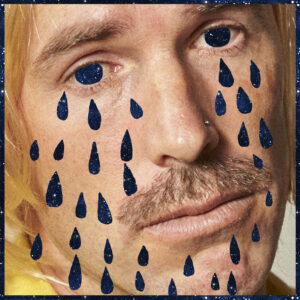
DreamGood explore intuition, identity and uncertainty through genre-defying music, bringing pop, electronic experimentation and storytelling together in the strange, captivating world of Paris Novella.
1. “Lifeline” is described as a “soft-boy introvert’s anthem” about trusting your innate intuition. What inspired the song, and what does following your intuition mean to DreamGood?
“Lifeline” is a song written from the perspective of Paris Novella, a fortune teller, in the moment they begin to believe in their gift, even if that gift sits outside what is conventionally “normal,” “accepted,” or even real. It’s a song that explores the threshold between intuition, imagination, and belief.
Intuition is an intriguing aspect of consciousness which humans rely/use on more than we like to admit. Even when we tell ourselves we’re making purely rational decisions, we often aren’t. For DreamGood, we needed to suspend our disbelief—to follow the irrational and explore our own contradictions.
2. You describe “Lifeline” as a meeting point between Adele and Aphex Twin, while also referencing artists such as Perfume Genius, Four Tet, Belinda Carlisle and George Michael. How do these very different influences come together in your sound?
It’s a little nonsensical, maybe even bombastic, to describe your music as a meeting point between Adele and Aphex Twin, but honestly, it’s difficult to describe the kind of music DreamGood are making. We jump around, taking influences from everywhere and nowhere, and we often end up in a genre-defying no man’s land.
Personally, I’ve never listened to an album as much as I listened to Adele’s 25. Mitch adores Aphex Twin, and Glenn is obsessive about electric guitar. Those are very different musical worlds, but that collision is kind of the point. Lifeline is what happens when our musical tastes, obsessions and instincts collide.
3. Your forthcoming concept album, Paris Novella (Fortune Teller): All Predictions Act Like Curses, revolves around an eccentric fortune teller. Who is Paris Novella, and what made this character the perfect vehicle for exploring the album’s themes?
There is no simple way to understand identity in our contemporary world. We all contain many different parts, and those parts can shift drastically depending on who or what we find ourselves in relation to. Paris Novella is no exception.
They are both powerful and small, beautifully confident and cripplingly insecure. They can be an upfront bull in a china shop one moment, and a sweet, sexy, alluring summer breeze the next. They contain contradictions that shouldn’t necessarily make sense together, but somehow do.
Paris became the perfect vehicle for the album because they allowed us to explore multiplicities – to inhabit parts of ourselves we didn’t even know existed, and to ask what happens when all of those different selves are given a voice.
4. The album seems to blur the boundaries between pop, electronic music, experimentation and storytelling. How did the character and narrative of Paris Novella influence the way you approached the music and production?
Months before any songs officially started, Mitch was sketching and experimenting, searching for a musical language that would break the rules of our previous work. Albums like Ziggy Stardust, Drukqs and Fever Ray showed us how rule-breaking records can build their own sonic worlds. Mitch built microtonal scales, strange sounds from voice memos and drum sounds from hardware synths, and looked for ways to misuse plugins.
As we delved into Paris Novella, his dreams, desires and ideas, the album’s extremes became clearer. Was the music a score in his mind, songs he’d written, a queer-pop musical, or fragments of his thoughts? That uncertainty gave us permission to move between catchy melodies, experimental production and deeply layered lyrics. Mitch mixed with a drum-and-bass mindset, drawing on Noisia and IMANU. Ultimately, Paris gave us a world to build rather than a set of rules to follow.
Finally, to subtly emphasize the album’s extremes, we had each half mastered by a different engineer: Tim Pennells, who’s worked with Floating Points, and Morgan Stratton, who’s worked with Death Grips. Everything was then summed through the same gear at the end, so it still felt like one album, just mastered with two extremes in mind.
5. DreamGood have been creating music together since 2009. How has the dynamic between Mitchell Sloan, Joshua Heath and Glenn Heath evolved over the years, and what keeps the three of you creatively connected today?
There have been huge shifts in DreamGood’s dynamics over the years. On our first album, we wrote entire songs on acoustic instruments, which were then composed out and transformed in the studio. Paris Novella, on the other hand, came from a completely different kind of songwriting process. Mitch would create sections of music, then we’d build mumble tracks to find a verse melody, which would lead to the chorus melody, with the lyrics often coming last. Many of the lyrics were completely improvised, in an almost stream-of-consciousness way.
So the way we make music has changed, but the thing that keeps us connected is much simpler. We genuinely care about each other’s lives. We’ve known each other for a long time, and that relationship allows the music to keep changing without losing the sense that it belongs to the three of us. There is no one way for us to work. We’re all open to playing different roles within the band, and we all play multiple instruments. There are fewer rules and defined roles now than when we first began, which gives us a lot more freedom to follow wherever the music takes us.
6. With Paris Novella (Fortune Teller) on the horizon, what would you like listeners to discover when they step into DreamGood’s world for the first time—and what can they expect from the next chapter?
We hope people can put aside their preconceived judgements and allow themselves to feel something. The album is strange in places, vulnerable in others, and hopefully gives people enough space to bring their own experiences to it. We don’t think music needs to be completely understood to be meaningful.
As for the next chapter, we genuinely have no idea what it will hold. We’ve never been particularly good at knowing where the music will take us, and perhaps that’s part of what keeps it interesting. For now, uncertainty feels beautiful.