
Toby S. Reeves
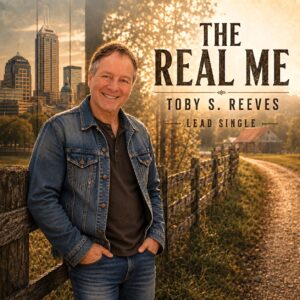
Toby S. Reeves discusses “The Real Me,” exploring identity, family heritage, life’s changing roles, songwriting, and the personal experiences shaping his reflective Backroad Folk sound.
1. “The Real Me” is described as an autobiographical reflection on the roles and expectations we carry throughout life. What personal experiences inspired you to write this song, and when did you realize you had found its central message?
I’ve spent more than three decades in business, building companies, leading teams, traveling, and talking about what comes next. The song’s images of hotel lights, glowing screens, and the suit and tie come from that part of my life. Alongside it, I’ve always carried my family’s history, my mother’s Kentucky roots, and my connection to music.
For me, the central message comes into focus in the lines, “But my mama’s hills were humming / Underneath the suit and tie.” That captures the whole idea. Whatever roles I took on, those roots were still there. “The Real Me” is about recognizing how much of home you carry with you, even when you spend years looking toward the next destination.
2. Your music combines contemporary country, Americana, and what you call “Backroad Folk.” How would you describe the sound and musical identity you have developed over the years, and what makes this style feel authentically yours?
I created Backroad Folk as a counter to modern country. I wanted simple, soulful acoustic music with personal stories and room to breathe. Picture friends sitting on the back porch in the evening after dinner, with fireflies lighting to the rhythm. That’s the atmosphere I’m trying to create.
It shares roots with folk, Americana, and bluegrass, but it has a particular focus. Americana is a broad musical umbrella; Backroad Folk settles into the smaller stories of people, places, family, and memory. It draws on bluegrass’s acoustic character while taking a slower, more reflective approach. The instruments support the story, and the arrangement leaves room for you to feel it.
That feels authentically mine because of my Indiana upbringing and Appalachian family heritage. Those roots give me both the musical foundation and the stories. Backroad Folk brings them together into something as familiar and welcoming as that evening on the porch.
3. You describe your music as having “Hoosier roots and Appalachian bones.” How have your Indiana upbringing, Appalachian heritage, and life experiences influenced the stories and musical atmosphere you create?
I grew up in Columbus, Indiana, and I live in Noblesville now. Indiana gives me the places and everyday details I know firsthand: the roads, the towns, and the working lives that find their way into my songs. My mother’s family came from Rockcastle County, Kentucky, so my Appalachian connection comes through family and heritage.
Music is part of that inheritance. My mother and aunt performed bluegrass as the Logston Sisters, and my father played electric guitar. Those influences are part of my own musical foundation.
Then there are the experiences I’ve accumulated along the way: work, travel, family responsibilities, and starting new chapters. They give me different perspectives on belonging and change. “Hoosier roots and Appalachian bones” describes what I bring with me when I sit down to write.
4. The song explores the idea of discovering who we really are beneath the identities we build over time. Has writing “The Real Me” changed the way you look at your own journey, family, faith, or the different roles you have carried throughout your life?
Writing it has helped me put those parts of my life into perspective. When you spend years focused on work and what comes next, it’s easy to let your professional identity take up most of the picture. This song gives me room to consider everything else that belongs there.
Being a husband and a foster parent makes home something very immediate. It’s about showing up, caring for someone, and accepting responsibility through uncertainty. Looking at my journey through that lens changes what I consider meaningful.
Faith belongs in that reflection, too, through gratitude, humility, and learning to live with unanswered questions. I can appreciate what each chapter has taught me while recognizing that there is more of my story still to write.
5. “The Real Me” is the title track and lead single from your upcoming album, which explores identity, memory, heritage, and the meaning of home. What can listeners expect from the album as a whole, and how does this song introduce the wider story you want to tell?
The project has developed into a six-song EP, with “The Real Me” as its title track and lead single. The collection explores how people hold on to a sense of themselves as their lives and the world around them change. There’s reflection, but there’s also humor, energy, and warmth.
“The Last Human Driver” looks at those questions through someone whose decades of experience matter, even as technology threatens to change his place in the world. “Room at the Table” brings the collection toward family and belonging.
The title track opens that conversation in the most personal way. It asks what stays with us through all the jobs, expectations, changes, and miles. The other songs approach those themes through different stories, giving listeners several ways to find themselves in the music.
6. After more than three decades in business and a lifetime of experiences behind you, what does songwriting mean to you today? What do you hope listeners discover about themselves when they hear your music?
Having my position eliminated during a company reorganization was part of what brought me back to music. After spending so much of my life building businesses and helping them grow, that change raised some very personal questions about work, identity, and what comes next. Those experiences helped shape songs like “Replaced.”
Songwriting gave me a way to work through those questions and reconnect with something that had been part of me long before my career. It also gave me somewhere to put the family stories, memories, humor, and experiences I’d accumulated along the way.
I hope listeners recognize something of themselves in the music. Plenty of people know what it feels like to start over or have a role they’ve carried suddenly disappear. I want them to feel that their experience still matters, they still have something to contribute, and there’s room for another chapter.