
DEDCHIMP
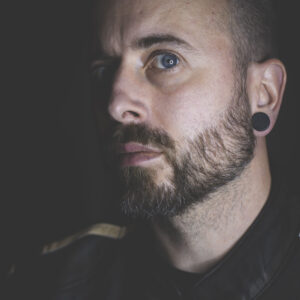
Blending industrial electronics, heavy guitars and dark atmospheres, DEDCHIMP confronts consumption, technology, power and human behavior. We discuss “DEVOUR,” creative freedom, influences, and the world behind the project.
1. “DEVOUR” explores humanity’s endless appetite for resources, technology, information, attention and even each other. What was the moment or feeling that first sparked the idea for the song?
I’m not sure there was a single moment that sparked the idea for DEVOUR. More like a form of dread that has crept up over time. I think it’s hard to be part of the alternative music scene and not be aware of what’s going on in the world… I mean, that’s kind of the point, right? It’s protest music at its core. We’re not playing Ed Sheeran concerts.
Like a lot of people of my generation, my interest in wider politics happened on 9/11. It’s almost like there was a world before the attacks, and a world afterwards. A lot has been done since that time to harbour a feeling of fear and one of the ways is by making us scared consumers. We consume, we devour and eventually we drain the well. Then whoever controls what’s left to eat, controls us.
The concept and lyrics for DEVOUR actually came quite quickly and easily, but I think that’s because I’ve had years of thinking about what I would actually like to say.
2. You describe “DEVOUR” as a confession and acknowledge your own complicity in the cycle you’re observing. How important was it for you to include yourself in the subject rather than simply watching from the outside?
I think it was important to start from a point of complicity because it’s the truth. I’ve spent my entire career chasing the life goals prescribed by society. Success is having a nice car, a big house and career status. I chased that for a long time, putting aside my passions to follow dreams that weren’t mine. I didn’t care about the big pop records I was working on. I didn’t care for the people I met in Hollywood. I wasn’t proud of it, I was just doing it because I thought that was what I was meant to do.
But it wasn’t like I didn’t know what was going on. That whole time I followed that path I knew it wasn’t true to who I was. I was falling for the same old traps but I wasn’t courageous enough to step away from it for a long time. The music industry is tough enough. Choosing to work with independent artists at smaller studios when you’ve been surrounded by some of the most successful people in the industry is a tough thing to do out of principle.
So I can’t exactly come from the point of view of being someone who figured this stuff out. It would be hypocritical. Instead, it’s worse than that. We’ve all kept our heads down from what’s going on around us and there is nothing left to do but watch the whole world burn. Perhaps it touches on some kind of existential nihilism, but I’m just creating a soundtrack for it.
3. Musically, DEDCHIMP brings together industrial electronics, heavy guitars, dark atmospheres and melody. How did you develop this particular sound, and what did you want listeners to feel when they first hear it?
I’ve always loved records that create worlds. I’m a big fan of movie soundtracks, especially those that create huge soundscapes. Although my music isn’t cinematic, I want to be able to create an atmosphere that makes the listener feel like they’re stepping into some kind of world. It’s an uncomfortable world to sit in, but I think the subject matter is uncomfortable.
At the same time, DEDCHIMP is a more visceral project. I didn’t really want it to be too musically clever. It’s aggressive and distorted because it comes from a place of despair. So I wanted to create the feeling of a band, without it being band music. I come from a background of playing guitar and have played and toured with a lot of bands. I didn’t want to do that. I put the synths at the forefront and treated them like guitars, with the actual guitars being a background element.
As for being melodically driven, I think that’s just something I can’t escape. I’ve worked on a lot of pop records where melody is the most important factor. So that’s kind of been drilled into me. When I started writing DEDCHIMP songs I had thought they would be more aggressive and less melodic, but whenever I wrote anything like that, it felt like a pastiche of something else. Being more melodic felt more me.
4. After more than 20 years working behind the scenes as a producer and mixing engineer, you’ve now stepped into the spotlight with your own voice. What has been the biggest difference between helping other artists express themselves and creating music entirely on your own terms?
In all honesty it’s terrifying. When I’m creating records with other artists, I’m helping them find their voice. I know my job is done when they’re happy with what we’ve managed to create. With my own music, I have no one telling me if anything is any good. It’s hard to be happy with your own creations, so claiming they’re done feels like you’re abandoning them.
At the moment, I’m at the very start of my journey, so not many people outside of limited friends and family have heard what I’m doing. I don’t share my work a lot. It’s hard to take it seriously when they tell you something is good. However, I’m starting to get listeners whose only motivation to listen is because they want to.
I am however enjoying the musical and lyrical freedom. Words are important to me, and the ability to express myself freely, writing about what I believe in and not just helping artists tell their story has been hugely liberating.
5. You mention influences such as Nine Inch Nails, HEALTH, Deftones and Linkin Park, while wanting DEDCHIMP to have its own identity. How do you balance the artists who have influenced you with the desire to create something that feels uniquely yours?
I’ve often found that when artists first start out, they’re basically copying their most influential records. That’s fine, that’s how we learn. When I first started writing music as a teenager they were almost carbon copies of records I was listening to. Over time you learn to take the elements of records that influence you, but make them your own.
Also, I’ve spent my entire life listening to a lot of music. I have one of those brains that for whatever reason can recall a lot of songs, sounds and melodies, which is useful in the studio because it’s a huge well to draw from. Whatever artists I’m working with will end up with their own pallet of sounds to make their records individual from any other artist I’m working with.
I like to hope that although there will always be elements of the records that influence what I’m doing in DEDCHIMP, there’s enough of a blend of everything that it creates its own little Frankenstein’s monster.
6. “DEVOUR” is described as the first chapter of a larger project exploring power, technology, belief and human behaviour. What can listeners expect from the world DEDCHIMP will build through future releases?
That makes it sound so grandiose, doesn’t it!? At the moment there are a few more singles in the can and a lot of demos. I’m kept very busy as a producer for other musicians, so I have to snatch time in between studio sessions to create DEDCHIMP records.
I’m hoping to get one or two more records out this year. The next single is ready to mix. It’s a little heavier and a bit more tongue in cheek. At the moment I’m just going to keep releasing singles. I don’t have time to focus too much on an album or even something like an EP. I’m talking to a few people about collaborations, remixes and of course, I’d love to take it live one day. But these things always take time in my experience.
I’d love to do something more visual with this as well. At the moment, everything besides the mastering, which is done by my friend Stefan Brown, is all me, including the visuals and photography. I would love to collaborate with some visual artists and create some interesting photography or film that further explores this world.