
Kent Olsson
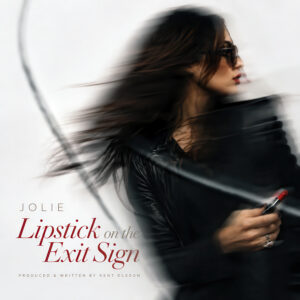
Kent Olsson complete The Art of Breaking Up trilogy with “Lipstick on the Exit Sign.” We discuss songwriting, collaboration, production, remote recording, and the freedom behind this stylish final chapter.
1. Lipstick on the Exit Sign completes The Art of Breaking Up trilogy, following Replay:me and Access Denied. What inspired you to tell this three-part story, and how did the emotional journey evolve from one song to the next?
Kent: I don’t think I originally sat down and decided, “I’m going to write a trilogy about breaking up.” It grew into one.
Replay:me was really about being trapped in that emotional loop where a relationship keeps restarting even though, somewhere inside, you already know how the story ends. There is still vulnerability in that song and still a desire to believe that maybe this time things will be different.
With Access Denied, something changes. The door begins to close. There is more attitude, more self-respect and a clear sense of setting boundaries. The person in the song has stopped waiting for permission to move on.
Then Lipstick on the Exit Sign became the natural final chapter. By that point there are no negotiations left and no need for another dramatic goodbye. She simply leaves – and does it with style.
So emotionally the trilogy moves from repetition, through rejection, to freedom. I liked the idea that a breakup story didn’t have to end in sadness. It could end with a smile.
2. You’ve worked closely with Jolie across several releases, including the complete The Art of Breaking Up trilogy. From your perspective as songwriter and producer, what does Jolie bring to your songs, and how has your creative collaboration developed over time?
Kent: What Jolie brings to my songs is a very distinct sense of character. She has a voice that can sound vulnerable and strong at the same time, and that combination is incredibly useful when the song is built around emotion, attitude and storytelling.
When we first started working together, I was mainly looking for the right voice for the songs. But over time, the collaboration has developed into something much more specific. I now find myself writing with her voice, phrasing and personality in mind from a very early stage.
That was especially true throughout The Art of Breaking Up trilogy. Each song needed a slightly different emotional angle, but Jolie gave them a clear identity and continuity. She has a natural way of making a lyric feel lived-in rather than simply performed.
Our collaboration has also influenced the arrangements. I often leave parts of the production deliberately open until I hear her vocals, because her interpretation can suggest where the track needs more space, more energy or sometimes less of everything.
When I heard Jolie, there was something in the character of her voice that immediately caught my attention. She has precision and control, but there is also personality in every phrase. That is extremely important to me. I don’t want a singer just to reproduce what I have written – I want the voice to become part of the storytelling.
Since then, I’ve probably listened to her voice several hundreds of times in different recordings and different musical contexts, and I like to think I’ve developed a pretty good sense of where her vocal sweet spot is – not only in terms of range, but in terms of character, dynamics and where that particular quality in her voice really comes alive. That knowledge naturally influences the way I write and arrange for her.
Once we had completed Replay:me, I realized that her voice had almost become the voice of the character in these songs. So, when Access Denied appeared, and later Lipstick on the Exit Sign, I naturally heard Jolie in my head while writing and producing them.
The collaboration has also developed into something I value enormously: trust. I can build a fairly detailed production and still give Jolie complete freedom with interpretation, phrasing and expression. She understands the character of the songs, and very often she adds things I would never have thought of myself.
That is when collaboration becomes much more interesting than simply hiring a vocalist.
3. The new track feels more confident and playful than its predecessors, with the central idea of leaving without looking back. What does “putting lipstick on the exit sign” mean to you personally, and what did you want listeners to take away from the song?
Kent: For me, “putting lipstick on the exit sign” is a small act of rebellion.
Instead of quietly disappearing through the door, she leaves a mark behind. Not because she wants to come back, and not because she needs revenge, but because she has finally taken ownership of the situation.
There is humour and irony in it too, which I love using in lyrics. Serious emotions don’t always need serious language. Sometimes one slightly absurd or visual image can say much more.
The lipstick mark basically says: “Yes, I was here. Yes, I’m leaving. And I’m perfectly fine with that.”
I wanted the listener to feel that sense of release. Heartbreak can hurt, but there is also an incredible moment when you realize that you have stopped looking backwards. That moment can be powerful, liberating – and even fun.
4. Musically, the project combines polished pop songwriting with rock-edged energy, electronic textures, layered harmonies and cinematic production. How did you balance those elements while keeping Jolie’s natural vocal performance at the centre of the music?
Kent: The voice always comes first for me.
I can use a lot of elements in a production – guitars, electronic sounds, synths, percussion, vocal layers and cinematic textures – but they all have to serve the song and the person singing it.
With Jolie especially, there is no reason to hide the voice behind production. Her vocal has so much character that the arrangement needs to create a world around it rather than compete with it.
I often think quite visually when I arrange music. That probably comes from my background in film scoring, which is still very much the nerve of how I approach music. I almost imagine scenes, camera movement and changes of perspective while I’m arranging. Some sections can become very wide and dense, while others suddenly become dry and intimate. That contrast gives the vocal somewhere to go and helps me shape the emotional movement of the song almost as if I were scoring a scene.
The harmonies are also important. I love building arrangements, but I try to make them reinforce the lead rather than turn everything into a wall of voices and sound. Jolie’s lead vocal remains the narrator. Everything else is scenery.
5. The songs were created remotely between Kent’s studio in Västerås, Sweden, and Jolie’s recording setup in Italy. What was the creative process like across that distance, and were there any particular recording, vocal-layering or production techniques that became important to the sound of Lipstick on the Exit Sign?
Kent: Strangely enough, I rarely think about the distance.
I work in Västerås and Jolie records in Italy, but the process feels very direct. I normally build the composition, arrangement and demo here and send Jolie quite a detailed picture of what I’m hearing. At the same time, I deliberately leave room for her interpretation.
She records her vocals and sends the individual tracks back to me, and then a second part of the creative process begins. I can reshape the arrangement around what she has actually sung rather than around the demo vocal.
For Lipstick on the Exit Sign, vocal layering became particularly important. There are lead vocals, harmonies, doubles and ad-libs, and we spent quite a lot of time placing them so that certain phrases suddenly expand around Jolie while the main vocal remains very clear.
I also like combining organic and electronic elements. Guitars and more traditional instrumentation can sit next to processed textures and deliberately manipulated voices. There is even a small spoken/vocoded moment in the bridge. Those details create little surprises without changing the identity of the song.
Remote recording also gives us an interesting advantage: we both have time to listen and think. It isn’t a session where the clock is running and somebody says, “OK, next take.” We can send ideas back and forth if needed and allow the track to develop.
6. With The Art of Breaking Up now complete, what does the end of this trilogy represent for you as artists? Does Lipstick on the Exit Sign feel like a final goodbye, or are you already looking toward the next chapter of your collaboration?
Kent: It is definitely a final goodbye – but only to the story, not to the collaboration.
I love that Lipstick on the Exit Sign gives the trilogy a real ending. The character has completed her journey, and I don’t think we need to find another boyfriend for her to throw out of the house! 😊
But creatively, Jolie and I continue.
In fact, I’m already working on our next song. It still has some of the irony and attitude people may recognize from the trilogy, but musically we are moving somewhere different. There is a lot of brass, a lot of vocal work and a very different energy.
So Lipstick on the Exit Sign closes one door.
Apparently, we are making quite a lot of noise on the other side of it.