
Hardy White
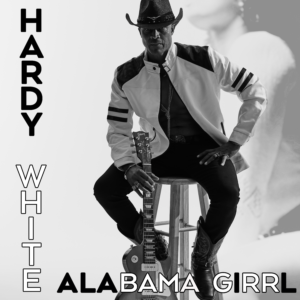
Hardy White takes us behind “Alabama Girrl,” sharing the story, influences, faith, and life experiences shaping his unique blend of country, rock, R&B, soul, and hip-hop.
1. “Alabama Girrl” centers on a woman who leaves her old life behind and embraces a new identity, symbolized by her “new boots” and “new ZIP code.” What inspired you to tell this particular story, and when did you realize it could represent something much bigger than one person?
The phrase Alabama Girrl came out of nowhere. I was just playing around with some of my vocal pedals, and nothing seemed to be working. I felt like I needed a strong country phrase, so I started singing, “I met her down in Alabama.” The melody felt strong, so I grabbed my guitar and started writing.
As the story developed, I realized this wasn’t just about one woman. It became a story about leaving behind who you used to be and becoming somebody new. Sometimes life gives you a new pair of boots, a new ZIP code, and a whole new way of looking at yourself.
2. One of the most interesting aspects of the song is that the woman, rather than the narrator, is really the star of the story. Why was it important to you to let her transformation take center stage?
Because her transformation is really what the song is about. I wanted Alabama Girrl to be about a woman who had the courage to change her life and become who she wanted to be.
As a writer, sometimes a story comes out of you that you weren’t expecting. I didn’t set out to make myself the center of the song. The woman became the story, and I wanted to let her journey speak for itself.
There’s something powerful about watching somebody leave an old life behind and step into a new one. That’s what made her the star of this song.
3. Your music brings together country storytelling with rock, R&B, soul and hip-hop influences. How do you approach combining these different styles, and what do you feel each genre brings to your sound?
To understand my music, you have to understand where I come from. I was born and raised in West Dallas, Texas, in the ghetto. I spent time in East Texas, had a military background, eventually made my way to Iowa, raised my kids, and moved to the suburbs because I wanted something different for them.
All of those experiences became part of my music.
When I write, the most important thing to me is the groove. From there, all the different influences naturally come in—rock ’n’ roll, R&B, country storytelling, gospel and hip-hop.
I grew up around a lot of different rhythms. I was in marching band, listened to drumlines, experienced breakdancing, Michael Jackson, R&B and hip-hop, and then there were my heavy rock ’n’ roll days. So I don’t really think about putting genres together. They’re already a part of me.
Rock gives me the energy and the ability to connect with a big crowd. Country gives me the storytelling. R&B and hip-hop bring some of the coolest rhythms and sounds in music. And gospel, to me, is the glue. All of those pieces have shaped who I am as a musician.
4. You spent decades playing guitar, writing and performing while also working, raising a family and building a life outside the traditional music industry path. What finally made you decide that it was time to step forward and put your own music at the center?
That damn COVID was a genius – it changed the way a lot of people looked at their lives. It certainly made me look at mine and ask myself what I really wanted to be doing.
After our last kid finished college, my wife and I started thinking about what was next for us. My daughter, who I had performed with for about 10 years, wanted to have a child, and I was getting ready to go back and focus on my union job. I needed another 1,000 hours to get my pension.
Then my beautiful wife looked at me and basically said, “Bullshit. Play music. You’re good at it.”
She was right.
I truly love music. It’s a part of my being, my soul—it’s everything to me. My wife has always believed in me and told me I had something to give to the world.
So I prayed about it and asked God to help me use whatever He had given me to deliver His message. And here I am.
I don’t believe I found music at this point in my life by accident. I believe it’s God’s timing.
5. You’ve mentioned that early reactions to “Alabama Girrl,” particularly from women and younger listeners, helped you see the character in a broader way. What have listeners told you about the song that surprised or moved you the most?
Honestly, I don’t want to seem creepy, but I never expected this song to connect with girls from their teens all the way up through their parents and even their grandparents.
I’ve had young women and their parents tell me they can’t wait to show me their dances to the song. They’re excited about going into ninth grade or high school, or even moving on to college. It’s been a really cool experience to see how they connect with the idea of starting a new chapter.
But then to see a grandmother and her mother dancing to the song, putting their boots on and just loving what it says about a woman starting a new journey with a new attitude—that’s pretty damn sweet.
That’s probably what has surprised me the most. I wrote a song about this woman and her new journey, and now I’m watching women of completely different generations make it their own.
6. Following “What Dem Cowboys Say” and the recent WCCO/CBS Minnesota exposure, you’re entering a new chapter with “Alabama Girrl.” What do you hope this next stage of your career looks like, and what can listeners expect from Hardy White moving forward?
I’m excited and pleased to say that I’ll be releasing an album next year with 12 to 14 songs. We’re also submitting myself to go on tour, so hopefully we can all hang out with the charismatic cowboy and see what he has to offer on stage live.
I’m ready to get out there, play this music for people and see where this next chapter takes us.
I’ve heard he’s pretty cool.
Blessings.