
Satoshi
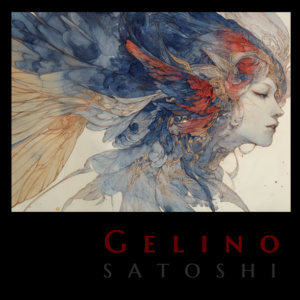
Japanese composer and producer Satoshi | ECLESIAH discusses “Gelino,” a bold reinterpretation of traditional music, blending folk melody, ambient electronics, cinematic textures, and post-metal heaviness.
1. “Gelino” takes a traditional public-domain song and places it in a very different sonic environment. What first attracted you to this particular piece, and what made you want to reinterpret it rather than simply present it as a traditional cover?
I came across the song by chance, but I was immediately captivated by the beauty of its melody. Knowing that it is a traditional song from the mountainous Caucasus region naturally brought to mind a sense of history, vast landscapes, and something deeply romantic, and I found that very appealing.
I was also fascinated to learn that, despite its melancholy character, it has traditionally been sung at weddings. That contrast gave me a strong sense of the depth and sophistication of the musical culture of the region, including Georgia.
One of the missions behind my music is to help introduce traditional songs and folk music from different parts of the world to a wider audience. There are already excellent traditional interpretations of many of these songs, so I felt that, as a musician working from a completely different cultural environment in Japan, my role was not simply to reproduce what already exists. Instead, I wanted to reinterpret the song through a new sonic language and create another path through which new listeners might discover it.
2. The track brings together folk melody, ambient electronics, experimental textures, post-rock dynamics and post-metal weight. How did you approach finding the right balance between these seemingly different musical worlds?
My own music has always had two main axes: heaviness and melody. Because of that, the arrangement of “Gelino” did not really come from a conscious attempt to combine different genres. It felt more like a natural extension of my own musical language and instincts.
At the same time, maintaining cohesion and avoiding excess was very important to me. Genre fusion can easily become a matter of forcing traditional melodies or instruments into the grammar of another style without any real necessity.
I tried not to simply add elements for the sake of variety. Instead, I carefully considered whether each sound was genuinely necessary for the song, and whether it strengthened the music or gave it greater meaning. The goal was to blend only the elements that truly served the piece.
3. You describe “Gelino” as a spacious and cinematic reinterpretation while still preserving the character of the original melody. How did you decide which elements of the traditional source had to remain untouched and where you could take creative liberties?
For me, the melody is the soul of a traditional song. From the beginning, I decided that I would leave the melody itself intact and reinterpret the piece through the backing arrangement, structure, and overall sonic environment. Of course, that was also because I was so strongly drawn to the original melody in the first place.
For that reason, I allowed myself much more freedom with the accompaniment, structure, and arrangement, which, as listeners can hear, were changed quite boldly.
The lyrics sit somewhere between those two approaches. As part of my aim to bring traditional songs to a wider audience, I generally adapt the original-language lyrics into English. However, I do not simply translate the literal meaning. I try to preserve the original imagery and emotional content as much as possible, while also making the English sound natural and ensuring that the words fit the original melody smoothly. I put a great deal of care into that process.
4. You handled the arrangement, instrumentation, sound design, production, mixing and mastering yourself. How did working across all these stages shape the final identity of the track, and was there a particular production element you found especially important?
I think the direction of the piece was largely determined during the arrangement and sound design stages.
The heavier section in the latter part of the track, in particular, is a completely new interpretation that does not exist in the original song. Because of that, the identity of the track was shaped not only by the arrangement itself, but also by decisions about texture, tone, and sound design.
By contrast, I see production, mixing, and mastering as stages that support and clarify that artistic direction. Their role is not so much to create the concept, but to make sure that the intention already established in the arrangement and sound design is communicated as clearly and effectively as possible.
If I had to identify one particularly important element, it would be the sound design of the heavier second half, because that is where the reinterpretation becomes most clearly distinct from the traditional source.
5. The vocal performance was created using ACE Studio’s AI singing technology. What possibilities does AI singing open up for your creative process, and how do you see it fitting alongside your own human work as a composer and producer?
On a practical level, AI singing makes trial and error much easier. It allows me to move through the creative cycle much faster, so it has clear benefits in terms of production speed and cost.
However, I do not see AI simply as a tool for efficiency. Creatively, I believe humans and AI can coexist through a division of roles, with each contributing something different and leading to better artistic results.
For example, AI singing can be pushed in directions that are very different from natural human performance. You can reduce subtle pitch fluctuations to an extreme degree and create a voice that feels almost crystalline—very even, transparent, and precise. When voices like that are layered into a choir, they can produce a kind of beauty that is intentionally non-human. I informally call this kind of sound an “angelic voice,” although I am still experimenting with the idea.
At the same time, human singing has qualities that are uniquely human: tiny fluctuations, warmth, physical presence, and emotional instability. I therefore do not believe AI should completely replace conventional human singing.
There are also forms of expression that are difficult to reach through inference based on existing data—completely new ideas, very niche aesthetics, or highly personal forms of expression. I believe those areas will continue to depend heavily on human creativity.
For me, the artistic direction, composition, and final decisions still remain human responsibilities. AI is another expressive tool within that process, rather than something that replaces the role of the composer or producer.
6. “Gelino” sits somewhere between world music, experimental music and atmospheric heavy music. What do you hope listeners from these different musical backgrounds will take away from the track, and does this release point toward a broader direction for your future work?
I hope listeners who are already familiar with traditional music can discover something new through the contemporary sound, while listeners who are more accustomed to modern production can discover a traditional song they may never have encountered before.
If the track can create a new kind of musical pleasure through that exchange, I would be very happy. More broadly, I hope it can encourage listeners to move back and forth between global and local perspectives.
“Gelino” definitely represents the direction of my music very clearly. One part of that is discovering lesser-known traditional songs and bringing them to new audiences. Another is combining traditional melodies with new sonic environments. And another is bringing heaviness and melody together in the same piece. Those three elements describe my musical identity very well.