
Endive
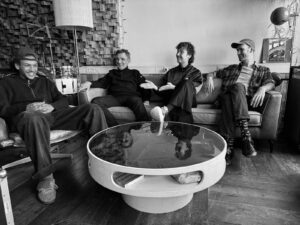
We caught up with endive to discuss their debut EP headprint, exploring its emotional depth, creative process, diverse influences, cinematic atmosphere, and the journey behind their distinctive sound.
1. Congratulations on the release of headprint! Looking back on the journey from the first improvisations to the finished EP, what emotions stand out the most now that the record is out in the world?
Warner: Mostly gratitude, and probably a little vulnerability. Some of the songs began as very private moments at the piano, so releasing them feels like letting go of something that lived with me for a long time.
Marcel: And then they became something shared. What’s also special about endive is that we’re not only musical collaborators, but father-in-law and son-in-law, from different generations. We came into music through very different lives, so the project has always been an unexpected meeting of worlds. Warner and I developed the compositions together, sitting in the attic, talking and experimenting until an idea took shape. Seeing those private ideas eventually become a record with Sam and Andro, and now hearing people connect with it, is incredibly humbling.
Warner: And somehow that whole journey makes the release feel bigger than just putting out a record. Something that started very privately between the two of us has become something we can share with other people.
2. Many of your songs begin as spontaneous piano improvisations. What is it about improvisation that allows you to discover ideas you might never find through a more structured writing process?
Warner: Improvisation helps me bypass the part of my brain that wants to judge everything. I can simply react to what I’m hearing, and sometimes an unexpected harmony or melody takes me somewhere I wouldn’t have consciously gone.
Marcel: That’s often where our collaboration starts. Warner brings the initial idea, and then we explore it together. Sometimes it stays close to the original, sometimes it becomes something completely different.
Warner: The improvisation gives us the spark, but the writing becomes a conversation.
3. Your music beautifully blends dream pop, ambient pop, and art rock. How did those different influences naturally come together to shape endive’s distinctive sound?
Warner: I think the contrast starts with our very different musical backgrounds. I grew up immersed in classical music and was trained at the conservatory, which made me very focused on harmony, melody and composition.
Marcel: My background is much more eclectic. I’ve played and toured in bands across different genres and spent years running a record store, so I was constantly surrounded by different ways of approaching music.
Warner: We’re also from different generations, so we didn’t grow up with the same musical culture. We naturally bring different perspectives into the writing.
Marcel: That means we often hear the same idea differently. Warner might focus on a melody or chord progression, while I’ll hear something in the rhythm, texture or space around it.
Warner: When we start responding to each other’s way of hearing an idea, it can develop into something neither of us would have found alone. I think that’s a big part of what gives endive its sound.
4. The EP explores themes such as love, longing, identity, self-discovery, and self-destruction. Were there any songs that were particularly challenging or emotionally demanding to write?
Warner: Actually, that applies to quite a few songs on the EP, precisely because they all come from very personal experiences and feelings. Nightfall, for example, was one of the more difficult ones. It’s about addiction, wrong choices and destructive patterns that can be difficult to break. To unfold comes from a very different place: it’s about pursuing your dreams while also being afraid of rejection or failure.
Marcel: I think that personal layer is important throughout the EP. You don’t necessarily need to know exactly what lies behind a song to recognize the feeling.
Warner: Exactly. The challenge is always to be honest enough that the song comes from somewhere real, without explaining everything. I want there to be room for the listener to find their own experience in it.
5. Nature, dreams, and the passage of time are recurring elements throughout headprint. What draws you to these themes, and how do they help express emotions that words alone cannot?
Warner: I’m drawn to things that are constantly changing and impossible to hold onto. Dreams disappear as soon as you wake up, nature is always transforming, and time changes the meaning of things without us being able to stop it. I think those qualities mirror the way emotions work.
I’m also interested in the fact that an image can communicate something without explaining it. A landscape, a season or a particular moment in nature can carry a feeling that would become much more literal if I tried to describe it directly.
Marcel: And that ambiguity leaves room for the listener. The same image can mean something completely different to different people.
Warner: That’s important to us. We don’t want to give the listener a fixed interpretation. We want the songs to create a space where they can bring their own memories and experiences.
6. Critics have praised the cinematic quality of your music. When you’re writing and arranging a song, do you consciously imagine visual landscapes or stories, or does that atmosphere emerge naturally?
Warner: It’s a combination. Much like in Impressionism, I try to connect certain sounds with images, feelings and movement. A particular harmony might evoke a colour or landscape, while a rhythm can create a sense of movement. I don’t think so much in terms of a specific story or scene, but more in associations and atmosphere.
Marcel: And when we’re arranging, we think a lot about space: whether something feels close or distant, open or enclosed. That connects quite naturally with what Warner is trying to create through those associations.
Warner: Ultimately, the cinematic quality comes from that combination of sound, image and feeling, without prescribing exactly what the listener should see.
7. Working with producer Oscar de Jong has been an important part of your creative process. What did he bring to the project that helped elevate the songs beyond their original ideas?
Warner: Oscar helped us see our songs from a different perspective and discover what they could become. He pushed us beyond our first ideas and helped us see possibilities we hadn’t considered.
Marcel: He has a great instinct for knowing what a song needs, and maybe more importantly, what it doesn’t. Sometimes removing something made a much bigger difference than adding another layer. He helped us find a balance between the intimacy of the compositions and the larger, immersive sound we were looking for.
Warner: What I value most is that he never tried to make the songs sound like something else. He understood what we were trying to do and helped us bring that further. He made the songs feel more like themselves.
8. Artists like Radiohead, Beach House, Slowdive, and Jeff Buckley are often mentioned when describing your music. Which artists have had the greatest influence on each of you, both inside and outside those comparisons?
Warner: Classical music is probably the foundation of everything I do. Especially composers like Debussy and Ravel have deeply influenced the way I think about harmony, colour and atmosphere. Outside of classical music, Jeff Buckley has always been a huge influence because of the emotional freedom in his voice and songwriting. Radiohead taught me a lot about atmosphere and the possibilities of constantly reinventing your sound, while Sufjan Stevens has influenced me through his intimacy and attention to detail.
Marcel: With my background, there are quite a few artists who have had a particularly strong influence on me. Slowdive is a major influence because of the way they create atmosphere and emotion through texture. Steve Reich has influenced the way I think about repetition and gradual development, while CAN showed me how much freedom there can be in rhythm and improvisation.
Warner: What’s interesting is that, despite coming from such different generations and musical backgrounds, we have some important common ground.
Marcel: Radiohead and Beach House are probably the clearest examples. Those shared references give us a common language, while the differences in our backgrounds keep the writing unpredictable.
9. Your live performances have been described as immersive and dreamlike. How do you approach translating the layered textures of headprint into a live setting while keeping the emotional intimacy intact?
Marcel: We don’t try to reproduce the record exactly. We focus on what is emotionally essential to each song, together with Sam and Andro.
Warner: The stage also gives the songs a different energy. Some things become simpler, others more physical or expansive. We want to preserve the atmosphere without losing the spontaneity of playing together.
10. The title headprint is intriguing. What does it represent to the band, and why did it feel like the perfect title for your debut release?
Warner: We think of a headprint as the traces that experiences leave behind in your mind. They aren’t necessarily memories in a chronological sense. They can be fragments, images, sensations or scenes that return unexpectedly.
Marcel: That also connects to the way the EP was made. The songs aren’t meant to tell one continuous story. Different emotions and impressions accumulate, almost like layers of memory.
Warner: And that’s how we hope the music can be experienced too. You don’t necessarily have to search for a clear answer or narrative. You can just follow the images and emotions and get a little lost in them.
11. Receiving praise from publications in both the Netherlands and internationally is an impressive achievement for a debut EP. Has that positive response influenced your confidence or creative direction moving forward?
Marcel: It definitely gives us confidence, especially knowing that people in different places are connecting with the music. At the same time, it’s very humbling to see something that started so personally reach people we’ve never met.
Warner: It has definitely influenced us in that sense. It makes us trust our instincts a little more, and it makes our inner saboteur talk a little less loudly. You always wonder whether what you’re making is good enough or whether anyone will care. Knowing that people genuinely connect with it makes it easier to trust that instinct and keep going.
12. As endive continues to evolve, what musical territories or ideas are you most excited to explore on future releases, and what can listeners expect from the next chapter of the band’s journey?
Warner: We’re interested in exploring more contrast and experimentation. More tension, movement and dynamics while keeping the atmospheric side of endive intact.
Marcel: And we don’t want to decide too much in advance what it should sound like. The interesting part is still surprising each other.
Warner: The fact that we’re from different generations is part of that. We don’t always hear an idea in the same way, which means there’s always the possibility of taking it somewhere unexpected.
Both: The next chapter will still feel unmistakably like endive, but it won’t simply be headprint again. We want to keep following that tension between our different musical worlds and see how far we can take it.