
BEND
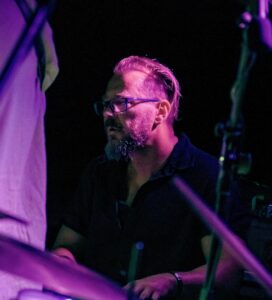
Gábor Szunyogh discusses BEND, a deeply personal journey through genre, mood, improvisation and the piano, exploring how music can transform perception and reveal entirely new realities.
1. BEND explores the idea that we all “bend reality” through our own perceptions. When did you first realize that your personal way of seeing the world could become a source of musical inspiration?
I think it was when I realized that the experiences we go through can be filtered through us as music in completely unexpected ways. After a moment of great happiness, you might write a sad song. A frustrating experience might somehow rearrange itself into perfect harmonies and become a peaceful piece of music.
I began to notice that the usual musical stereotypes don’t always work. The world can reappear in your music as a completely different reality. Obviously, it is a world that follows different rules – and that is exactly why it is so interesting to explore. I think that idea is at the heart of BEND.
2. The album moves between jazz, blues, classical music, psychedelia, world music and cinematic sounds without settling into one genre. How do you decide which musical direction to follow when a new idea begins to emerge?
That is one of the most fantastic things about music: freedom doesn’t only exist in choosing the notes, rhythms or harmonies. You are also free to choose the genre – or not to choose one at all.
Playing alone on one instrument gives me enormous freedom in this respect. With Weekend Vikings, our jazz duo, there are already two of us, two instruments, a shared concept, and naturally we have to react to each other. With BEND, the field was completely open.
But I should add that most of this happens instinctively. Sometimes you simply start composing in the musical language that seems right for the piece. And sometimes it happens the other way around: the style or genre itself becomes the starting point. You step into that framework and something new begins to emerge from it. The genre becomes the inspiration.
3. Several tracks create very different atmospheres, from the meditative Japanese Garden to the bluesy Greenrobe and the psychedelic Sunshards. What role does mood play in your composing process?
It is probably the most important thing.
And this is where the idea of “bending reality” comes back. We only really need to bend reality when we are in a state of mind that demands it – when, in a way, we have no choice.
Mood creates that necessity. It tells you that something has to come out, but it doesn’t tell you what form it will take. A meditative piece, a blues, something psychedelic – you discover that while playing. So yes, mood is probably the strongest motivation behind my music.
4. As a pianist and composer with more than 25 years of experience, how has your relationship with the piano evolved, and what can you express through the instrument today that you could not express earlier in your career?
Sometimes it is a little frightening how human my relationship with this instrument has become.
At first, I actually looked down on the piano a little because I wanted to be a guitarist! That didn’t work out quite as well, and besides, I always thought pianists looked slightly awkward on stage – everybody else is moving around while the pianist just sits there somewhere at the side.
Then I discovered that I could play almost anything on the keyboard. I realized how many different things I could express with it – and with a synthesizer, the possibilities became practically limitless.
A major inspiration for me in this respect is Zsolt Kaltenecker, a brilliant Hungarian musician and composer. He showed me that on keyboards you can almost become a bass player or a guitarist as well. That was a revelation. Suddenly, entirely new worlds opened up.
Over time, of course, your instrument becomes much more than an instrument. It becomes your companion, your refuge – and a gateway into that other, slightly bent reality.
5. The Night Comes, Gravels, Grado Blues and other pieces reveal different influences and approaches to harmony and improvisation. Are there particular composers, musicians or musical traditions that have had the strongest impact on your artistic language?
Besides Zsolt Kaltenecker and many of the great jazz pianists, Pink Floyd and Led Zeppelin have probably had the strongest influence on me. But I also love The Cardigans, Nina Persson’s solo work and Jan Garbarek.
It is a strange mixture, I know, but I think that is reflected in BEND as well. These influences don’t necessarily appear in an obvious way. They pass through me and become something else.
Sometimes I even think I’m playing Nirvana on the piano.
But perhaps that already belongs firmly in the category of bent reality.
6. Alongside your solo work, you perform with Weekend Vikings, an improvisation-driven keyboard-and-drums duo. How does creating music with another musician differ from the very personal, almost solitary creative world you explore on BEND, and what would you like listeners to discover next?
My friend and musical partner Viktor Szathmáry and I see many aspects of the world in a very similar way, and our musical taste and energy are very close as well. But with Weekend Vikings, the compositions grow out of the interaction between the two of us – out of shared moods, reactions and improvisation. It is an incredibly exciting journey because neither of us can completely know where the other person will take the music.
BEND is different. BEND is just me. And I wanted to show that world too.
So right now, BEND is what I would most like listeners to discover. But please follow Weekend Vikings as well, because our second album is coming soon.
In fact, there could hardly be a better moment to say this: today we finished the very last track in the rehearsal room.